Are the Dutch friendly to foreigners?
Moving to the Netherlands as a foreigner comes with a mix of excitement and uncertainty. One of the most common questions internationals ask before or shortly after arriving is whether Dutch people are actually welcoming. If you have experienced culture shock in the Netherlands, you are not alone. Understanding the Dutch mindset can make a significant difference in how quickly you settle in and start building a real life here.
The good news is that the Netherlands consistently ranks among the most internationally friendly countries in the world. But “friendly” in the Dutch sense does not always look the way newcomers expect. Let’s break down what you actually need to know.
Are Dutch people actually friendly to foreigners?
Yes, Dutch people are generally friendly to foreigners. The Netherlands has a long history of international trade, migration, and cultural openness. Most Dutch people are welcoming, tolerant, and genuinely curious about people from other countries. However, their friendliness tends to be practical and straightforward rather than warm and effusive, which can feel confusing at first.
Dutch society places a high value on equality and directness. This means that foreigners are rarely treated as outsiders in a negative sense, but they are also not given special treatment simply for being new. You are expected to engage on equal terms from the start. Once you understand this, the culture feels far less cold and much more respectful. Many expats and internationals who have lived in the Netherlands as a new home for a few years describe it as one of the best countries they have ever lived in, precisely because of this honest, no-nonsense approach to human interaction.
Why do Dutch people seem cold or distant at first?
Dutch people can seem cold or distant at first because they maintain clear boundaries between acquaintances and close friends. Small talk with strangers is not a strong cultural habit, and Dutch people rarely strike up conversations with people they do not know. This is not rudeness. It is simply a cultural norm that values personal space and authenticity over surface-level pleasantries.
In many cultures, warmth is expressed through smiling at strangers, making casual conversation, or offering compliments. In the Netherlands, these gestures can actually feel insincere. Dutch people prefer honest, purposeful interaction. If they are talking to you, it is because they genuinely want to. This can feel jarring at first, especially if you come from a culture where social warmth is performed more openly. But once you adjust your expectations, you start to appreciate the authenticity behind Dutch reserve. Culture shock in the Netherlands often fades once you realize that a Dutch person who does engage with you is doing so genuinely.
How do Dutch people typically make friends?
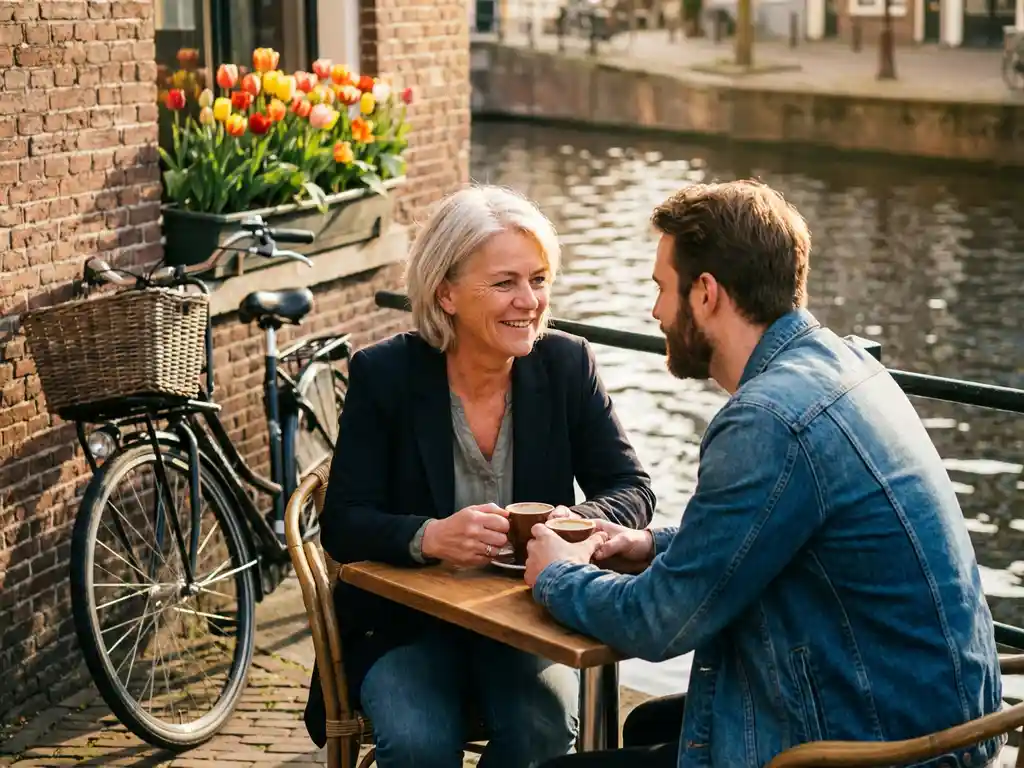
Dutch people typically make friends through structured social contexts such as sports clubs, community groups, work environments, and shared hobbies rather than through spontaneous social encounters. Friendships tend to develop slowly and are built on repeated, meaningful interaction over time. Dutch social circles can appear closed to outsiders, but they are not impossible to enter.
The role of structured activities in Dutch social life
Joining a local club, class, or recurring group activity is one of the most effective ways to build friendships in the Netherlands. Dutch people are loyal and consistent within their social structures. If you show up regularly and engage genuinely, you will gradually become part of the group. This is why language classes, sports associations, and neighbourhood events are so valuable for newcomers.
Patience is part of the process
Dutch friendships take time to form, but they tend to be deep and lasting once established. Unlike cultures where new acquaintances quickly become “friends,” Dutch people make a clear distinction between someone they know and someone they trust. Accepting this timeline, rather than pushing for closeness too quickly, makes the process much smoother and more rewarding.
What cultural differences should foreigners be aware of in the Netherlands?
The most important cultural differences foreigners should be aware of in the Netherlands include directness in communication, a strong sense of equality, a preference for planning over spontaneity, and a clear separation between professional and personal life. These values shape nearly every social interaction and can be a significant source of culture shock for newcomers.
- Directness: Dutch people say what they mean. Criticism is delivered plainly and is not intended as an attack. Learning to receive and give direct feedback without taking it personally is essential.
- Equality: The Dutch value a flat social hierarchy. Titles, status, and formality carry less weight here than in many other cultures. Everyone is expected to contribute and speak up.
- Planning: Spontaneous visits or last-minute social invitations are generally not the norm. Dutch people plan their social lives in advance, and showing up unannounced can feel intrusive.
- Privacy: Personal questions about income, relationships, or life choices may be considered intrusive unless you are close friends. Respecting boundaries early on builds trust.
- Going Dutch: Splitting bills equally is standard practice, even among friends. It reflects the cultural value of fairness and independence rather than a lack of generosity.
Understanding these differences does not mean you have to abandon your own cultural identity. It simply means you can navigate Dutch social life with far less frustration and far more confidence.
How can learning Dutch help foreigners feel more welcome?
Learning Dutch helps foreigners feel more welcome by removing one of the biggest invisible barriers between them and the local community. While most Dutch people speak excellent English, making the effort to learn their language signals genuine commitment to integration. It opens doors to conversations, friendships, and experiences that simply are not accessible in English.
Language learning is also one of the most effective ways to understand Dutch culture from the inside. When you learn how Dutch people express themselves, you start to understand their humour, their values, and their way of seeing the world. This cultural insight transforms everyday interactions from confusing to meaningful. Culture shock in the Netherlands becomes much more manageable when you can actually participate in Dutch life rather than observing it from a distance. You can also explore options like learning Dutch with AI tools to accelerate your progress alongside traditional classes.
At Dutch on Track, we have seen this transformation happen time and again. Our small group classes of 8 to 10 students create a genuinely social learning environment where you practise Dutch with other internationals who are navigating the same journey. Our communicative approach means you start speaking from day one, which builds confidence quickly. Beyond the language itself, our students often tell us that the friendships they form in class become some of their first real social connections in the Netherlands. If you are ready to take that step, our Dutch language courses in Eindhoven and Tilburg are designed specifically for people in your position. You can schedule a free introductory meeting to find out which course suits you best.
Frequently Asked Questions
How long does it typically take to feel truly settled in the Netherlands as a foreigner?
Most internationals report that it takes anywhere from one to two years to genuinely feel at home in the Netherlands. The first few months are often the hardest, as the cultural differences around directness, social distance, and friendship-building can feel isolating. The turning point usually comes when you establish a regular social routine — whether through a language class, a sports club, or a workplace — and start forming consistent connections with both Dutch people and fellow internationals.
Is it really necessary to learn Dutch if most people already speak English?
While you can absolutely function day-to-day in English, relying on it long-term creates an invisible ceiling on how deeply you can integrate. Many job opportunities, local community events, and informal social situations are conducted primarily in Dutch, and locals tend to open up more naturally when you make the effort to speak their language. Even a basic level of Dutch signals respect and commitment to your new home, which makes a noticeable difference in how warmly people respond to you.
What are the most common mistakes foreigners make when trying to connect with Dutch people?
The most common mistakes include misreading Dutch directness as rudeness and withdrawing socially, trying to fast-track friendships by oversharing or being overly enthusiastic too soon, and waiting for Dutch people to make the first move rather than taking initiative. Another frequent pitfall is expecting the same kind of spontaneous social warmth you may be used to at home — in the Netherlands, consistent presence in structured settings matters far more than grand social gestures.
Are there specific regions or cities in the Netherlands that are more welcoming to internationals?
Cities with large international populations — such as Amsterdam, Eindhoven, Rotterdam, and Utrecht — tend to have well-established expat communities and more infrastructure designed for newcomers, including international schools, English-language services, and expat networking groups. Eindhoven and Tilburg, for example, have grown significantly as international hubs thanks to the tech and design industries, making them particularly accessible for people new to the country. That said, smaller cities and towns can also be very welcoming once you find your footing in local community life.
How do I handle it when a Dutch person says something that feels blunt or even hurtful?
The key is to reframe the intent before reacting — Dutch directness is almost never meant to be unkind, it is simply the culturally normal way of communicating honestly. If a colleague tells you your work needs improvement or a new acquaintance gives you unsolicited but frank feedback, try to receive it as a sign of respect rather than an attack. Over time, you may even come to appreciate knowing exactly where you stand, which is something many expats say they genuinely miss when they move elsewhere.
What practical steps can I take in my first month in the Netherlands to avoid feeling isolated?
Start by identifying one or two recurring activities you can commit to — a weekly language class, a local sports team, a hobby group, or a neighbourhood volunteer initiative. Consistency is everything in Dutch social culture, so showing up regularly matters far more than making a strong first impression. It also helps to connect with other internationals who are at a similar stage, as they can provide immediate community while your longer-term local connections are still developing.
Does culture shock in the Netherlands ever fully go away, or do you just learn to manage it?
For most people, the acute phase of culture shock — the confusion, frustration, and sense of not belonging — does fade significantly, usually within the first year. What replaces it is a more nuanced understanding of Dutch culture that actually becomes something many expats deeply appreciate. The directness starts to feel refreshing, the planning feels reassuring, and the slow-burning friendships start to feel more meaningful than the quick connections you may have had elsewhere. Language learning and active community involvement are consistently the two factors that accelerate this shift the most.