
What is the climate like in the Netherlands?
Moving to the Netherlands as an expat comes with plenty of exciting discoveries, and the weather is often one of the first topics that catches newcomers off guard. The Dutch climate is famously unpredictable, and understanding what to expect can make a real difference in how quickly you settle in and feel at home. Whether you are planning your move or already living here, knowing how the weather shapes daily life is an essential part of the Netherlands expat experience.
This guide answers the most common questions about Dutch weather in plain terms, so you know exactly what to pack, when to plan outdoor activities, and how locals actually relate to the rain, wind, and occasional sunshine that define life in the Low Countries.
What are the four seasons like in the Netherlands?
The Netherlands experiences four distinct seasons, but none of them are extreme. Winters are mild and grey rather than bitterly cold, summers are warm but rarely hot, and spring and autumn are often the most unpredictable times of year. Temperatures generally range from around 2°C in winter to 22°C in a good summer, with plenty of variation in between.
Spring (March to May)
Spring is arguably the most celebrated season in the Netherlands. The famous tulip fields bloom across the country, the days grow longer, and locals pour onto terraces the moment the sun appears. Temperatures climb gradually from cool to mild, but showers are frequent, and the weather can change within a single afternoon.
Summer (June to August)
Dutch summers are pleasant rather than scorching. Most days sit between 18°C and 24°C, and a truly hot week above 30°C is memorable precisely because it is rare. When the sun does shine, the entire country seems to shift outdoors. Parks fill up, canals come alive, and the social energy is infectious.
Autumn (September to November)
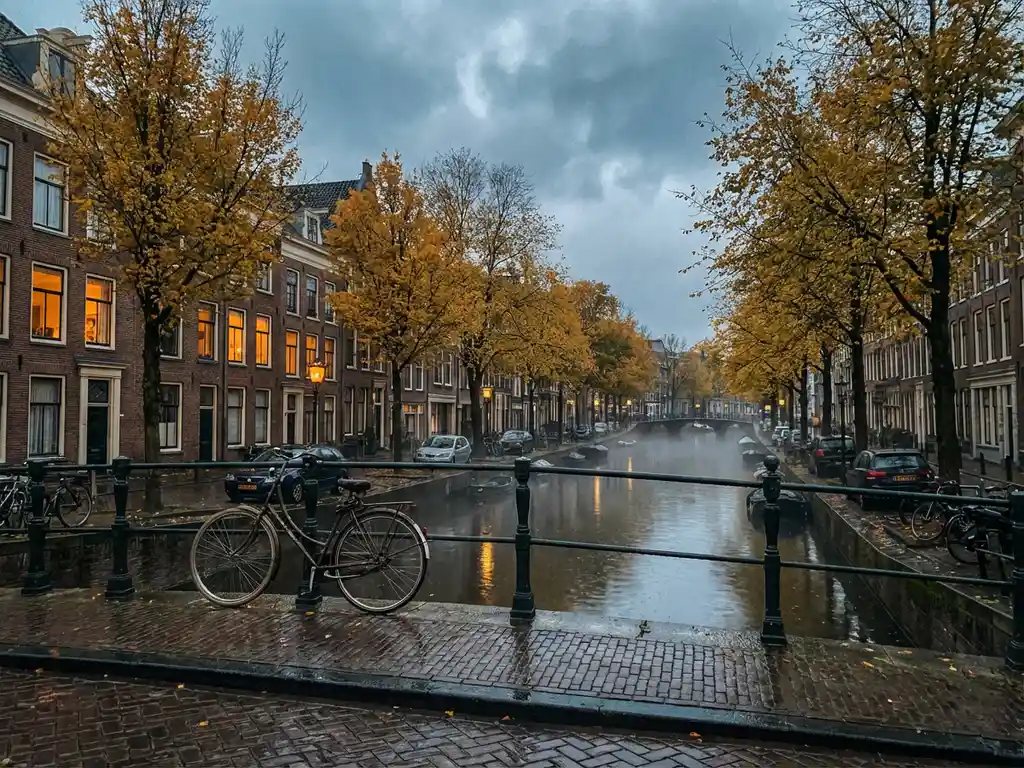
Autumn brings beautiful golden colours, but also the return of wind and rain. Days shorten quickly, and by November the grey skies that define the Dutch winter begin to settle in. Cosy indoor culture becomes more prominent, and the Dutch concept of gezelligheid—that warm, convivial feeling of being together indoors—starts to feel very relevant.
Winter (December to February)
Dutch winters are damp and overcast more than they are snowy or freezing. Frost and occasional snow do occur, but they rarely last long. The lack of sunlight is the biggest adjustment for many expats, particularly those arriving from sunnier climates. That said, the festive season brings warmth through Christmas markets, lights, and plenty of social gatherings.
How much does it rain in the Netherlands?
The Netherlands receives rain throughout the entire year, with no truly dry season. Annual rainfall is spread fairly evenly across all twelve months, meaning you can expect some wet days in any season. Autumn and winter tend to bring the most persistent grey drizzle, while summer rain often arrives in short, sharp showers followed by sunshine.
What makes Dutch rain distinctive is not its intensity but its consistency. It rarely pours heavily for long stretches, but a light drizzle can appear at almost any moment. This is why locals carry a compact umbrella or a good rain jacket as a matter of habit rather than as a precaution. Expats who embrace this attitude quickly find that rain stops feeling like an obstacle and becomes simply part of the rhythm of life here.
What should you wear for Dutch weather?
The golden rule for dressing in the Netherlands is to layer up and always be prepared for rain. A waterproof outer layer, comfortable walking shoes or boots, and breathable mid-layers will serve you well across all four seasons. Avoid packing only warm-weather clothes or only heavy winter gear, because Dutch weather often requires both within the same week.
- A quality rain jacket is the single most useful item you can own. The Dutch cycle everywhere, and a jacket that keeps you dry on a bike is essential.
- Waterproof ankle boots or shoes handle wet pavements and cobblestones far better than trainers or open footwear.
- Lightweight layers allow you to adapt to a day that starts cold, warms up at noon, and turns breezy by evening.
- A compact umbrella fits in any bag and earns its place immediately during your first week.
In summer, lighter clothing is perfectly fine for sunny days, but always keep a layer nearby. The Dutch have a saying that roughly translates to “There is no bad weather, only bad clothing,” and it reflects a genuinely practical national attitude towards the elements.
How does Dutch weather affect everyday life and social culture?
Dutch weather has a surprisingly strong influence on social life, daily routines, and even national identity. The unpredictability of the climate has shaped a culture that values being prepared, staying active regardless of conditions, and finding warmth and connection indoors when the weather turns grey. For expats, understanding this connection helps explain a lot about how Dutch people socialise and organise their days.
Cycling is the clearest example. The Dutch cycle in rain, wind, and cold without a second thought, and this habit creates a particular kind of resilience and practicality that runs through daily life. If you are new to the Netherlands and start cycling to your local market or language class in light rain, you will quickly feel like part of the community rather than a visitor watching from the sidelines.
The grey winter months also explain why indoor social culture is so rich here. Cafes, community spaces, and evening activities become especially important between October and March. This is one of the reasons we designed our Dutch language courses with AI support to take place in the evenings in small, welcoming groups. Meeting fellow internationals in a warm classroom after work, laughing through pronunciation mistakes together, and building friendships over shared experiences is exactly the kind of connection that makes a Dutch winter feel far less isolating.
When the sun does appear, Dutch social life shifts outdoors with remarkable speed. Terraces fill within minutes of a sunny forecast, parks become communal living rooms, and the collective mood lifts noticeably. Learning to read and respond to these seasonal rhythms is a genuine part of integrating into Dutch culture, and it is something that happens naturally as you spend more time here, build friendships, and start to feel at home in your new country. If you would like to schedule a free meeting with our team, we are happy to help you find the right starting point.
Frequently Asked Questions
How long does it typically take to adjust to the Dutch weather as an expat?
Most expats find they adapt to the rain and grey skies within one to two full seasonal cycles, meaning after roughly a year of living in the Netherlands. The biggest mental shift is accepting that waiting for good weather to go outside is not a practical strategy here. Adopting local habits early — cycling regularly, keeping a rain jacket by the door, and building a strong indoor social life — tends to speed up the adjustment significantly.
Is the lack of sunlight in Dutch winters something I should genuinely prepare for?
Yes, and it is worth taking seriously, especially if you are moving from a sunnier climate such as Southern Europe, Latin America, the Middle East, or Southeast Asia. The Netherlands has very short daylight hours in December and January, and overcast skies can mean days with very little natural light at all. Many expats find it helpful to invest in a daylight therapy lamp, keep up regular exercise, and prioritise social plans during the darker months to maintain their mood and energy levels.
What are the best months to visit the Netherlands if I am planning a trip before deciding to move?
May and June are widely considered the best months to visit, as you get the tail end of tulip season, longer daylight hours, mild temperatures, and a good chance of sunny days. September is also an excellent choice — the summer crowds have thinned, the weather remains pleasant, and the city terraces are still active. Visiting in winter is also worthwhile if you want a realistic picture of what daily expat life actually looks like for most of the year.
Do I need to change anything about my home or apartment setup to cope with Dutch weather?
A few practical adjustments make a real difference. A good drying rack or heated towel rail is essential since outdoor drying is unreliable for much of the year. Investing in thick curtains or blackout blinds helps with both the dark winters and the surprisingly bright summer mornings. Many expats also find a dehumidifier useful, as the damp climate can affect older Dutch apartments, and a doormat and dedicated spot for wet coats and shoes near the entrance quickly becomes a household essential.
Is it worth learning to cycle in the Netherlands even if I have not cycled regularly as an adult?
Absolutely, and most expats who commit to cycling say it is one of the best decisions they made after moving here. The Netherlands has the best cycling infrastructure in the world, making it genuinely safe and comfortable for all levels of experience. Starting in dry weather and gradually building confidence in light rain is a perfectly reasonable approach, and within a few weeks most people find it feels completely natural — even in wind and drizzle.
Are there any Dutch weather apps or forecasting tools that locals actually rely on?
Buienradar is the go-to app for anyone living in the Netherlands and is used by locals and expats alike. It provides a highly accurate rain radar that shows exactly when and where rain will fall in the next two hours, down to your specific location. This makes it incredibly useful for timing a bike ride, planning a terrace lunch, or deciding whether to grab your umbrella before leaving the house. It is one of the first apps most expats download and rarely delete.
How do I avoid the common mistake of over-packing or under-packing when moving to the Netherlands?
The most common packing mistake is bringing a wardrobe built for one extreme — either all lightweight summer clothes or heavy winter gear — without accounting for the in-between layers that Dutch weather demands most of the year. Focus on versatile, waterproof, and layerable pieces rather than volume. A small number of high-quality items, particularly a reliable rain jacket, a pair of waterproof boots, and a few adaptable mid-layers, will outperform a large suitcase of weather-specific clothing that only gets used a few weeks per year.
Related Articles
- What is King's Day and how do the Dutch celebrate it?
- How long does it take to get Netherlands citizenship by marriage?
- Why do small group Dutch classes help you speak faster than studying alone?
- How do you choose the right Dutch language course?
- How do you maintain motivation during Dutch language courses?