How do you open a bank account in the Netherlands as an expat?
Moving to the Netherlands is an exciting step, but settling in comes with a long to-do list. Near the top of that list, right alongside finding a place to live and registering with your municipality, is opening a Dutch bank account. Without one, everyday life in the Netherlands becomes surprisingly complicated. Paying rent, receiving your salary, splitting bills with housemates, or even buying a train ticket with iDEAL all require a local account.
Whether you have just arrived or are still planning your move, understanding how the Dutch banking system works will save you time and frustration. This guide answers the most common questions expats have about opening a bank account in the Netherlands, so you can get settled faster and focus on actually enjoying your new life here.
Why do you need a Dutch bank account as an expat?
A Dutch bank account is essential for expat life in the Netherlands because the country relies heavily on iDEAL, a local online payment system that only works with Dutch bank accounts. Without one, you cannot pay rent through most landlord portals, receive a Dutch salary, pay utility bills, or shop at many Dutch webshops.
Beyond the practical limitations, not having a local account signals to landlords, employers, and service providers that you are not yet fully settled. Many rental contracts explicitly require rent payments via Dutch bank transfer. Supermarkets, parking meters, and government services often accept only iDEAL or Dutch debit cards. Living in the Netherlands as an expat without a local account means constantly working around systems that were simply not designed for foreign cards.
Opening an account early also helps you build a financial footprint in the Netherlands, which can matter later when applying for a mortgage, a phone contract, or other services that check your local financial history.
What documents do you need to open a bank account in the Netherlands?
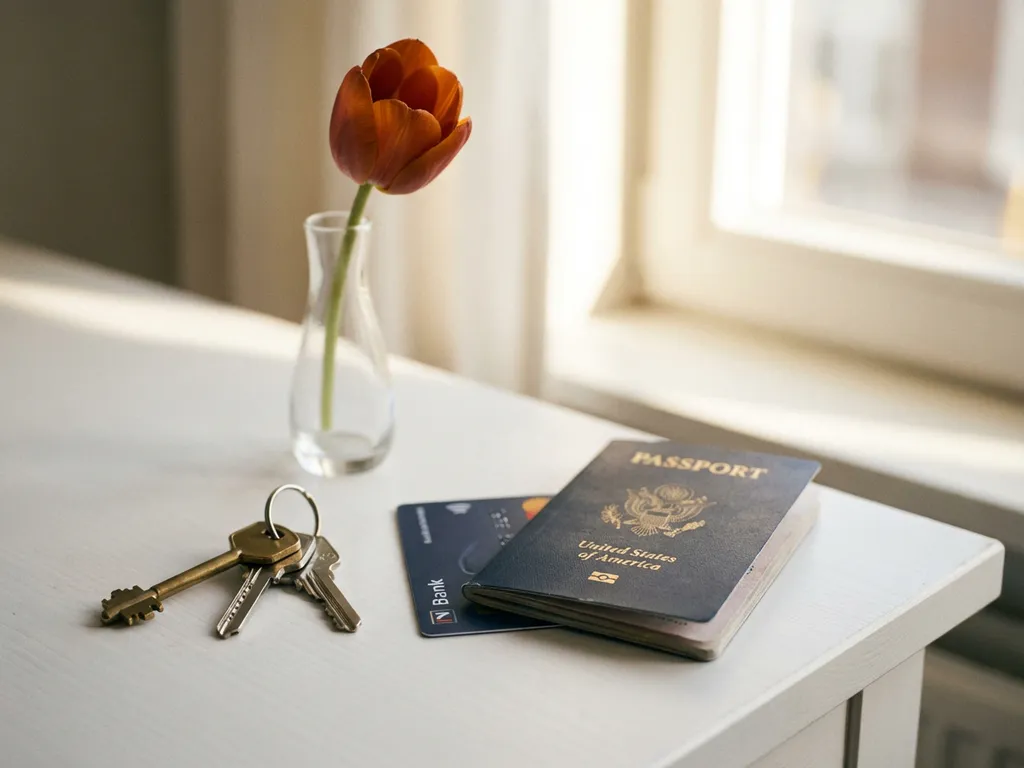
To open a bank account in the Netherlands, you typically need a valid passport or EU identity card, your BSN (Burgerservicenummer), and proof of your Dutch address. Some banks also ask for a residence permit if you are a non-EU citizen.
Here is what most Dutch banks require:
- A valid passport or national ID card
- Your BSN (Dutch citizen service number)
- Proof of address in the Netherlands (such as a rental contract or municipality registration)
- A residence permit for non-EU nationals
The BSN is the most important requirement and the one that causes the most delays for newcomers. You receive your BSN when you register at your local municipality (gemeente). If you are staying in the Netherlands for fewer than four months, you can register as a non-resident at certain municipalities and still receive a BSN, which may allow you to open an account sooner.
Which Dutch banks are best for expats and internationals?
The most expat-friendly Dutch banks are ING, ABN AMRO, and Rabobank, as all three offer English-language support and digital onboarding. bunq and Revolut with a Dutch IBAN are also popular among internationals for their flexibility and English-first mobile apps.
ING is widely considered the most accessible for expats because its app and customer service are available in English, and the account opening process can be completed largely online. ABN AMRO has a dedicated expat desk and offers English-language documentation, making it a strong choice if you prefer more traditional banking support. Rabobank is well established but tends to be slightly less flexible for newcomers without a full Dutch administrative setup.
For those who want a quick digital solution, bunq allows you to open an account entirely in English with a Dutch IBAN, which means iDEAL payments work immediately. Keep in mind that bunq charges a monthly fee, so it is worth weighing convenience against cost. Many expats start with bunq or Revolut for immediate access and then open a traditional Dutch bank account once their BSN and registration are in order.
How do you open a Dutch bank account without a BSN?
Opening a Dutch bank account without a BSN is difficult but possible through a few specific routes. bunq is the most accessible option, as it allows account opening without a BSN in some cases. Some municipalities also offer emergency BSN registration for newcomers who need one urgently.
If you are in the process of settling in the Netherlands and your BSN application is pending, the fastest workaround is to open a bunq account using your passport and Dutch address. This gives you a functional Dutch IBAN immediately. However, traditional banks like ING and ABN AMRO will almost always require a BSN before they approve an account, so pursuing your BSN registration as quickly as possible remains the most reliable path.
Non-EU nationals who have just arrived should prioritize registering at their gemeente within the first week of arrival. Once registered, the BSN is usually issued on the same day or within a few working days, which then unlocks the full range of banking options.
How long does it take to open a bank account in the Netherlands?
Opening a Dutch bank account typically takes between one day and two weeks, depending on the bank and whether you have all your documents ready. Digital banks like bunq can activate an account within hours, while traditional banks may take five to ten working days to process your application and send your debit card.
The timeline breaks down roughly as follows: with a digital bank and all documents in order, you can have a working IBAN within 24 hours. With a traditional bank, the online application usually takes 15 to 30 minutes, but approval and card delivery add another week or so. If any documents are missing or need verification, the process can take longer.
The biggest delay for most expats is not the bank itself but waiting for the BSN. Prioritising your municipality registration on arrival is the single most effective way to speed up the entire process of getting financially settled in the Netherlands.
What mistakes should expats avoid when opening a Dutch bank account?
The most common mistakes expats make when opening a Dutch bank account include waiting too long to register at the gemeente, assuming a foreign bank account is sufficient for daily life, and choosing a bank without checking English-language support options.
Arriving in the Netherlands and assuming you can manage with a foreign card for the first few months is a mistake many expats regret. iDEAL is so deeply embedded in Dutch daily life that even paying for a parking permit or a local sports club membership often requires it. Starting the registration and banking process in your first week avoids a frustrating backlog of tasks piling up.
Another common error is not reading the fee structure carefully. Some accounts charge monthly fees, transaction fees, or fees for international transfers. If your employer pays your salary in euros from abroad, check whether your chosen bank charges for incoming international transfers. Finally, do not overlook the importance of choosing a bank with solid English support, especially in the early months when navigating Dutch bureaucracy is already demanding enough.
How Dutch on Track helps you feel at home in the Netherlands
Getting your bank account sorted is just one piece of the puzzle when it comes to expat life in the Netherlands. Truly feeling settled means being able to communicate, connect, and belong. That is exactly where we come in.
At Dutch on Track, we offer Dutch language courses specifically designed for expats, internationals, and their partners in Eindhoven and Tilburg. Our courses are more than just language lessons. They are a genuinely fun and social experience where you meet other internationals who are navigating the same journey as you. Making friends, laughing at shared cultural confusion, and building confidence in Dutch all happen at the same time.
- Small groups of 8 to 10 participants, so you actually get to speak and connect
- A communicative approach where you start speaking Dutch from day one
- Courses from absolute beginner (A0) to intermediate (B1), including our 43-week “Dutch in 1 Year” programme
- Evening classes after work hours, at central locations in Eindhoven and Tilburg
Learning Dutch is one of the most rewarding investments you can make in your life in the Netherlands. It opens doors socially, professionally, and culturally. Whether you want to chat with your neighbours, understand what is happening at work, or simply feel less like an outsider, speaking the language makes all the difference. If you are ready to take that step, schedule a free meeting with Dutch on Track and find out which course is the right fit for you. Or explore our Beginner Dutch Course if you are starting from scratch.
Frequently Asked Questions
Can I use my existing foreign bank account temporarily while waiting for a Dutch one?
You can use a foreign bank account for some purchases, but it will not cover many essential Dutch payment situations. iDEAL, which is required for rent payments, utility bills, government services, and many Dutch webshops, only works with Dutch bank accounts. A practical workaround is to open a bunq account with a Dutch IBAN as quickly as possible to cover iDEAL payments while your traditional bank account application is being processed.
Do I need a Dutch bank account to receive my salary from a Dutch employer?
Most Dutch employers strongly prefer or outright require a Dutch IBAN to process salary payments, as their payroll systems are set up for local bank transfers. While some employers may temporarily accommodate a foreign account, this is not guaranteed and can cause delays in receiving your pay. Setting up a Dutch bank account before your first payday should be a top priority to avoid any payroll complications.
What is a BSN and how quickly can I get one after arriving in the Netherlands?
A BSN (Burgerservicenummer) is your Dutch citizen service number, used for almost all official interactions with government agencies, employers, and banks. You receive it by registering at your local gemeente (municipality), and in most cases the BSN is issued on the same day as your registration appointment. To speed things up, book your gemeente appointment as early as possible — ideally within your first week of arrival — and bring your passport, rental contract or proof of address, and residence permit if applicable.
Is bunq a reliable long-term banking option, or should I always aim to switch to a traditional Dutch bank?
bunq is a fully licensed Dutch bank regulated by De Nederlandsche Bank, so it is a legitimate and reliable option rather than just a temporary fix. Whether it suits you long-term depends on your needs: bunq's monthly fee can be a drawback if you want a no-cost account, but its English-first app, instant setup, and Dutch IBAN make it genuinely competitive. Many expats keep both a bunq account for convenience and a traditional bank account for services like mortgages or savings products that traditional banks handle better.
Will opening a Dutch bank account affect my tax situation in my home country?
Opening a foreign bank account can have reporting obligations depending on your home country's tax laws — for example, US citizens are required to report foreign accounts above certain thresholds under FBAR and FATCA rules. It is worth checking with a tax advisor familiar with both Dutch and your home country's regulations before or shortly after opening your account. The Netherlands itself does not impose special taxes simply for having a local bank account, but your worldwide income and assets may be relevant to Dutch tax authorities once you are considered a tax resident.
Can I open a Dutch bank account before I move to the Netherlands?
Opening a Dutch bank account before you physically arrive is generally not possible with traditional banks, as they require proof of a Dutch address and a BSN, both of which you can only obtain after registering in the Netherlands. However, you can prepare by gathering your documents in advance and booking your gemeente registration appointment for your first week of arrival. Some digital banks like bunq may offer more flexibility, but you will still typically need a Dutch address to complete the process.
Are there any Dutch banks that offer accounts specifically designed for expats or internationals?
ABN AMRO has a dedicated expat desk and provides English-language onboarding support, making it one of the most expat-conscious traditional banks in the Netherlands. ING also caters well to internationals with its English-language app and customer service. For a fully English-first digital experience, bunq was built with an international audience in mind and is a popular choice among the expat community across the Netherlands.