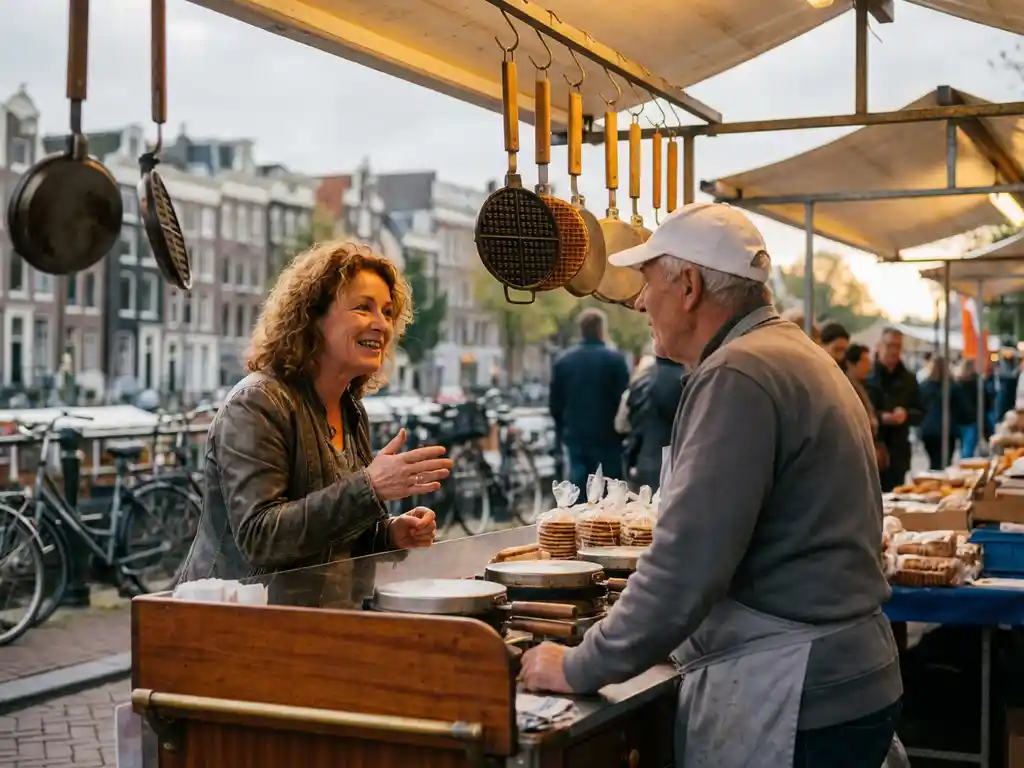
What can you do in the Netherlands that you cannot do without Dutch?
The Netherlands is a welcoming country for internationals, but there is a quiet reality that many expats discover only after settling in: life here runs on Dutch. Not just in government offices or on road signs, but in the supermarket, at the school gate, in the break room, and at the neighbourhood barbecue. If you are exploring an online Dutch learning course or wondering whether a Dutch course online is worth your time, the honest answer is that Dutch unlocks a version of life in the Netherlands that English simply cannot reach.
This article walks through the everyday situations, social moments, and professional contexts where Dutch makes a real difference, and why learning the language is one of the most rewarding investments you can make as an expat or international living here.
What everyday situations in the Netherlands require Dutch?
Many everyday situations in the Netherlands require at least basic Dutch, including dealing with local authorities, reading official letters, communicating with healthcare providers, understanding your lease agreement, and navigating neighbourhood services. While many Dutch people speak English, official systems and local services often default to Dutch without warning.
Think about the letter from the gemeente that arrives with a deadline you do not understand, or the GP receptionist who switches to Dutch the moment the waiting room fills up. Even practical tasks like setting up utilities, registering your children at a local school, or understanding your rights as a tenant involve Dutch-language documents and conversations. These are not rare edge cases; they are the fabric of daily life.
Beyond paperwork, Dutch matters in the small moments too. Ordering at a local bakery, chatting with the cashier, asking for directions, or understanding the announcements at the train station all become smoother and more enjoyable when you have some Dutch behind you. The language is not a barrier you cross once; it is a door you open again and again.
Why is Dutch so hard to get by without in social settings?
Dutch is hard to avoid in social settings because the Dutch tend to switch back to their native language the moment a group conversation gets comfortable. Even when individuals are perfectly capable of speaking English, group dynamics, humour, and casual conversation naturally drift into Dutch, leaving non-speakers on the outside.
This is not rudeness. It is simply what happens when people relax. Dutch directness and dry humour are deeply embedded in the language itself, and a lot gets lost in translation. Jokes land differently. Irony disappears. The warmth of a casual exchange between neighbours or colleagues is often invisible to someone who cannot follow along.
Social exclusion in the Netherlands is rarely intentional, but it is real. Many expats describe feeling like they are watching life through a window rather than participating in it. Learning Dutch is not just about communication; it is about being in the room, not just physically present but genuinely included. You can get in touch with our team to find out how we help expats make that shift.
What social opportunities open up when you speak Dutch?
Speaking Dutch opens up friendships with local Dutch people, access to community clubs and sports associations, genuine participation in neighbourhood life, and the ability to understand cultural references, news, and humour that shape how Dutch people see the world. These are the connections that turn a temporary stay into a real home.
Dutch society has a rich associative culture. There are sports clubs, neighbourhood committees, volunteer organisations, music groups, and hobby associations that operate entirely in Dutch. Most of these communities welcome internationals warmly, but the entry point is the language. Once you can hold a basic conversation, doors open that most expats never even knew existed.
There is also something deeply satisfying about the social confidence that comes with language progress. Making a Dutch friend laugh at your joke, following a conversation at a birthday party, or chatting with a neighbour without reaching for your phone to translate—these moments build a sense of belonging that no amount of English fluency can replicate in the Netherlands.
Learning Dutch in a group setting, like the small classes we offer, is also one of the most enjoyable ways to meet people in a new city. You share the experience of learning, laughing at mistakes, and growing together with fellow internationals who are on the same journey.
How does speaking Dutch change your experience at work in the Netherlands?
Speaking Dutch at work in the Netherlands changes your professional experience by improving your relationships with Dutch colleagues, helping you understand informal communication and office culture, and signalling genuine commitment to your new environment. Even in international companies where English is the working language, Dutch fluency changes how you are perceived and included.
The informal moments at work—the coffee machine conversation, the Friday afternoon drinks, the side comment during a meeting—are often in Dutch. These are the moments where trust is built and professional relationships deepen. If you cannot participate, you miss a significant part of the working culture.
For those working in roles that involve Dutch clients, suppliers, or partners, the professional case for learning Dutch is even stronger. Understanding what is being said in a meeting, even if you respond in English, changes the dynamic entirely. It shows respect, builds credibility, and gives you insight that non-Dutch speakers simply do not have access to. Tools like AI-powered Dutch learning support can also help you build this professional vocabulary at your own pace.
Can you really integrate into Dutch society without learning the language?
You can live in the Netherlands without learning Dutch, but genuine integration into Dutch society is very difficult without the language. Integration means more than logistics. It means understanding cultural values, participating in community life, and forming real relationships with Dutch people—all of which depend heavily on language.
Many long-term expats who never learned Dutch describe a persistent sense of distance from Dutch life, even after years in the country. They have routines, they have international friends, but they remain in a parallel social world that sits alongside Dutch society rather than within it.
Cultural integration goes deeper than vocabulary. When you learn Dutch, you also absorb the directness, the egalitarianism, the particular Dutch sense of humour, and the values that shape how people interact. A Dutch language course is not just a language course; it is a cultural education that changes how you understand the people around you. Learn more about our teaching philosophy and how we approach this kind of integrated learning.
How can expats start learning Dutch for real life in the Netherlands?
Expats can start learning Dutch for real life in the Netherlands by choosing a course that focuses on practical, spoken communication from day one rather than grammar rules and textbook exercises. The most effective approach combines structured learning with real conversation practice in contexts that mirror daily life.
A few principles that make Dutch learning stick for expats:
- Prioritise speaking over perfection. Making mistakes is how you learn, and the Dutch genuinely appreciate the effort.
- Connect learning to your actual life. Practise the vocabulary and conversations you need in your neighbourhood, at work, and in social situations.
- Learn with others. Group learning builds confidence, creates accountability, and makes the process genuinely enjoyable.
- Be consistent. Short, regular practice beats occasional intensive sessions every time.
The best Dutch course online options combine digital flexibility with real human interaction, so you can prepare at your own pace and then practise in a live setting with other learners. This blended approach is far more effective than either pure self-study or traditional classroom learning alone. Book a free introductory meeting with us to find out which level and format suits you best.
How Dutch on Track helps you learn Dutch for real life
Dutch on Track is designed specifically for expats, highly educated internationals, and their partners who want to learn Dutch that actually works in daily life. Our approach is practical, social, and built around the real situations you encounter in the Netherlands every day. Visit the Dutch on Track homepage to explore everything we offer.
Here is what makes our programme different:
- A blended learning method that combines e-learning preparation, interactive group classes, and consolidation activities so every lesson builds on the last.
- Small groups of 8 to 10 participants, which means you get personal attention and genuine practice time, not just passive listening.
- Classes after work hours (17:45 to 19:45) at central locations in Eindhoven and Tilburg, making it easy to fit learning into a busy professional life.
- A communicative approach where you speak Dutch from the very first lesson, building confidence and reducing the fear of making mistakes.
We offer courses from complete beginner (A0) to intermediate (B1) level, including our flagship Dutch in 1 Year programme that takes you from zero to B1 in 43 weeks. Beyond the language itself, our classes are a genuinely fun way to meet other internationals, share the experience of adapting to Dutch life, and build friendships that go well beyond the classroom.
If you are ready to stop watching Dutch life from the outside and start living it from the inside, Dutch on Track is where that journey begins. Explore our Dutch language courses and find the right level for you.
Frequently Asked Questions
How long does it realistically take to become conversational in Dutch as an English speaker?
Most English-speaking expats can reach a conversational level (around A2–B1) within 6 to 12 months with consistent, structured practice. Dutch shares enough vocabulary and grammar patterns with English to make progress feel relatively quick compared to languages like Mandarin or Arabic. The key is regular exposure and speaking practice — learners who combine a structured course with daily real-life use tend to hit conversational milestones significantly faster than those relying on self-study alone.
The Dutch always switch to English when I try to speak Dutch — how do I get them to stick with Dutch?
This is one of the most common frustrations expats face, and it happens because Dutch people are genuinely trying to be helpful, not dismissive. The most effective strategy is to politely but firmly say something like 'Ik wil graag in het Nederlands oefenen' (I'd like to practise in Dutch) — most Dutch people will immediately respect that. Building relationships with Dutch speakers over time also helps, as friends and colleagues are far more likely to be patient conversation partners than strangers or service staff.
Is it worth learning Dutch if I'm only planning to stay in the Netherlands for 2–3 years?
Absolutely — even a shorter stay is dramatically richer when you can engage with local life in Dutch. You'll build deeper friendships, navigate daily life with far less friction, and leave with a genuinely transferable skill, since Dutch also gives you a strong head start with German and Afrikaans. Many expats who initially planned a short stay also find that their connection to Dutch life deepens precisely because they invested in the language, which often influences how long they ultimately choose to stay.
What's the biggest mistake expats make when trying to learn Dutch?
The most common mistake is waiting until they feel 'ready' before speaking, which leads to months of passive study with very little real-world progress. Dutch learning only accelerates when you start using the language in actual conversations, mistakes and all — the Dutch are famously forgiving and encouraging toward anyone making a genuine effort. A close second mistake is relying entirely on apps or self-study without any live speaking practice, which builds vocabulary in isolation but doesn't prepare you for the unpredictability of real conversation.
Do I need to learn Dutch if I work in an international company where English is the official language?
Even in fully English-speaking workplaces, Dutch fluency has a measurable impact on your professional experience and career progression in the Netherlands. The informal conversations, social dynamics, and unspoken cultural cues that shape workplace relationships almost always happen in Dutch, and being excluded from those moments creates a real ceiling on how integrated and trusted you can become. Dutch also signals long-term commitment to your employer and Dutch colleagues, which matters in a culture that values authenticity and genuine effort.
How do I keep practising Dutch outside of class so I don't forget what I've learned?
The most effective out-of-class practice is weaving Dutch into habits you already have — switching your phone and apps to Dutch, listening to Dutch podcasts or radio during your commute, and making a point of using Dutch in at least one daily interaction like ordering coffee or chatting with a neighbour. Watching Dutch TV with Dutch subtitles (not English) is also surprisingly effective for training your ear to natural speech patterns. The goal is to make Dutch a normal part of your daily environment, not a separate activity you have to schedule.
My partner isn't learning Dutch — will that slow down my own progress?
It can, particularly if your home environment defaults entirely to English, since home is where many learners get their most consistent daily practice. One practical approach is to agree on small Dutch-only moments at home — a meal, a daily check-in, or even just greeting each other in Dutch — which keeps the language active without requiring your partner to fully commit. Ideally, encouraging your partner to join a beginner course alongside you not only supports your own progress but also makes the experience of adapting to Dutch life a shared journey rather than a solo one.