
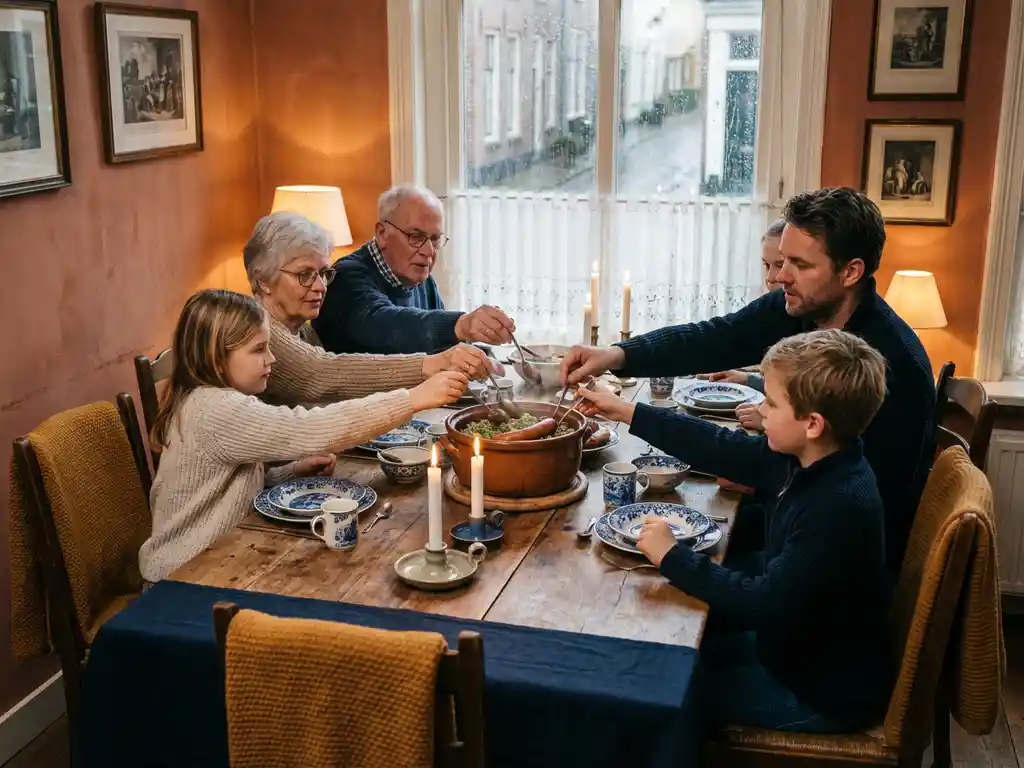
What do the Dutch say before eating?
One of the small but meaningful moments of living in the Netherlands as an expat is sitting down to a meal with Dutch colleagues, neighbours, or new friends and realising everyone is waiting for something. There is a phrase, a ritual, a small social cue you may not have learned yet. Understanding these moments is part of what makes settling in the Netherlands feel less like navigating a foreign country and more like genuinely belonging.
Dutch mealtime culture is warmer and more communal than its no-nonsense reputation might suggest. Whether you are sharing lunch at work, joining a Dutch family for dinner, or simply eating with fellow expats, knowing what to say—and when to say it—goes a long way toward feeling at home.
What does ‘eet smakelijk’ actually mean in Dutch?
Eet smakelijk is the standard Dutch phrase said before, or at the start of, a meal. It translates directly to “eat tastily” or, in more natural English, “enjoy your meal.” It is the Dutch equivalent of the French bon appétit and is used across the country in homes, restaurants, and workplaces alike.
The phrase comes from the Dutch word smakelijk, meaning tasty or flavourful, combined with eet, the imperative form of “to eat.” Together, the phrase is essentially a warm wish that the food will taste good. It is simple, sincere, and deeply ingrained in everyday Dutch social life.
You will typically hear it said by the host, the person who cooked, or simply whoever speaks first once everyone is seated and the food is served. Responding with eet smakelijk back to the group is perfectly natural and always appreciated. For expats settling in the Netherlands, picking up this small phrase is one of the easiest and most effective ways to signal that you are making an effort to connect with Dutch culture.
Are there other Dutch phrases used around mealtimes?
Yes, Dutch mealtime conversation includes several common phrases beyond eet smakelijk. These expressions appear regularly in homes and social settings, and recognising them helps you participate naturally in shared meals rather than smiling politely while missing what is being said.
Here are a few you are likely to encounter:
- Smakelijk eten is a slight variation of eet smakelijk and means the same thing. Both are widely used and interchangeable.
- Lekker! means “delicious” or “nice” and is one of the most versatile words in the Dutch language. Saying it after a bite is a genuine compliment.
- Proost! is the Dutch toast, equivalent to “cheers,” used when raising a glass before drinking.
- Mag ik even doorschuiven? means “could you pass that along?” and is useful when dishes are shared at the table.
Dutch mealtimes are often conversational and relaxed, particularly in home settings. The food itself is usually straightforward, but the social atmosphere around the table matters a great deal. Learning even a handful of these phrases transforms you from a guest who is tolerated to one who is genuinely welcomed.
How do Dutch table manners differ from other cultures?
Dutch table manners are generally relaxed and unpretentious compared to many other European cultures, but there are a few specific norms that can catch expats off guard. The Dutch value directness, practicality, and equality at the table, which shapes how meals are conducted in ways that feel different from more formal dining traditions.
Punctuality and waiting
Arriving on time for a dinner invitation is considered respectful and is genuinely expected. Unlike in some southern European or Latin American cultures, where arriving late is socially acceptable, Dutch hosts typically serve food at the stated time. Waiting for everyone to be seated before eating is standard, and eet smakelijk is often the signal that it is time to begin.
Going Dutch
The phrase “going Dutch” exists for a reason. Splitting bills evenly is entirely normal in the Netherlands, even among close friends and on dates. This is not considered rude or cheap; it is simply the default. For expats coming from cultures where one person traditionally pays, or where covering someone else’s meal is a gesture of generosity, this can feel abrupt at first. Over time, most people come to appreciate the straightforwardness of it.
Directness about food
If a Dutch person does not like something on the menu, they will say so. If the food is excellent, they will say that too. Complimenting a host’s cooking is always welcome, and lekker! is the easiest word to reach for. The Dutch do not tend to offer hollow compliments, so when they say something tastes good, they mean it. This directness is one of the cultural adjustments that takes time when you are new to expat life in the Netherlands, but it quickly starts to feel refreshingly honest.
How Dutch on Track helps with living in the Netherlands as an expat
Understanding phrases like eet smakelijk is just the beginning. The deeper challenge of expat life in the Netherlands is feeling genuinely connected: being able to joke with a colleague, follow a conversation at a dinner party, or simply walk into a local shop without anxiety. That confidence comes from learning Dutch in a way that is practical, social, and built around real life.
At Dutch on Track, we design our courses specifically for expats, international professionals, and their partners. Our approach is communicative from day one, which means you speak from the very first lesson. You practise with fellow internationals in small groups of 8 to 10 people, which makes the learning process both effective and genuinely enjoyable. Many of our students find that the friendships they build in class become some of their first real social connections in the Netherlands.
Here is what makes our approach different:
- Small group classes of 8 to 10 students create a relaxed, social atmosphere where making mistakes feels safe and even fun.
- Our blended learning method combines e-learning preparation, interactive classroom sessions, and consolidation exercises so the language sticks.
- Lessons are held after work hours and are located steps from Eindhoven and Tilburg Central stations, making them easy to fit into a busy schedule.
- All instructors are certified specialists in teaching Dutch as a Second Language, so you are always in expert hands.
Whether you are just arriving or have been here for a while and want to finally feel at home, Dutch on Track offers a clear path forward. Start with our Beginner Dutch Course if you are new to the language, or schedule a free meeting with us to find the right level and programme for where you are right now.
Frequently Asked Questions
How do I pronounce 'eet smakelijk' correctly so I don't feel embarrassed saying it?
Pronounce it roughly as 'ayt smah-kuh-luk' — the 'ee' in 'eet' sounds like the English word 'ate,' and 'smakelijk' has a soft, unstressed ending. The good news is that Dutch people genuinely appreciate any effort to use their language, and a slightly imperfect pronunciation will almost always be met with encouragement rather than correction. If you want to build confidence before your next dinner, practising a few common Dutch phrases out loud — ideally in a structured class setting — makes a noticeable difference very quickly.
What should I say if I don't speak any Dutch yet — is it awkward to just smile and nod at mealtimes?
A warm smile goes a long way, but having even two or three key phrases ready — like 'eet smakelijk,' 'lekker!' and 'proost!' — can transform you from a silent observer into an active participant. Dutch people tend to switch to English readily and without judgment, so there is no pressure to hold a full conversation in Dutch from day one. That said, making a small, genuine effort in Dutch is almost always noticed and appreciated, and it signals that you are invested in connecting rather than just passing through.
How quickly can a beginner expat expect to feel comfortable in everyday Dutch social situations like shared meals?
Most expats find that after just a few weeks of structured, communicative Dutch lessons, they can handle common social phrases and small talk with growing confidence. The key is learning Dutch in context — practising real conversations rather than memorising grammar rules in isolation. At Dutch on Track, many students report feeling noticeably more at ease in everyday social settings within the first month of their beginner course, simply because they are speaking from lesson one.
Are there any common mistakes expats make at Dutch dinner tables that I should try to avoid?
One of the most common missteps is waiting for a formal, elaborate hosting ritual that simply does not come — Dutch meals are typically relaxed and unpretentious, so don't read a low-key atmosphere as unwelcoming. Another is over-complimenting the food in an effusive way that can feel insincere to Dutch hosts, who tend to value straightforward honesty over social pleasantries. Finally, assuming that whoever invited you will automatically pay the bill can lead to an awkward moment — going Dutch is the default, so it is always safe to be prepared to split.
Does learning Dutch really make a practical difference to expat social life, or is English enough in the Netherlands?
English is widely spoken in the Netherlands, and you can absolutely get by without Dutch in many professional and urban settings — but 'getting by' and 'feeling at home' are two very different experiences. Speaking even basic Dutch opens up casual conversations, neighbourhood relationships, and social moments that simply do not happen in English, and it signals a level of commitment to your new home that Dutch people genuinely respond to. Many expats describe learning Dutch as the single biggest turning point in moving from feeling like a visitor to feeling like they actually belong.
What if I am a complete beginner — is it too late to start learning Dutch after already living in the Netherlands for a year or more?
It is absolutely not too late, and in fact many expats find that starting Dutch lessons after some time in the country is actually an advantage — you already have real-life context for the language and a clearer sense of which situations you want to handle more confidently. Dutch on Track welcomes students at all stages of their expat journey, from brand-new arrivals to people who have been here for years and are finally ready to make the leap. A free introductory meeting is a great way to find the right starting level and programme without any pressure.
Are there cultural differences in how Dutch people behave at workplace lunches versus dinner at someone's home?
Yes — workplace lunches in the Netherlands tend to be brief, practical affairs, often eaten at a desk or in a canteen, and 'eet smakelijk' is still commonly said but the overall atmosphere is more casual and time-conscious. Dinner at a Dutch home, on the other hand, is a more intentional social event where punctuality, table conversation, and staying for a reasonable amount of time after the meal all carry social weight. Understanding this distinction helps you calibrate your behaviour appropriately and avoid either overstaying your welcome or leaving so promptly that it seems rude.
Related Articles
- How does learning Dutch change your social life in the Netherlands?
- Can you switch between different Dutch language course levels?
- How do you maintain motivation during Dutch language courses?
- What are the do’s and don’ts in the Netherlands?
- Why is speaking Dutch from day one the fastest way to learn it?