What do Dutch people eat for dinner?
Food is one of the fastest ways to understand a new culture, and for expats settling in the Netherlands, Dutch dinner habits can come as quite a surprise. Whether you have been invited to a Dutch home for the first time or are simply trying to navigate daily life in your new country, knowing what to expect at the dinner table will help you feel more at ease. Living in the Netherlands as an expat means encountering a food culture that is practical, hearty, and deeply rooted in tradition, and understanding it is a genuine step toward feeling at home.
From early mealtimes to no-frills classics, Dutch dinner culture reflects broader values of simplicity, efficiency, and togetherness. This guide answers the most common questions expats ask about what Dutch people eat for dinner, so you can approach your next Dutch dining experience with confidence and curiosity.
What is a typical Dutch dinner like?
A typical Dutch dinner is a straightforward, filling meal served at home, usually consisting of a protein, a starchy carbohydrate, and a vegetable. The Dutch refer to this classic plate as aardappelen, groente, vlees, meaning potatoes, vegetables, and meat. Meals are generally unpretentious and portion-focused rather than elaborate or multi-course.
Unlike the long, social dinner traditions found in southern Europe, Dutch dinners tend to be efficient. The table is set simply, the meal is eaten together as a family or household, and then the evening moves on. That said, there is genuine warmth in a Dutch home dinner. The focus is on nourishment and connection rather than culinary showmanship, which can feel refreshingly honest once you adjust to it.
Soup is sometimes served as a starter, particularly in winter, and dessert is common but modest, often a small portion of yogurt, vla (a Dutch custard), or fruit. Wine or beer may accompany the meal, though water is equally common on a weeknight.
What are the most popular Dutch dinner dishes?
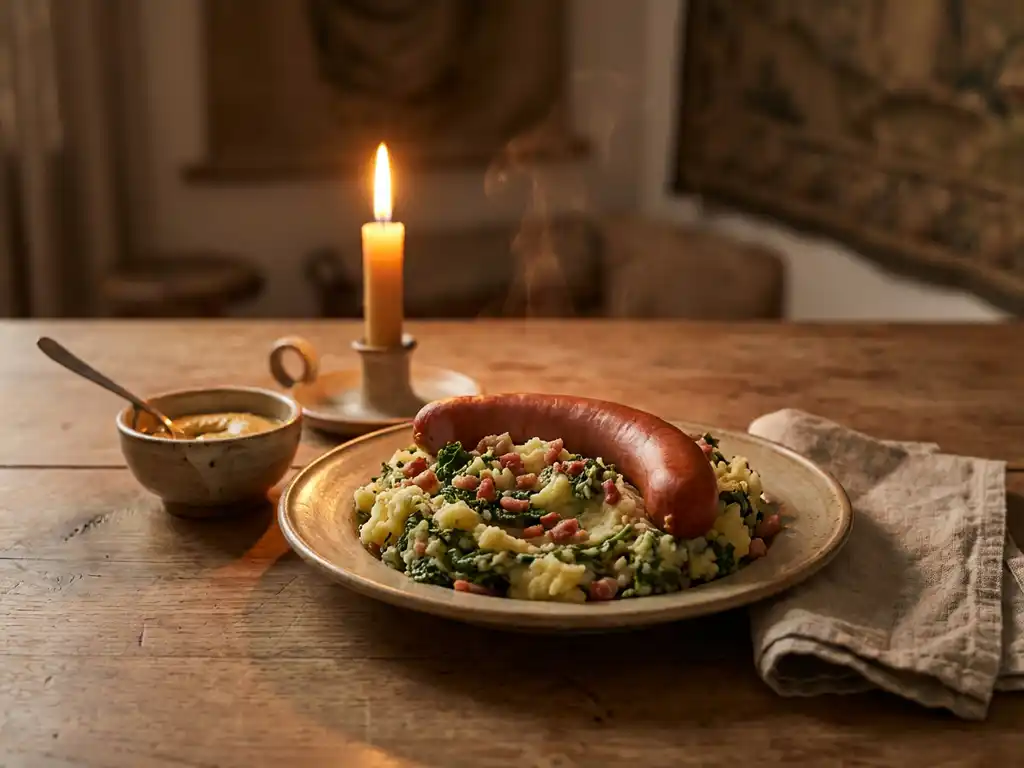
The most popular Dutch dinner dishes include stamppot, erwtensoep, hutspot, and bitterballen as a snack alongside drinks. Stamppot, a mashed combination of potatoes and vegetables such as kale or sauerkraut, is arguably the most iconic Dutch comfort food and is eaten widely during autumn and winter.
Other beloved dinner staples include:
- Hutspot: a mash of potatoes, carrots, and onions, often served with braised beef
- Pannenkoeken: Dutch pancakes, which are thinner than American pancakes and commonly eaten for dinner rather than breakfast
- Hachee: a slow-cooked beef and onion stew served over rice or with potatoes
- Boerenkool stamppot: kale mashed with potatoes and topped with a smoked sausage called rookworst
In more urban areas and among younger generations, Dutch dinner tables have become considerably more international. Pasta, stir-fries, and curries are all common weeknight meals. However, the traditional dishes remain deeply embedded in Dutch culture and are the ones you are most likely to encounter when invited to a Dutch home.
How do Dutch eating habits differ from other cultures?
Dutch eating habits differ from many other cultures primarily in their emphasis on simplicity, early mealtimes, and a no-fuss approach to food. While food is important in the Netherlands, it rarely carries the same ceremonial or social weight that it does in, for example, Italian, Spanish, or Middle Eastern cultures, where meals are extended social events built around multiple courses and shared plates.
One of the most striking differences for expats settling in the Netherlands is the Dutch attitude toward lunch. A typical Dutch lunch is a cold sandwich, often eaten quickly at a desk or at the kitchen table. This means dinner carries slightly more weight as the main hot meal of the day, but even then, it is rarely an elaborate affair.
Portion sizes are generally moderate, and food waste is taken seriously. The Dutch also have a strong culture of gezelligheid, a word that roughly translates to coziness or togetherness, and while this does not always translate into long dinner parties, it does mean that sharing a meal carries genuine social meaning. Being invited to eat with a Dutch family or colleague is a real sign of warmth and inclusion.
Why do Dutch people eat dinner so early?
Dutch people eat dinner early, typically between 17:30 and 18:30, because of a cultural tradition rooted in structured working hours and a strong separation between work time and family time. The early dinner hour reflects the Dutch value of efficiency and the importance placed on family routines, particularly for households with children.
For many expats living in the Netherlands, this is one of the biggest cultural adjustments. If you come from a country where dinner at 21:00 or 22:00 is the norm, the Dutch schedule can feel disorienting at first. Restaurants in the Netherlands also tend to reflect this habit, with kitchens often closing earlier than in southern European countries.
Understanding this rhythm is genuinely useful for expat life in the Netherlands. If a Dutch colleague or neighbor invites you for dinner at 18:00, they mean exactly that. Arriving late without warning is considered impolite, and the meal will likely be finished and cleared by 19:30. Embracing this schedule, rather than resisting it, is one of the small but meaningful ways expats begin to feel part of Dutch daily life.
What should expats expect at a Dutch dinner invitation?
When invited to a Dutch home for dinner, expats should expect punctuality, a warm but straightforward welcome, a single main course with modest accompaniments, and an early end to the evening. Dutch hospitality is genuine but not performative. Your host will not expect you to bring an extravagant gift, though a bottle of wine or a small bunch of flowers is always appreciated.
A few things to keep in mind for your first Dutch dinner invitation:
- Arrive on time, as the Dutch take punctuality seriously in social settings as well as professional ones
- Compliment the food sincerely but do not expect an elaborate multi-course spread
- Offer to help clear the table, as this is a common and appreciated gesture
- Do not be surprised if the evening wraps up by 21:00 or 22:00, especially on a weeknight
One thing many expats find unexpected is the directness of Dutch conversation at the dinner table. The Dutch are known for their frank communication style, and dinner table topics can range from politics to personal finances without much preamble. This directness is not rudeness. It is a sign that your Dutch hosts feel comfortable with you, and meeting it with openness rather than awkwardness will go a long way toward building a genuine connection.
How Dutch on Track Helps You Feel at Home in the Netherlands
Understanding Dutch food culture is just one piece of the puzzle when it comes to truly settling in the Netherlands as an expat. Language is the thread that connects everything, from understanding what your host is cooking to joining the conversation at the dinner table. That is exactly where we come in.
At Dutch on Track, we offer Dutch language courses specifically designed for expats, internationals, and their partners in Eindhoven and Tilburg. Our approach goes far beyond grammar exercises. We focus on the practical, everyday Dutch you actually need, including the cultural context that helps you make sense of life in the Netherlands. Our small group classes of 8 to 10 students create a genuinely social environment where you practice the language while building real friendships with fellow internationals who are navigating the same experiences as you. Learning Dutch with us is fun, encouraging, and a surprisingly easy way to expand your social circle in a new country.
Here is what makes our courses a strong fit for expats who want to integrate:
- Classes run after work hours from 17:45 to 19:45, fitting around your schedule
- Our communicative approach means you speak Dutch from day one, building confidence quickly
- All teachers are certified specialists in Dutch as a Second Language
Whether you are a complete beginner or already have some Dutch under your belt, our Beginner Dutch Course is a great place to start your journey. Ready to take the first step? Schedule a free meeting with Dutch on Track and find out how we can help you feel confident, connected, and truly at home in the Netherlands.
Frequently Asked Questions
Is it rude to decline certain foods at a Dutch dinner?
Dutch hosts are generally understanding if you have dietary restrictions or allergies, especially if you let them know in advance. It is considered good etiquette to mention any dietary needs when you accept the invitation rather than at the table, as Dutch hosts appreciate the opportunity to plan accordingly. Politely declining a dish without a lengthy explanation is perfectly acceptable, and most Dutch people will not take it personally as long as you are straightforward about it.
How do I find or buy traditional Dutch ingredients if I want to try cooking these dishes at home?
Most traditional Dutch ingredients like rookworst (smoked sausage), boerenkool (kale), and vla (Dutch custard) are widely available at mainstream Dutch supermarkets such as Albert Heijn, Jumbo, and Lidl. Stamppot meal kits and pre-washed boerenkool are often sold ready to prepare, making it easy for expats to recreate classic dishes at home. Exploring a Dutch supermarket is itself a great cultural exercise and a fun way to familiarise yourself with local food staples.
What if I am vegetarian or vegan — is Dutch dinner culture difficult to navigate?
Traditional Dutch cuisine is quite meat-heavy, so vegetarian and vegan expats may find classic home-cooked meals less accommodating without some adaptation. That said, Dutch supermarkets have a strong and growing selection of plant-based products, and most stamppot and hutspot recipes can easily be made without meat. In cities like Eindhoven and Amsterdam, vegetarian and vegan restaurant options are plentiful, and younger Dutch households are increasingly open to meat-free meals.
Should I bring something when invited to a Dutch dinner, and if so, what is appropriate?
Bringing a small gift is a thoughtful gesture that Dutch hosts genuinely appreciate, though it is not a strict obligation. A bottle of wine, a box of chocolates, or a modest bunch of flowers are all well-received and appropriately scaled to Dutch hospitality norms — there is no need to arrive with an elaborate or expensive gift. Avoid bringing food intended to be served at the meal unless your host has specifically asked, as this could come across as presumptuous in Dutch social culture.
How can learning Dutch help me better integrate into everyday food and social culture?
Knowing even basic Dutch makes a significant difference in everyday situations like navigating a supermarket, reading a menu, or chatting with a Dutch host about what they are cooking. Understanding phrases around mealtimes, food preferences, and social invitations helps you respond naturally and confidently rather than feeling like an outsider. Language is ultimately the bridge between observing Dutch culture and genuinely participating in it, which is why combining cultural knowledge with language learning is one of the most effective paths to real integration.
Are Dutch dinner habits changing, and how much do they vary between generations or regions?
Dutch dinner habits are evolving, particularly among younger generations and in larger cities, where international cuisines, plant-based diets, and later mealtimes are becoming more common. However, traditional dishes like stamppot remain a strong cultural touchstone, especially in autumn and winter, and are still regularly cooked across all age groups. Regional differences exist but are relatively subtle — the south of the Netherlands, for example, tends to have a slightly more relaxed and food-celebratory culture influenced by Belgian and German neighbours.
What is the best way to start building social connections with Dutch colleagues or neighbours through food?
Accepting dinner invitations when they are offered is one of the most effective ways to build genuine connections with Dutch people, as being welcomed into someone's home carries real social significance in Dutch culture. You can also reciprocate by hosting a meal yourself — Dutch people appreciate the gesture even if your cooking is from a completely different culinary tradition, as curiosity and openness go a long way. Taking a Dutch language course is another surprisingly effective route, as shared learning environments naturally create social bonds while also giving you the language skills to deepen those connections over time.