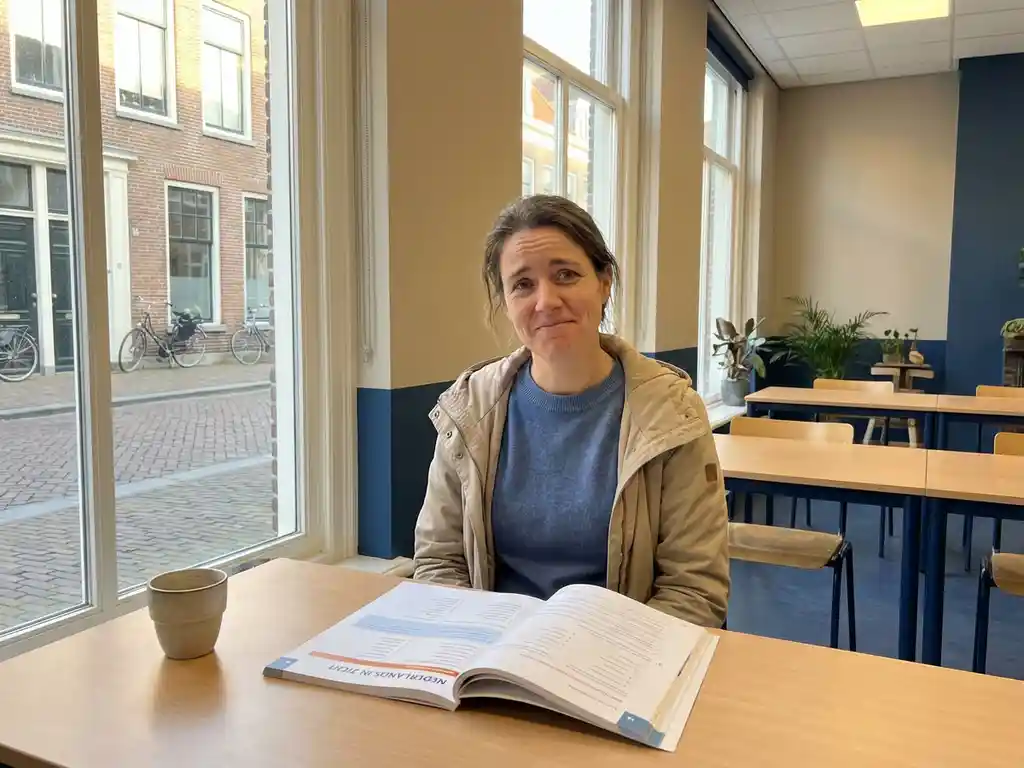
What does a Dutch language course look like for a complete beginner?
Starting to learn Dutch as a complete beginner can feel overwhelming, especially if you are new to the Netherlands and trying to settle into a new country, culture, and social environment all at once. The good news is that a well-structured beginner Dutch course is designed to meet you exactly where you are, with no prior knowledge required and plenty of room to grow at a comfortable pace.
Whether you are searching for a Dutch course online, looking for in-person classes near you, or exploring a blended approach, understanding what a beginner course actually looks like will help you take that first confident step. This article answers the most common questions people have before signing up for their first Dutch language course.
What does a Dutch language course for beginners actually include?
A beginner Dutch language course typically includes vocabulary building, basic grammar, everyday conversation practice, and cultural context. Most high-quality programs combine structured input with plenty of speaking practice, so you learn the language in a way that is immediately useful in real life, not just on paper.
At the core of a good beginner course, you will find three layers of learning. First, you prepare by studying new words, phrases, and dialogues before class. Then, you practise in a live setting with a teacher and fellow students. Finally, you consolidate what you have learned through follow-up exercises that help the new material stick. This cycle repeats week after week, building your Dutch gradually and sustainably.
The content itself focuses on practical, everyday situations: introducing yourself, shopping, asking for directions, talking about your work, or making plans with neighbours. The goal is not to memorise grammar rules in isolation but to use Dutch in real contexts from the very beginning.
What level of Dutch do you start at as a complete beginner?
As a complete beginner, you start at A0 level, which means you have no prior knowledge of Dutch. This is the absolute starting point on the Common European Framework of Reference (CEFR) scale, and it is the level at which most expat-focused Dutch courses begin. No Dutch background is needed or expected.
From A0, a well-structured course will guide you progressively through A1 and A2 levels, where you gain the ability to handle simple conversations and understand basic written Dutch. More intensive or longer programs, such as a “Dutch in 1 Year” format, take students all the way to B1 level, which is considered an intermediate level of functional fluency.
It is worth knowing that starting at A0 is nothing to feel self-conscious about. Everyone in a beginner group is in the same position, and that shared starting point is actually one of the things that makes the group dynamic so supportive and enjoyable.
How does a typical Dutch lesson work week by week?
A typical week in a beginner Dutch course follows a prepare–practise–consolidate rhythm. Before class, you complete e-learning exercises to learn new vocabulary and dialogues. During the live session, you practise those materials with your classmates through conversation exercises. After class, consolidation activities help you retain what you covered.
In the classroom itself, the emphasis is on speaking and interaction rather than passive listening or grammar drills. A lesson might start with a short warm-up conversation, move into a structured activity around a theme like ordering food or talking about your weekend, and then close with a group exercise where everyone practises together.
Week by week, the themes build on each other. Early weeks focus on greetings, numbers, and basic introductions. As the course progresses, you move into more complex territory: talking about your family, navigating Dutch workplaces, understanding Dutch directness, and handling social situations with confidence. The progression feels natural because each new lesson connects to what you already know.
What happens if you make mistakes in Dutch class?
Making mistakes in Dutch class is not just acceptable; it is actively encouraged. A communicative teaching approach prioritises speaking over perfection, because the biggest barrier to language learning is the fear of getting something wrong. In a good beginner course, mistakes are treated as a normal and necessary part of the process.
Teachers in high-quality Dutch language programs are trained to give supportive, constructive feedback without interrupting the flow of conversation. You might say something incorrectly, get a gentle correction, and immediately try again. Over time, this builds the kind of confidence that lets you use Dutch in real life without freezing up.
The small-group format, typically around 8 to 10 students, plays a big role here. When everyone in the room is a beginner and everyone is making similar mistakes, the atmosphere quickly becomes relaxed and even fun. You end up laughing together, helping each other, and forming real connections with your classmates. For many people, Dutch class becomes one of the first places they genuinely feel at home in the Netherlands.
Who else takes beginner Dutch classes in the Netherlands?
Beginner Dutch classes in the Netherlands are typically filled with expats, international knowledge workers, and partners of people who have relocated for work. Most participants are professionals or highly educated internationals who have recently arrived and want to integrate into Dutch life more fully, both socially and professionally.
What makes this group dynamic particularly valuable is the shared experience. Everyone in the room is navigating the same cultural learning curve: figuring out Dutch directness, understanding Dutch humour, and trying to build a social life in a new country. That common ground makes it surprisingly easy to connect with classmates, and many people find that their Dutch course becomes one of their first genuine social circles in the Netherlands.
If you have ever wondered whether a Dutch course is “for people like you,” the answer is almost certainly yes. These courses are designed specifically for internationals, which means the content, the pace, and the social environment are all built around the experience of being new to the Netherlands. You can learn more about our approach and team to see if it feels like the right fit.
Where and when can you take Dutch classes as a beginner?
Beginner Dutch classes are available both in person at central city locations and as online Dutch learning courses, giving you flexibility depending on your schedule and location. In-person classes are typically held after work to suit working professionals, while online options make Dutch course content accessible from anywhere.
For those based in the Eindhoven or Tilburg area, in-person classes at central, easy-to-reach locations make it practical to attend regularly without long travel times. After-work scheduling, typically in the early evening, means you can fit language learning into a busy week without sacrificing your workday.
Online Dutch learning courses follow the same structured approach as in-person options and are a strong choice if your schedule is unpredictable or if you simply prefer learning from home. You might also want to explore learning Dutch with AI tools as a flexible supplement to your studies. The key is finding a course that combines live interaction with self-paced preparation, so you get the best of both worlds.
How Dutch on Track helps you get started with Dutch language courses
Dutch on Track offers beginner Dutch language courses specifically designed for expats, internationals, and their partners in the Netherlands. Our approach is built around three things that matter most to people starting from scratch: a clear structure, a supportive group, and a focus on speaking Dutch from day one.
Here is what makes our Dutch language courses different:
- Small groups of 8 to 10 students create a relaxed, social atmosphere where making mistakes feels safe and even fun.
- Our blended learning method combines e-learning preparation, live classroom practice, and consolidation so nothing gets forgotten.
- All teachers are certified specialists in Dutch as a Second Language, giving you expert guidance at every step.
- Courses run after work at central locations in Eindhoven and Tilburg, as well as online.
Beyond the language itself, our courses are genuinely one of the best ways to build social connections when you are new to the Netherlands. You will meet other internationals who are going through the same experience, share laughs over Dutch pronunciation, and often leave with friendships that go well beyond the classroom. Learning Dutch with Dutch on Track is not just a language investment; it is a fun, social, and deeply rewarding part of building your life in the Netherlands. Ready to take your first step? Schedule a free meeting with us and find the right starting point for you.
FAQ broken data: JSON error 4