What is the Dutch rule in dating?
Dating in the Netherlands comes with its own set of unwritten rules, and for many expats, the experience can be a genuine culture shock. From splitting bills to direct communication, Dutch dating customs often surprise people who arrive with expectations shaped by their home culture. Understanding these norms is not just useful for romance—it opens a window into how Dutch society works at a deeper level.
Whether you are newly arrived in Eindhoven or Tilburg, or simply curious about how relationships unfold in this famously straightforward country, this guide answers the most common questions about Dutch dating culture. Consider it your practical introduction to one of the most distinctive social landscapes in Europe.
What is the Dutch rule in dating?
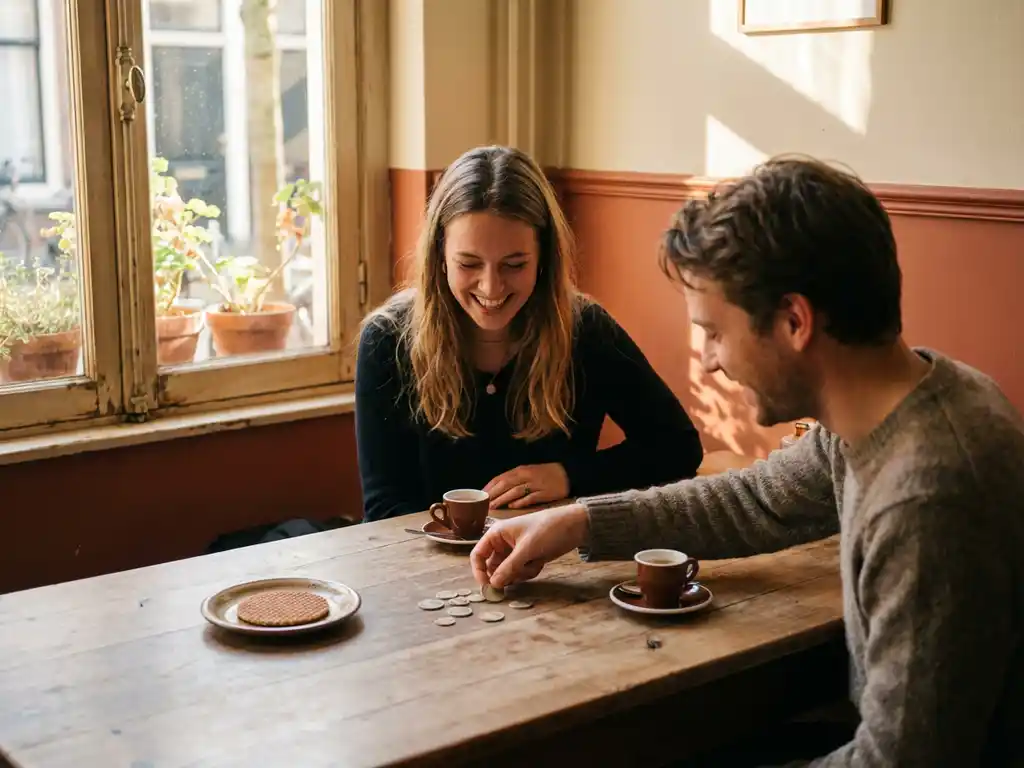
The Dutch rule in dating refers to the practice of splitting costs equally between two people on a date, rather than one person paying for the other. Often called “going Dutch,” this approach reflects a broader Dutch cultural value of equality and financial independence. Neither party is expected to treat the other, and offering to split is seen as respectful rather than unromantic.
The term “going Dutch” is widely used in English-speaking countries, but it originates from observations of Dutch social behaviour. In the Netherlands, this is simply the default expectation in many social situations, not just romantic ones. Friends, colleagues, and acquaintances routinely split bills at restaurants and bars without a second thought.
It is worth noting that the Dutch rule in dating is not just about money. It also reflects a cultural preference for clarity and equality in relationships. Dutch people tend to be straightforward about intentions, expectations, and feelings, which can feel refreshingly honest to some and unexpectedly blunt to others.
Why do Dutch people split the bill on dates?
Dutch people split the bill on dates primarily because Dutch culture places a high value on equality, independence, and avoiding the sense of obligation that can come with one person paying for another. Paying your own way signals that you are an equal partner in the interaction, not someone who owes a debt of gratitude or feels pressured by a financial gesture.
This attitude is deeply rooted in Dutch society. The Netherlands has historically championed individual autonomy and egalitarian values, and these principles show up in everyday social interactions. When someone pays for you entirely, it can create an implicit social dynamic that many Dutch people find uncomfortable or unnecessary.
There is also a practical dimension. The Dutch are generally known for being financially pragmatic, and splitting costs fairly is simply seen as the sensible approach. It removes ambiguity about who owes what and keeps the focus on enjoying each other’s company rather than navigating unspoken social debts.
Is going Dutch considered rude or romantic in the Netherlands?
Going Dutch is not considered rude in the Netherlands. It is the standard social norm and is widely accepted as a sign of respect and equality. In Dutch dating culture, splitting the bill is rarely interpreted as a lack of interest or generosity. It simply means both people are participating as equals.
That said, romantic gestures do exist in Dutch culture. Occasionally treating a partner or paying for a special occasion is not unheard of, particularly in established relationships. The difference is that it happens as a genuine gesture rather than an expected social script. Dutch people tend to appreciate authenticity over performance, so a spontaneous kind act carries more weight than a formulaic one.
For expats accustomed to cultures where the person who asks pays, or where men are traditionally expected to cover the bill, going Dutch can initially feel jarring. This is a classic moment of culture shock. With time, most people come to appreciate the clarity and equality it represents.
How does Dutch dating culture differ from other countries?
Dutch dating culture differs from that of many other countries primarily in its emphasis on directness, equality, and practicality. While dating in some cultures involves elaborate courtship rituals, indirect signals, and unspoken rules, Dutch dating tends to be more straightforward. If someone is interested, they are likely to say so. If they are not, they will say that too.
Directness versus indirectness
In many countries, dating involves a layer of ambiguity where people hint at interest rather than stating it. In the Netherlands, this indirectness is often replaced by honest, sometimes blunt communication. Dutch people generally prefer to know where they stand, and they extend the same courtesy to others. This can feel refreshing or unsettling, depending on your background.
Group socialising and slow progression
Dutch dating often begins within existing social circles rather than through formal one-on-one dates. Meeting through friends, sports clubs, or shared activities is common. Relationships tend to develop gradually, and it is not unusual for couples to spend considerable time as friends before defining the relationship. This slower pace can confuse expats who expect clearer early signals of romantic intent.
Gender equality in dating
Compared to many cultures, Dutch dating norms are notably gender-neutral. Women are just as likely to initiate contact or suggest splitting costs, and traditional gender roles in courtship are less pronounced. This reflects the Netherlands’ broader commitment to gender equality in public and private life.
What other dating customs should expats know about in the Netherlands?
Beyond going Dutch, expats should know that Dutch dating culture values honesty, respects personal space, and moves at its own pace. Showing up with grand romantic gestures too early can feel overwhelming rather than impressive. Patience, genuine interest, and clear communication tend to go much further.
- Punctuality matters: Being on time is a sign of respect in Dutch culture. Arriving late to a date without a heads-up is considered inconsiderate.
- Directness is a compliment: If a Dutch person tells you something honestly, even if it stings, they are treating you as an equal. It is not meant to be unkind.
- Gezelligheid is key: This untranslatable Dutch concept refers to a warm, cosy, convivial atmosphere. Creating a gezellig environment, whether at home or in a café, is one of the most valued social experiences in the Netherlands.
- Cycling is romantic: Seriously. Sharing a bike ride, cycling side by side through the city, or meeting someone at a bike rack is a genuinely Dutch romantic experience.
- Expect independence: Dutch partners often maintain strong friendships and hobbies outside the relationship. This is healthy, not a red flag.
Understanding these customs is part of navigating the broader culture shock of life in the Netherlands. The more you understand the cultural logic behind these behaviours, the easier it becomes to connect authentically with Dutch people.
How can learning Dutch help with dating and social life in the Netherlands?
Learning Dutch dramatically improves your social life in the Netherlands by allowing you to connect with people on their own terms, in their own language. While many Dutch people speak excellent English, switching to Dutch signals genuine effort and respect for their culture. This small gesture can open doors that English simply cannot.
Language is the gateway to understanding Dutch humour, directness, and the cultural nuances that make relationships meaningful. When you understand what someone actually means, not just what they literally say, you navigate social situations with far greater confidence. This is especially true in a culture where tone, word choice, and timing carry significant weight.
Beyond romance, building a social life in the Netherlands as an expat often depends on finding your community. That is something we understand deeply at Dutch on Track. Our Dutch language courses in Eindhoven and Tilburg are designed for highly educated internationals who want to feel at home in the Netherlands, not just survive there. Our small groups of 8 to 10 participants create a genuinely social learning environment where friendships form naturally alongside language skills.
Learning Dutch is ultimately an act of social courage. It means being willing to make mistakes, laugh at yourself, and try again—which, funnily enough, is exactly the kind of openness that Dutch people respect and admire. From day one in our communicative classroom sessions, we encourage you to speak, connect, and embrace the experience. You can also learn Dutch with AI-powered tools to practise at your own pace alongside your course. If you are ready to take the first step, schedule a free meeting with our team to find out how we can help you feel at home in the Netherlands. Because the best way to understand Dutch dating culture, Dutch directness, and Dutch gezelligheid is to live it, in Dutch.
Frequently Asked Questions
I'm used to traditional dating norms where one person pays — how do I bring up splitting the bill without it feeling awkward?
The easiest approach is to simply be prepared and natural about it. When the bill arrives, reaching for your wallet or card without hesitation signals that you understand and respect the local norm. If you feel the need to address it, a light, direct comment like 'Shall we split it?' works perfectly — Dutch people appreciate straightforwardness and will not read anything negative into it.
How do I know if a Dutch person is actually interested in me romantically, or just being friendly?
This is one of the most common points of confusion for expats, largely because Dutch social relationships develop gradually and within group settings. A reliable signal is consistent one-on-one initiative — if someone actively seeks out your company, suggests plans directly, or openly tells you they enjoy spending time with you, that is a meaningful sign. When in doubt, the Dutch culture of directness is your friend: it is perfectly acceptable to ask where things stand, and most Dutch people will give you an honest answer.
Is it common to use dating apps in the Netherlands, or do Dutch people prefer meeting organically?
Dating apps like Tinder, Bumble, and Hinge are widely used in the Netherlands, particularly in cities and among younger adults. That said, meeting through shared social circles, sports clubs, or hobby groups remains very common and aligns naturally with the Dutch preference for building relationships gradually within trusted communities. Using both approaches — apps for broader reach and social activities for deeper connection — tends to work well for expats.
What are the biggest mistakes expats make when dating in the Netherlands?
The most common mistakes are moving too fast, over-romanticising early interactions, and misreading friendliness as flirtation — or conversely, misreading Dutch directness as coldness or disinterest. Coming on too strong with grand gestures or intense emotional declarations early on can feel overwhelming in a culture that values a measured, gradual pace. The best mindset is to focus on genuine connection, be patient with the slower relationship timeline, and resist the urge to apply your home culture's dating playbook.
How important is it to speak Dutch when dating someone who is Dutch?
While most Dutch people are highly proficient in English, making an effort to learn Dutch sends a powerful message that you respect their culture and are genuinely invested in building a life in the Netherlands. Even basic Dutch — a joke, a phrase, or navigating a conversation at a café — can create warmth and connection that English rarely achieves in the same way. Over time, understanding Dutch also helps you pick up on humour, tone, and the subtleties of how your partner communicates.
Does Dutch dating culture change at all once you move from casual dating into a serious relationship?
Yes, meaningfully so. Once a relationship becomes established, Dutch partners tend to be very loyal, committed, and open about long-term plans — the Dutch are not known for keeping people guessing once a relationship is defined. The financial independence and personal space that characterise early dating continue, but within a framework of genuine partnership. Expect honest conversations about shared goals, finances, and living arrangements relatively early compared to some other cultures.
Are there regional differences in dating culture within the Netherlands — for example, between Amsterdam and cities like Eindhoven or Tilburg?
There are subtle differences worth knowing. Amsterdam, as a large cosmopolitan city, has a more international and fast-paced dating scene where apps and casual dating are very common. Cities like Eindhoven and Tilburg tend to have a slightly more close-knit, community-oriented social culture, where meeting people through local networks, sports clubs, and shared activities plays a bigger role. The core Dutch values of directness, equality, and independence remain consistent across the country, but the pace and setting of social life can vary.