Can I get a Dutch passport if my husband is Dutch?
Moving to the Netherlands as an expat spouse opens up a world of possibilities, and for many partners of Dutch nationals, the question of citizenship eventually comes up. Whether you are dreaming of a Dutch passport for practical travel reasons, a deeper sense of belonging, or simply feeling more at home in your new country, understanding the path to Dutch nationality is a great first step. As an expat spouse in the Netherlands, the rules may be more accessible than you think.
This guide walks you through the most common questions about Dutch citizenship for spouses of Dutch nationals, covering the two main legal routes, residency requirements, and the language level you will need to demonstrate. Read on for clear, direct answers to each question.
Can you get a Dutch passport if your husband is Dutch?
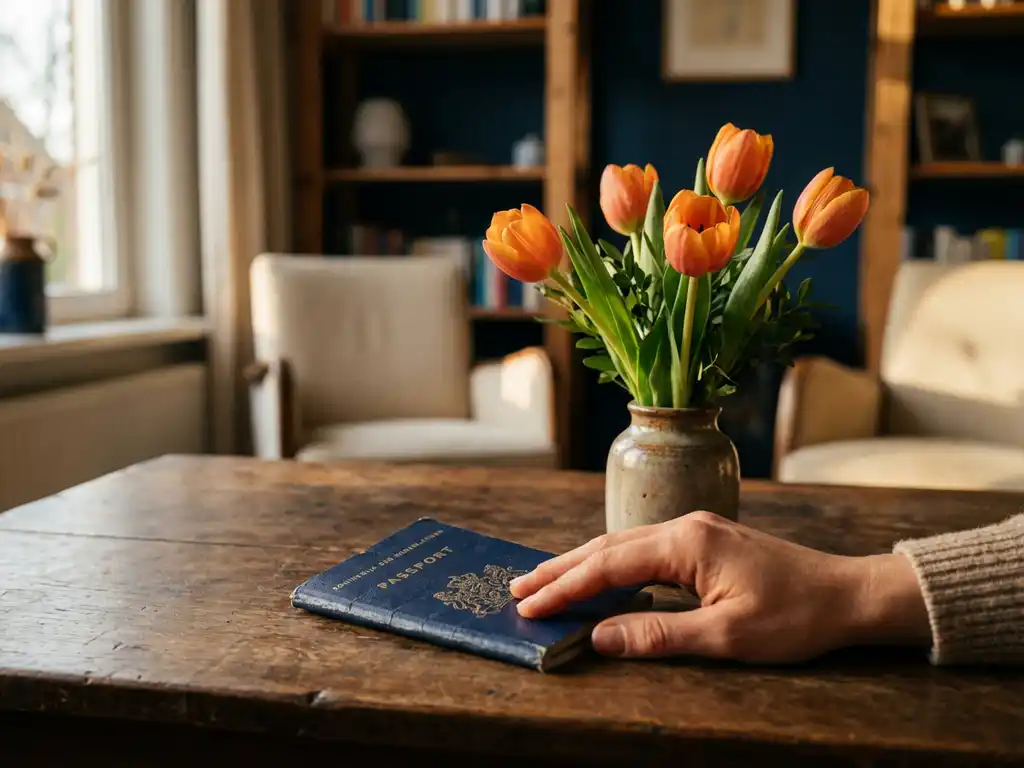
Yes, you can get a Dutch passport if your husband is Dutch, but marriage alone does not automatically grant you Dutch nationality. You will need to apply through one of two official routes: naturalisation or the option procedure. Your eligibility depends on factors such as how long you have been married, how long you have lived in the Netherlands, and whether you meet the language and civic integration requirements.
Many expat spouses assume that being married to a Dutch citizen is enough to receive a passport, but the Dutch government requires you to apply and meet specific criteria. The good news is that being married to a Dutch national can significantly shorten the residency period required, compared with the standard naturalisation route available to other foreign nationals. This makes the process more accessible for partners who have built a life in the Netherlands together.
It is also worth noting that obtaining Dutch nationality often means giving up your original passport, as the Netherlands generally does not allow dual nationality. There are exceptions, particularly if renouncing your original nationality is not legally possible or would cause serious personal hardship, so it is worth checking your specific situation with the Dutch Immigration and Naturalisation Service (IND).
What is the difference between naturalisation and the option procedure?
The key difference between naturalisation and the option procedure is how you apply and who qualifies. Naturalisation is a formal application process open to most foreign nationals who meet residency and integration requirements. The option procedure is a simpler, faster declaration process available to a more limited group, including spouses and registered partners of Dutch nationals who meet specific conditions.
The option procedure for expat spouses
If you are married to a Dutch national and have been living in the Netherlands legally for at least three years, and you have also been married or in a registered partnership for at least three years, you may qualify for the option procedure. This route involves submitting a declaration rather than a full application, which makes it administratively lighter and generally faster to process.
The option procedure is particularly appealing for expat spouses because it acknowledges the close ties you have built through your relationship and your life in the Netherlands. You still need to meet the language and civic integration requirements, but the overall process is more streamlined than standard naturalisation.
Naturalisation as an alternative route
Naturalisation is the more widely known route and is open to foreign nationals who have lived in the Netherlands legally for at least five years. For spouses of Dutch nationals, this period can be reduced to three years, bringing it in line with the option procedure timeline. Naturalisation involves a formal application to the municipality, an assessment of your civic integration, and proof of language proficiency. Both routes ultimately lead to the same outcome: Dutch nationality and the right to a Dutch passport.
How long do you need to live in the Netherlands before applying?
As an expat spouse of a Dutch national, you generally need to have lived in the Netherlands legally for at least three years before you can apply, provided you have also been married or in a registered partnership for at least three years. This is shorter than the standard five-year requirement that applies to most other foreign nationals seeking naturalisation.
The three-year period must be continuous and documented through your registration in the Dutch municipality (the BRP, or Basisregistratie Personen). Gaps in residency or periods spent living abroad can affect your eligibility, so it is important to maintain your Dutch address registration throughout this time. If you have moved in and out of the Netherlands during your marriage, it is worth consulting the IND to understand how this affects your personal timeline.
It is also worth knowing that the clock starts when you are legally and officially registered as a resident, not simply when you arrived in the country. Making sure your registration is in order from the moment you arrive is therefore an important practical step that many expat spouses overlook in the early days of settling in.
What Dutch language level do you need for citizenship?
To apply for Dutch citizenship through either naturalisation or the option procedure, you generally need to demonstrate Dutch language proficiency at the B1 level of the Common European Framework of Reference (CEFR). This means you should be able to understand and communicate in everyday situations, hold conversations on familiar topics, and navigate daily life in Dutch with reasonable confidence.
The B1 requirement is assessed as part of the civic integration exam (inburgeringsexamen), which tests your speaking, listening, reading, and writing skills. Passing this exam is a key milestone on the road to Dutch nationality and is something that takes consistent effort and structured learning to achieve.
This is where building a strong language foundation early makes a real difference. We offer Dutch language courses designed specifically for expats and their partners, taking students from complete beginner level (A0) all the way to B1 through our flagship Dutch in 1 Year programme. Our small groups of 8 to 10 students create a warm, social environment where you can practise speaking from day one, make friends who are on the same journey, and build the kind of everyday confidence that the B1 exam demands. Learning Dutch is not just about ticking a box for citizenship; it is about feeling genuinely at home in your new country and connecting with the people and culture around you.
If the B1 level feels far away right now, that is completely normal. The key is to start speaking early, embrace the occasional mistake, and surround yourself with others who understand exactly what you are going through. You can also practise Dutch using AI-powered learning tools to supplement your progress between classes. The language journey and the integration journey go hand in hand, and both are far more enjoyable when you do not have to walk them alone.