How do you deal with the Dutch weather as an expat?
Moving to the Netherlands is an exciting adventure, but there is one thing almost every expat mentions within the first few weeks: the weather. Grey skies, unexpected rain showers, and biting winds can catch even the most prepared international off guard. If you are living in the Netherlands as an expat, understanding how to deal with Dutch weather—both mentally and practically—is a genuine part of settling in successfully.
The good news is that you are far from alone in this experience, and the Dutch have developed a wonderfully pragmatic relationship with their climate over centuries. This guide walks you through what to expect, why the weather hits expats harder than they anticipate, and how building a social life in the Netherlands can make even the darkest November feel a little brighter.
What is the Dutch weather actually like throughout the year?
Dutch weather is mild, wet, and unpredictable. The Netherlands has a temperate maritime climate, meaning summers rarely get very hot, winters rarely get very cold, and rain is possible in every single month of the year. Wind is a constant companion, especially in autumn and winter, and overcast skies are the norm rather than the exception.
Spring, roughly March through May, brings the most dramatic transformation. Tulip fields bloom, temperatures rise gradually, and the occasional sunny day feels genuinely uplifting. Summer temperatures typically hover between 18 and 25 degrees Celsius, though heatwaves do occur. Autumn arrives quickly, bringing persistent grey cloud cover and rainfall. Winter is damp and dark rather than dramatically cold, with temperatures rarely dropping far below freezing. Snow is possible but not guaranteed each year.
The key thing to understand about expat life in the Netherlands is that the weather is not dramatically extreme in any direction. It is the relentless greyness and the wind that catches people off guard, not blizzards or scorching heat.
Why do so many expats struggle with the Dutch weather?
Expats struggle with Dutch weather primarily because of the contrast with their home countries. Someone arriving from Southern Europe, the Middle East, or Southeast Asia experiences not just cooler temperatures but a fundamental shift in the quality of daylight and outdoor life. The psychological adjustment is often underestimated amid the excitement of a new move.
Beyond the climate itself, the social habits that come with bad weather take time to adapt to. In many countries, socialising happens outdoors naturally. In the Netherlands, grey days push people indoors, and if you have not yet built a strong social network, those long evenings can feel isolating. This is one of the most commonly overlooked aspects of settling in the Netherlands for newcomers.
There is also a language dimension. When you cannot fully understand the conversations around you, small talk about the weather—which is genuinely one of the most common Dutch social topics—becomes a missed connection rather than a bonding moment. Building language skills opens up these everyday social exchanges in ways that make a real difference to how you experience daily life.
What is ‘herfstdip’ and does it affect expats more than locals?
Herfstdip, which translates literally as “autumn dip,” refers to the low mood that many people experience as daylight hours shorten and grey weather sets in during October and November. It sits on a spectrum between mild seasonal blues and the more clinically recognised Seasonal Affective Disorder (SAD). Expats often experience herfstdip more intensely than locals because they lack the coping rituals and social anchors that Dutch people have built over a lifetime.
Dutch people grow up knowing how to counter the herfstdip. They have established friend groups, family dinners, sports clubs, and cosy indoor traditions that fill the darker months with warmth and connection. Expats, especially those who have arrived recently, often do not yet have these structures in place. The combination of grey skies, shorter days, and social isolation can make autumn feel genuinely difficult.
Recognising the herfstdip as a real and common phenomenon, rather than a personal failing, is the first step. Many expats find that actively building community during the summer months, before autumn arrives, makes an enormous difference to how they experience the seasonal shift.
How do Dutch people mentally cope with bad weather?
Dutch people cope with bad weather through a combination of pragmatic acceptance, a strong indoor social culture, and the concept of gezelligheid. Gezelligheid is a uniquely Dutch idea that roughly translates to cosiness or conviviality, and it is essentially the art of making indoor time feel warm, connected, and enjoyable. Rather than fighting the weather, Dutch culture leans into it.
Embrace gezelligheid
Gezelligheid shows up in candlelit living rooms, long dinners with friends, board game evenings, and the ritual of cycling to a brown café in the rain and arriving slightly damp but happy. It is a mindset as much as a setting. Expats who consciously adopt this approach, rather than waiting for better weather to socialise, often find their relationship with the Dutch climate shifts significantly.
Stay active outdoors regardless
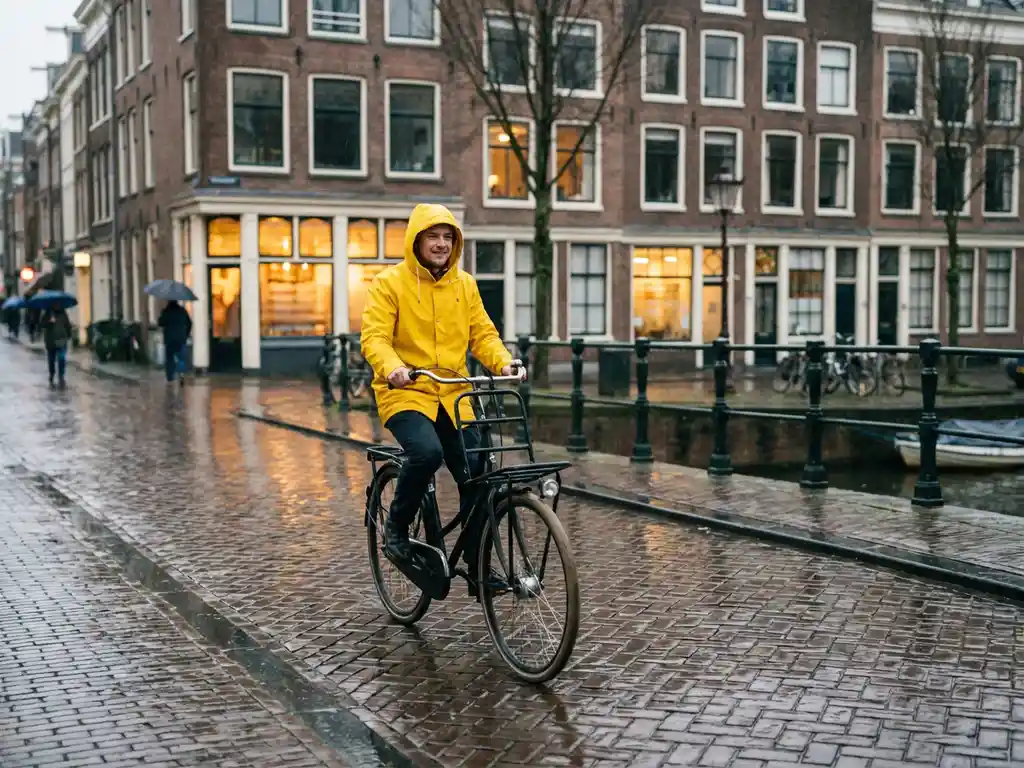
Another core Dutch coping mechanism is simply continuing to go outside. The Dutch cycle in the rain without complaint, walk along canals in the wind, and maintain outdoor hobbies throughout autumn and winter. There is a cultural attitude that there is no bad weather, only bad clothing. Investing in a good raincoat and waterproof cycling gear is not optional in the Netherlands; it is a genuine quality-of-life decision.
What practical tips help expats adjust to Dutch weather?
Adjusting to Dutch weather as an expat requires both practical preparation and a deliberate shift in mindset. The expats who settle most comfortably are those who equip themselves properly and build indoor social routines early, rather than waiting for conditions to improve.
- Invest in waterproof clothing and a solid Dutch-style bicycle with mudguards from the start.
- Get a daylight lamp for your home or desk; it is especially useful during the darker months between October and February.
- Build a social calendar that does not depend on good weather, such as regular group classes, sports clubs, or cultural activities.
- Embrace Dutch outdoor habits rather than avoiding them, because staying active outside genuinely improves mood during grey periods.
The expats who struggle most are those who stay indoors waiting for sunshine that may not arrive for weeks. Leaning into Dutch culture, including its relationship with rain and wind, accelerates the process of truly settling in the Netherlands rather than just surviving it.
How can learning Dutch help you enjoy life in the Netherlands despite the weather?
Learning Dutch transforms your experience of life in the Netherlands because it gives you access to the social fabric that makes bad weather bearable. When you can chat with your neighbour about the rain, joke with a colleague about the wind, or understand why your Dutch friend finds a grey Sunday afternoon perfectly pleasant, you stop being an outsider observing Dutch life and start participating in it.
Language is the gateway to gezelligheid. Those cosy, warm social moments that Dutch people use to counter the herfstdip happen in Dutch. Joining a conversation, catching a joke, or simply understanding what is being said around a dinner table are experiences that make you feel genuinely connected to your new home. Expats who invest in language learning consistently report that their social lives expand significantly, and with that comes a much more positive overall experience of expat life in the Netherlands, grey skies and all.
Language classes are also, in themselves, a wonderfully social activity. Sitting in a small group with fellow internationals who are all navigating the same experiences creates instant common ground. You laugh about the same cultural confusions, share tips for surviving autumn, and build friendships that extend well beyond the classroom.
How Dutch on Track Helps You Thrive in the Netherlands as an Expat
Dutch on Track offers a practical, social, and genuinely enjoyable way to learn Dutch while building the community connections that make life in the Netherlands so much richer. Our courses are designed specifically for expats and internationals in Eindhoven and Tilburg, and we understand that language learning is about far more than grammar. It is about confidence, connection, and feeling at home.
- Small groups of 8 to 10 participants mean you build real friendships with fellow internationals who share your experience.
- Our communicative approach gets you speaking from day one, so you can start using Dutch in real social situations immediately.
- Evening classes from 17:45 to 19:45 fit around your working day, making learning accessible even for busy professionals.
Whether you are just arriving or have been here a while and want to finally crack the language, Dutch on Track meets you where you are. Start with our Beginner Dutch Course from A0 to A1 if you are just starting out, or schedule a free meeting with us to find the right level and programme for your situation. The weather outside might be grey, but your next chapter in the Netherlands does not have to be.
Frequently Asked Questions
How long does it typically take for expats to fully adjust to Dutch weather?
Most expats find that the adjustment takes at least one full year, simply because you need to experience each season once before you know what to expect and how to prepare. The first autumn and winter are almost universally the hardest. By the second year, having the right gear, established routines, and a social network in place, the same grey months tend to feel far more manageable.
What is a daylight lamp and is it really worth buying?
A daylight lamp, also called a SAD lamp or light therapy lamp, emits bright white light that mimics natural daylight and is designed to compensate for the reduced sunlight during autumn and winter. Using one for 20 to 30 minutes each morning has been shown to improve mood, energy levels, and sleep quality. For expats coming from sunnier climates, it is one of the most practical and affordable investments you can make before October arrives — look for a lamp with at least 10,000 lux intensity.
What should I actually buy to stay comfortable cycling in Dutch rain and wind?
A good waterproof cycling jacket, waterproof trousers or overpants, and waterproof gloves are the essentials. Equally important is the bicycle itself — a sturdy Dutch-style bike with full mudguards and a chain guard will keep you far drier than a sports bike. Panniers or a good rear rack bag mean you never have to wear a backpack in the rain, which makes a surprising difference to how comfortable and dry you stay on a daily commute.
Are there specific communities or clubs in Eindhoven and Tilburg for expats looking to build a social life?
Yes — both cities have active expat communities, international sports clubs, language exchange meetups, and cultural organisations that welcome newcomers. Platforms like Meetup, Internations, and local Facebook expat groups are good starting points. Language classes, such as those offered by Dutch on Track, are also one of the most effective ways to meet fellow internationals in a relaxed, regular setting where friendships form naturally over shared experience.
What if I am already struggling with low mood or isolation after moving to the Netherlands — where can I get support?
First, know that what you are experiencing is extremely common and does not mean you made the wrong decision in moving. Speaking to your GP (huisarts) is a good first step, as they can refer you to mental health support if needed and are experienced with expat adjustment issues. Many companies also offer Employee Assistance Programmes (EAPs) that include counselling. Building social connection — even through something as simple as joining a class or club — is consistently one of the most effective practical steps alongside any professional support.
How do I know which Dutch language level is right for me if I want to start a course?
If you have never studied Dutch before, you are almost certainly an A0 beginner, and a course starting from scratch is the right place to begin. If you have picked up some basics from living here, you may be closer to A1 or A2. The most reliable way to find out is to take a short placement assessment or have a conversation with a course provider — Dutch on Track offers a free meeting specifically for this purpose, so you can find the right level without any guesswork or commitment.
Is it possible to enjoy outdoor life in the Netherlands during autumn and winter, or is it best to just wait for spring?
Absolutely possible — and actively recommended. The Netherlands has a well-developed culture of outdoor life year-round, from ice skating on frozen canals in cold snaps to winter markets, forest walks, and coastal cycling. Waiting for spring to enjoy the outdoors means losing nearly half the year, and staying sedentary indoors tends to worsen the herfstdip rather than protect against it. Dressing properly and adopting the Dutch attitude of going out regardless is genuinely one of the most effective mood-boosting strategies available to you.
Related Articles
- Incompany Dutch course or regular group course: 6 factors employers should compare
- How do Dutch people really feel about expats who don't learn the language?
- Do expats pay income tax in the Netherlands?
- Why do small group Dutch classes help you speak faster than studying alone?
- What can you do in the Netherlands that you cannot do without Dutch?