
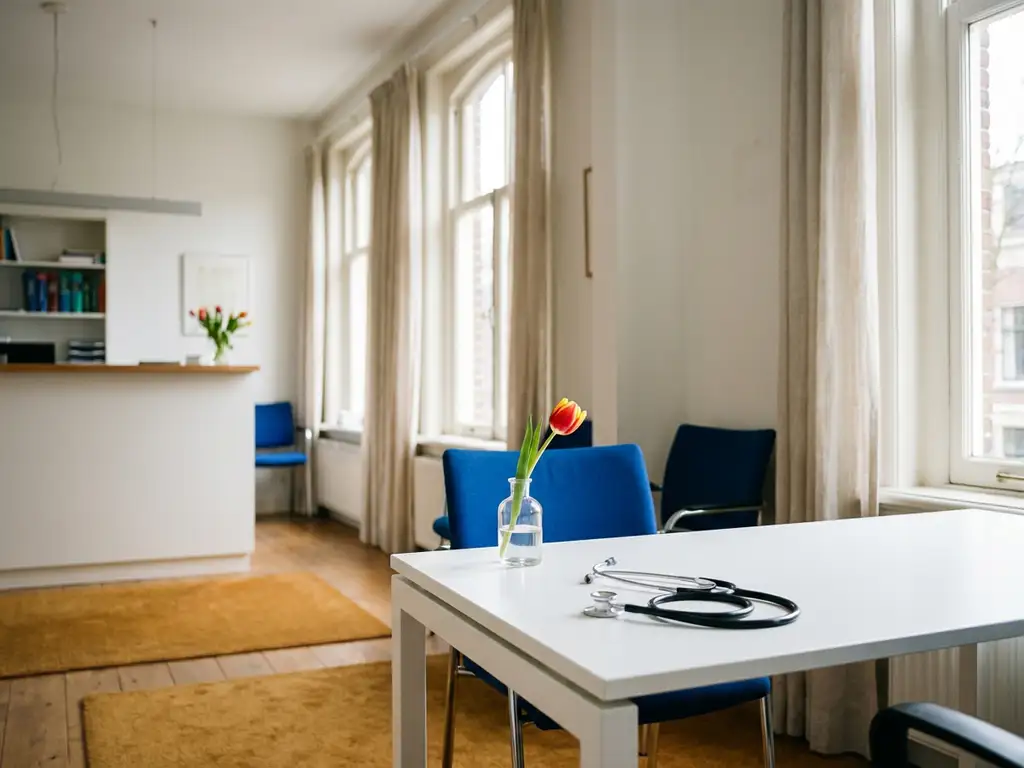
How good is the healthcare system in the Netherlands?
Moving to the Netherlands as an expat brings a lot of new systems to navigate, and healthcare is one of the most important to understand quickly. The Dutch healthcare system has a strong reputation across Europe, but it works quite differently from what many internationals are used to back home. Whether you have just arrived or are preparing for your move, knowing how healthcare works here will save you time, stress, and money.
From registering with a GP to understanding what your insurance actually covers, this guide answers the most common questions expats have about the healthcare system in the Netherlands. Read on for clear, practical answers to each one.
How does the healthcare system in the Netherlands work?
The Dutch healthcare system is a regulated private insurance model, meaning everyone who lives or works in the Netherlands is legally required to take out basic health insurance (basisverzekering) from a private insurer. The government sets the minimum coverage requirements, and all insurers must offer the same basic package at a regulated price. You choose your own insurer, but the core coverage is standardized.
The system is built around a gatekeeping model. Your GP, known as a huisarts, is your first point of contact for almost all medical issues. The huisarts decides whether you need to be referred to a specialist or a hospital. This is different from many countries where patients can visit a specialist directly. Emergency care is always accessible without a referral, but for everything else, the route goes through your GP first.
Healthcare in the Netherlands is funded through a combination of income-dependent contributions paid to the government, monthly premiums paid directly to your insurer, and an annual deductible (eigen risico) that you pay out of pocket before your insurance kicks in for most treatments.
Is the Dutch healthcare system good compared to other countries?
Yes, the Dutch healthcare system is consistently ranked among the best in Europe. The Netherlands regularly scores highly in European health consumer indexes for accessibility, patient rights, outcomes, and range of services. Wait times for GP appointments are generally short, hospitals are well equipped, and the quality of specialist care is high by international standards.
What makes the system particularly strong is its combination of universal access and competition between insurers. Because all insurers must offer the same basic package, the competition focuses on service quality, supplementary coverage, and price rather than on limiting access to core care. This keeps standards high across the board.
That said, the system is not without its pressures. GP practices in some cities have waiting lists for new patients, and mental health services face capacity challenges. But overall, expats from countries with weaker public health infrastructure tend to find the Dutch system a significant improvement in terms of reliability and responsiveness.
Do expats and internationals need Dutch health insurance?
Yes, almost all expats and internationals who live or work in the Netherlands are required by law to take out Dutch basic health insurance. This obligation applies as soon as you register with a municipality (gemeente) and receive a BSN (citizen service number). You have four months from your registration date to arrange your insurance, but it is strongly recommended that you do so immediately.
There are a few exceptions worth knowing about. If you work for an international organization or are posted to the Netherlands by a foreign employer, you may be covered under a different arrangement. Students from within the EU may also have different obligations depending on their situation. However, for the vast majority of expats and their partners who are settling in the Netherlands, Dutch health insurance is mandatory, not optional.
Failing to arrange insurance can result in fines from the CAK, the government body that enforces health insurance compliance. If you are uninsured for a period, the CAK can also enroll you with an insurer automatically and charge you a higher premium retroactively.
What does Dutch basic health insurance actually cover?
Dutch basic health insurance covers a broad range of essential medical care, including GP visits, hospital treatment, specialist consultations following a referral, mental health care, maternity care, emergency care, and a significant portion of prescription medication costs. The package is defined by law, so every insurer offers the same core coverage regardless of the premium you pay.
Key items included in the basic package are:
- GP visits and referrals
- Hospital stays and surgical procedures
- Specialist care when referred by a GP
- Mental health treatment (up to a defined number of sessions)
- Maternity care and obstetric services
- Prescription medicines on the approved list
- Basic dental care for children under 18
Adult dental care, physiotherapy beyond a limited number of sessions, and most optical care are not included in the basic package. For these, you can take out supplementary insurance (aanvullende verzekering) at an additional cost. Many expats choose to add a supplementary plan, especially if they wear glasses or need regular physiotherapy.
The annual deductible (eigen risico) is set by the government each year. Once you have paid this amount out of pocket within a calendar year, your insurer covers the remainder of eligible costs. GP visits are exempt from the deductible, which means seeing your huisarts is always free at the point of use.
How do you register with a GP (huisarts) in the Netherlands?
To register with a GP in the Netherlands, find a huisarts practice near your home that is accepting new patients, contact them directly, and submit a registration form along with your BSN and proof of address. Most practices have an online registration form on their website. Once accepted, you are officially registered and can book appointments.
Finding a practice that is accepting new patients can be the trickiest part, particularly in larger cities like Eindhoven or Tilburg, where demand is high. Here are some practical steps to follow:
- Search for GP practices in your neighborhood using the Zorgkaart Nederland website, or ask your insurer for a list of contracted practices.
- Contact two or three practices to check availability before committing to one.
- Prepare your BSN, Dutch address, and health insurance details before registering.
- If you have existing medical conditions or take regular medication, bring documentation from your previous doctor to share with your new GP.
Once registered, your huisarts becomes your central point of contact for all non-emergency health matters. Building a relationship with your GP is genuinely valuable, as they coordinate your care across the system and can advocate for you when specialist referrals are needed.
What are the biggest challenges expats face with Dutch healthcare?
The biggest challenges expats face with Dutch healthcare include navigating the GP gatekeeping model, understanding the insurance and deductible system, finding a practice that accepts new patients, and communicating effectively during medical appointments. For many internationals, the language barrier is the most immediate obstacle.
Most Dutch GPs and specialists speak English, particularly in cities with large expat populations like Eindhoven and Tilburg. However, not all administrative staff do, and written communications such as referral letters, prescription details, and insurance correspondence are almost always in Dutch. This is where having even a basic level of Dutch makes a real practical difference.
Beyond language, the gatekeeping model surprises many expats who are used to booking specialist appointments directly. Understanding that your huisarts is not a barrier but a coordinator takes some adjustment. Trusting the system and building a relationship with your GP tends to make the whole experience smoother over time.
Cultural directness also plays a role. Dutch medical professionals tend to be straightforward and evidence-based, which can feel abrupt to patients from cultures where doctors communicate more cautiously or deferentially. Learning a bit about Dutch communication style, both in healthcare and in daily life, genuinely helps. At Dutch on Track, our Dutch language courses are built around exactly this kind of practical, real-world communication. In small groups of 8 to 10 fellow internationals, you practice the conversations that actually matter in daily life in the Netherlands, including the kind of confident, direct communication that makes interactions with Dutch institutions far less stressful.
Frequently Asked Questions
Can I keep my existing foreign health insurance when I move to the Netherlands?
In most cases, no. Once you are registered as a resident in the Netherlands and have received your BSN, you are legally required to take out Dutch basic health insurance, regardless of any existing foreign policy you hold. Your foreign insurance will not satisfy the Dutch legal requirement, and relying on it could result in fines from the CAK. The only common exceptions are expats posted by a foreign employer under a specific international arrangement or certain EU students — if you think you may qualify for an exemption, check with your employer’s HR department or the CAK directly before assuming you are covered.
How do I choose the right Dutch health insurer as an expat?
Since the basic package is identical across all insurers, the key factors to compare are the monthly premium, the size of the contracted care network (naturapolis vs. restitutiepolis), customer service quality, and the supplementary add-ons available. A naturapolis is cheaper but restricts you to contracted hospitals and specialists, while a restitutiepolis gives you more freedom to choose providers and can be useful if you travel frequently or want flexibility. Comparison websites like Zorgwijzer.nl or Independer.nl are good starting points, and switching insurers is straightforward — you can do so every year during the open enrollment period in November and December.
What should I do if I cannot find a GP practice that is accepting new patients?
If you are struggling to find a huisarts with open spots, contact your health insurer directly — they are obligated to help you find a contracted GP in your area and can sometimes intervene on your behalf. You can also try expanding your search radius slightly beyond your immediate neighborhood, as a nearby practice a few streets over may have availability. In the meantime, for non-emergency medical needs, you can visit a huisartsenpost (out-of-hours GP clinic) or a walk-in practice, though these are not a long-term substitute for being registered with a regular GP.
How does the annual deductible (eigen risico) work in practice, and how can I manage the costs?
The eigen risico is the amount you pay out of pocket each calendar year before your insurer covers most eligible treatment costs — for 2024 this is set at €385, though it is adjusted annually. Once you have reached this threshold within the year, your insurer takes over the costs for covered treatments. GP visits are exempt, so you will never pay toward the deductible just for seeing your huisarts. To manage costs, consider whether voluntarily increasing your deductible (up to €885) in exchange for a lower monthly premium makes financial sense for your situation — this works well if you are generally healthy and unlikely to need significant treatment in a given year.
What is the best way to communicate with my Dutch GP if my Dutch is not yet fluent?
Most GPs in the Netherlands, especially in cities with large international communities, are comfortable consulting in English, so do not hesitate to ask to speak English from the start of your appointment. It helps to prepare beforehand by writing down your symptoms, the duration of the issue, and any medication you currently take — this keeps the consultation focused and reduces the chance of miscommunication. For written correspondence like referral letters or prescription information, tools like DeepL provide accurate Dutch-to-English translations, and learning key medical vocabulary in Dutch will make a noticeable difference over time. Structured Dutch language practice, particularly around practical everyday scenarios, can significantly boost your confidence in these interactions.
Does Dutch basic health insurance cover me if I get sick while traveling abroad?
Basic Dutch health insurance provides limited coverage abroad — it generally covers emergency medical care up to the cost that the same treatment would have in the Netherlands, which may not be enough in countries with high healthcare costs such as the United States. For travel within the EU, your European Health Insurance Card (EHIC), which you can request through your Dutch insurer, covers necessary medical care in EU countries. For frequent international travelers, it is strongly advisable to take out a separate travel insurance policy or check whether your supplementary insurance includes international coverage.
Can my partner and children be covered under my Dutch health insurance policy?
Health insurance in the Netherlands is individual — each person aged 18 or over must take out their own policy separately, there is no family plan that covers multiple adults under one premium. Children under 18, however, are covered for free under the basic package through their parent’s insurer, so you do not need to take out a separate policy for your kids. You will need to register your children with your insurer and with a GP practice, and you can add supplementary coverage for them if needed, for example for orthodontics or physiotherapy.