What do Dutch people do for fun?
If you are new to the Netherlands, one of the best ways to settle in is to understand how Dutch people actually spend their time. Expat life in the Netherlands can feel overwhelming at first, but once you see the rhythms of daily Dutch life, everything starts to make more sense. From cycling through the city to sharing a borrel with neighbors, Dutch culture is rich with social traditions that are easy to join once you know what to look for.
Living in the Netherlands as an expat means navigating a culture that values directness, outdoor activity, and genuine community. The good news is that Dutch people are more open to welcoming newcomers than their reserved reputation might suggest. You just need to know where to look and how to show up.
What do Dutch people typically do in their free time?
Dutch people spend their free time outdoors, with family and friends, and in organized clubs or associations. Cycling, visiting markets, playing sports, and gathering at local cafés are all central to everyday leisure. The Netherlands has one of the highest rates of club membership in Europe, meaning many Dutch people structure their social lives around shared hobbies and organized activities.
Beyond sports and cycling, the Dutch are avid readers, festival-goers, and garden enthusiasts. Public parks fill up on sunny days, and local libraries and cultural centers host regular events. Settling in the Netherlands becomes much easier when you recognize that Dutch leisure is largely social and community-based rather than private and home-centered.
Why is cycling such a big part of Dutch culture?
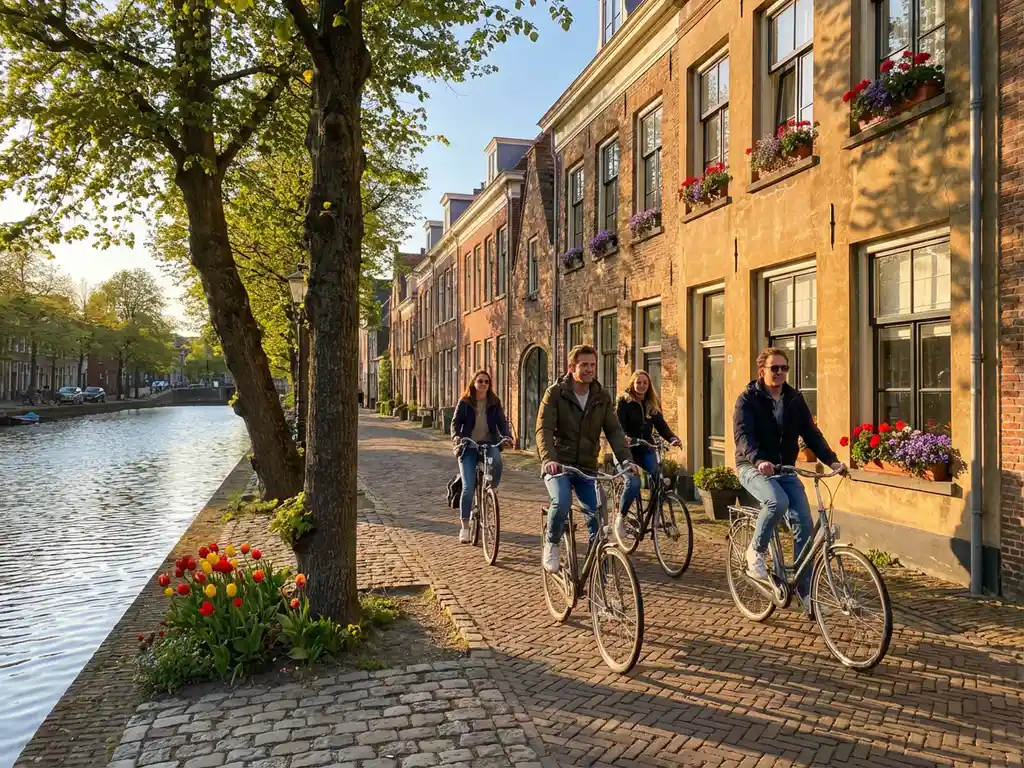
Cycling is central to Dutch culture because it is practical, affordable, and deeply embedded in daily life from childhood. The Netherlands has over 35,000 kilometers of dedicated cycling paths, making it one of the most cycle-friendly countries in the world. For Dutch people, the bike is not a hobby but a primary mode of transport for commuting, shopping, and socializing.
Beyond practicality, cycling carries a strong cultural identity. It represents equality, sustainability, and independence. You will see everyone on a bike, from schoolchildren to elderly residents. For expats living in the Netherlands, buying a bike early is one of the most effective ways to feel at home. It immediately connects you to the local pace of life and opens up the city in a way that no other form of transport can.
What do Dutch people do on weekends?
On weekends, Dutch people typically visit markets, go cycling, host or attend family dinners, and spend time at local cafés or in nature. Saturday mornings often revolve around the weekly market, where fresh produce, flowers, cheese, and street food are central attractions. Sunday is traditionally quieter and more family-oriented.
Weekend culture in the Netherlands also includes day trips to nearby cities, walks through national parks, and visits to museums. Cities like Eindhoven and Tilburg have thriving weekend scenes with food markets, cultural events, and design festivals. As an expat, joining in on weekend market visits or local events is one of the most natural ways to start building connections with the community around you.
How do Dutch people socialize and make friends?
Dutch people tend to socialize through structured activities, clubs, and regular gatherings rather than spontaneous meetups. The concept of the vaste afspraak, or a fixed appointment, is key. Dutch friendships are often built slowly and intentionally, with recurring plans rather than impromptu invitations. Once you are in someone’s circle, however, the connection tends to be genuine and lasting.
Common social settings include sports clubs, neighborhood associations, after-work drinks with colleagues, and the beloved Dutch tradition of the borrel, an informal drinks gathering. For expats, one of the most effective and enjoyable ways to meet people is through shared learning experiences. A language class, for example, immediately places you in a small group of people who are all navigating similar experiences, creating an instant sense of community.
- Join a local sports club or fitness group
- Attend neighborhood events or city festivals
- Take a Dutch language course to meet fellow internationals and connect with locals
- Say yes to after-work borrels and casual invitations
What Dutch holidays and traditions involve community activities?
Several Dutch holidays are deeply communal and offer great opportunities to connect with local culture. King’s Day on April 27 transforms every city into a massive street party, with orange-clad crowds, outdoor markets, and live music. Sinterklaas in early December is another beloved tradition, celebrated with poems, surprises, and family gatherings that spill into public spaces.
Other traditions worth knowing include Liberation Day on May 5, which features free concerts and festivals across the country, and Carnaval in the southern provinces, including Eindhoven and Tilburg, where street celebrations run for several days. These events are genuinely inclusive, and showing up with curiosity and enthusiasm is all you need to participate. Understanding a few words of Dutch during these celebrations makes a significant difference in how welcome you feel.
How can learning Dutch help you enjoy local life more?
Learning Dutch dramatically improves your experience of daily life in the Netherlands by removing barriers to genuine connection. While many Dutch people speak excellent English, conversations deepen and friendships form more naturally when you make the effort to speak the local language. Even a basic level of Dutch changes how locals respond to you and how confident you feel navigating everyday situations.
Beyond practical benefits, learning Dutch gives you access to humor, cultural nuance, and community spaces that remain largely invisible to those who only speak English. You can follow conversations at social events, understand what is happening at the market, and pick up on the indirect signals that Dutch communication often relies on. For expats settling in the Netherlands, language learning is not just a professional asset. It is a social one.
How Dutch on Track helps you feel at home living in the Netherlands as an expat
Dutch on Track was designed specifically for expats, partners of internationals, and highly educated newcomers who want to build a real life in the Netherlands, not just survive there. We combine structured language learning with a genuinely social experience that makes the process enjoyable from the very first lesson.
Here is what makes our approach different:
- Small groups of 8 to 10 students mean you actually get to know your classmates, many of whom are navigating the same expat experience you are
- Our communicative method gets you speaking from day one, so you build confidence quickly rather than waiting until you feel “ready”
- Evening classes from 17:45 to 19:45 fit around work schedules and create a natural social moment in your week
- Our Beginner Dutch Course takes you from zero to A1 with practical, real-life language you can use immediately
Learning Dutch with Dutch on Track is not just about grammar and vocabulary. It is about building the confidence to show up in Dutch life, make local friends, and genuinely enjoy your time in the Netherlands. If you are ready to take that step, schedule a free meeting with us, and we will help you find the right course to get started.
Frequently Asked Questions
How long does it typically take to feel settled as an expat in the Netherlands?
Most expats report feeling genuinely settled after 6 to 12 months, though this varies greatly depending on how actively you engage with local life. The process speeds up considerably when you combine practical steps — like buying a bike and exploring your neighborhood — with social ones, such as joining a club or taking a Dutch language course. The more intentionally you participate in local rhythms, the faster the Netherlands starts to feel like home rather than just a place you live.
Do I really need to learn Dutch if most Dutch people speak English?
While you can technically get by on English in most Dutch cities, relying on it exclusively creates an invisible ceiling on how deeply you can connect with local life. Dutch people appreciate the effort of learning their language enormously, and even a basic A1 or A2 level shifts the dynamic in social situations, at markets, and in the workplace. Think of English as a safety net and Dutch as the key that unlocks the fuller, richer version of life in the Netherlands.
What are the most common mistakes expats make when trying to integrate into Dutch culture?
One of the biggest mistakes is waiting to feel ready before putting yourself out there — whether that means joining a club, attending a neighborhood event, or starting a language course. Another common pitfall is misreading Dutch directness as coldness or unfriendliness; it is simply a cultural communication style, not a rejection. Finally, many expats underestimate how much of Dutch social life is structured around fixed plans and recurring commitments, so showing up consistently matters far more than making a great first impression.
What is the best way to find local clubs or community groups as a newcomer?
Your local gemeente (municipality) website is a great starting point, as many list registered associations, sports clubs, and community events by neighborhood. Apps and platforms like Meetup, Facebook Groups, and Internations also have active expat and mixed local-international communities across Dutch cities. If you are in cities like Eindhoven or Tilburg, checking the city’s cultural agenda and visiting local community centers (buurthuizen) in person is one of the most effective ways to discover groups that may not have a strong online presence.
Is it too late to start learning Dutch if I have already been living in the Netherlands for a year or more?
Absolutely not — in fact, having already lived in the Netherlands for some time gives you a real advantage when you start learning, because you already have context for the vocabulary and situations you will encounter. Many successful Dutch learners begin well into their expat journey, often motivated by a specific experience that made them realize how much the language matters. Starting a structured beginner course at any point will quickly show results, especially when you have daily opportunities to practice what you learn.
How do I navigate the Dutch concept of 'vaste afspraak' (fixed appointment) when trying to make friends?
The key is to be proactive and specific rather than leaving plans open-ended. Instead of saying ‘we should grab coffee sometime,’ suggest a concrete day, time, and place — Dutch people respond much better to a clear proposal. Once a recurring plan is established, treat it as a genuine commitment, because reliability is highly valued in Dutch friendships. Over time, these fixed moments build the kind of trust and familiarity that Dutch social bonds are founded on.
Are Dutch language courses suitable for complete beginners with no prior knowledge of the language?
Yes, most structured Dutch courses — including beginner programs like those offered by Dutch on Track — are designed specifically for people starting from absolute zero, with no prior knowledge required. A good beginner course will focus on practical, everyday language you can use immediately, rather than overwhelming you with grammar rules from the start. The communicative approach used by many modern language schools means you will be speaking and interacting from your very first lesson, which builds confidence quickly and makes the learning process genuinely enjoyable.