What is Sinterklaas and how do the Dutch celebrate it?
Every November, the Netherlands transforms into a wonderland of striped candy, mysterious poems, and a white-bearded saint arriving by steamboat. If you are new to expat life in the Netherlands, Sinterklaas can feel like a delightful puzzle—familiar in some ways, completely surprising in others. Understanding this tradition is one of the best first steps toward feeling truly at home in your new country.
Settling in the Netherlands means navigating a rich calendar of cultural moments, and Sinterklaas is arguably the most beloved of them all. This guide answers the questions internationals ask most often, so you can move from curious bystander to confident participant before December arrives.
What is Sinterklaas and where does the tradition come from?
Sinterklaas is a Dutch holiday figure based on Saint Nicholas, the historical Bishop of Myra who lived in the fourth century and was known for his generosity toward children and the poor. In the Netherlands, Sinterklaas is celebrated annually on the evening of December 5, known as Sinterklaasavond or Pakjesavond—the night of presents.
The tradition has deep roots in Dutch and Belgian culture, stretching back centuries. Saint Nicholas became the patron saint of children across much of Europe, and Dutch settlers later carried the Sinterklaas tradition with them to North America, where it eventually evolved into the modern Santa Claus figure. In the Netherlands, however, the original tradition has remained remarkably intact, making it one of the most distinctive cultural celebrations you will encounter while living in the Netherlands as an expat.
The holiday officially begins weeks earlier, when Sinterklaas arrives by steamboat from Spain—his supposed home—in a nationally televised event that draws enormous crowds to harbors across the country. Children track his journey with genuine excitement, and the weeks leading up to December 5 are filled with songs, surprises, and anticipation.
How do the Dutch celebrate Sinterklaas each year?
The Dutch celebrate Sinterklaas through a series of traditions that unfold over several weeks, beginning with the Intocht (the arrival of Sinterklaas by boat) in mid-November and culminating on the evening of December 5, when families gather to exchange gifts, read playful poems, and share seasonal treats.
During the weeks between the arrival and Pakjesavond, children place their shoes by the fireplace or front door at night, singing traditional Sinterklaas songs in the hope that Sinterklaas and his helpers will leave small gifts or sweets inside. This nightly ritual is a central part of the experience for Dutch families with young children.
On December 5 itself, the celebration centers on the exchange of presents accompanied by handwritten poems called gedichten. These poems are personal, often gently teasing, and written as if from Sinterklaas himself, commenting on the recipient’s year. Gifts are frequently disguised in creative wrapping called surprises, where the present is hidden inside an elaborate homemade construction that hints at an inside joke or personal detail. The humor, creativity, and personal touch make this tradition feel genuinely warm and uniquely Dutch.
What are pepernoten and other Sinterklaas treats?
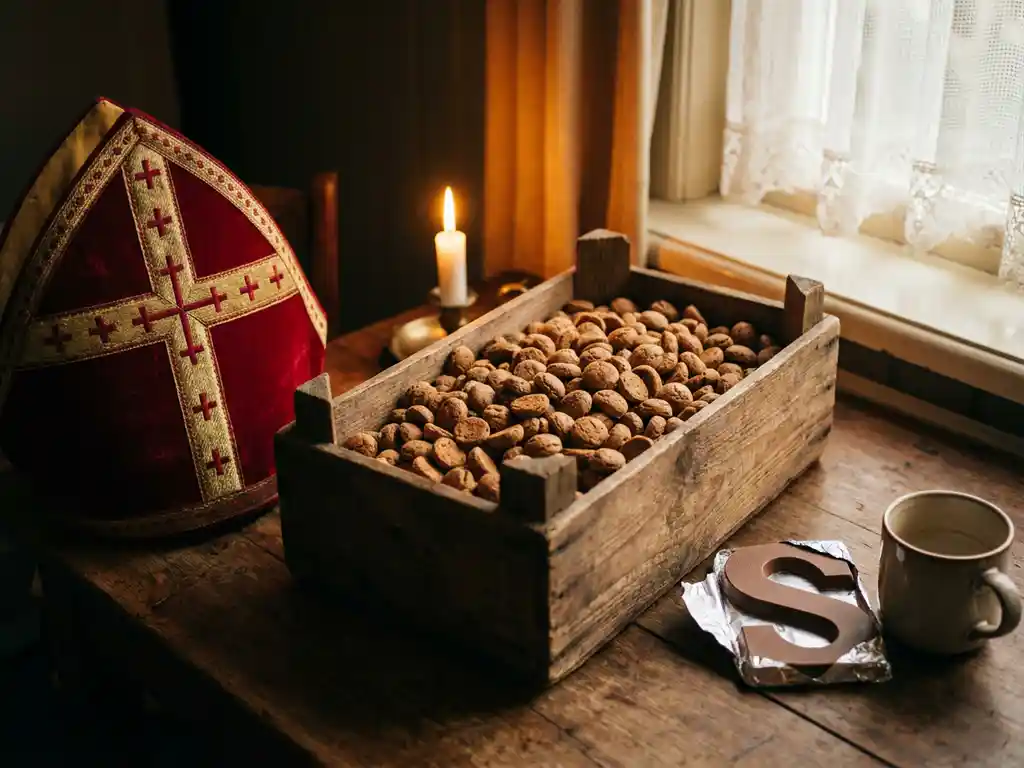
Pepernoten are small, spiced biscuits that are the most iconic Sinterklaas treat. They are made with a blend of warming spices, including cinnamon, cloves, and anise, and they appear in every supermarket, bakery, and household from mid-October onward. Throwing pepernoten to children is a beloved part of the Sinterklaas arrival festivities.
Beyond pepernoten, the Sinterklaas season brings a wonderful range of traditional sweets worth exploring:
- Kruidnoten — often confused with pepernoten, these are smaller, crunchier, and slightly different in spice profile.
- Speculaas — thin, crispy spiced biscuits often shaped like Sinterklaas figures.
- Chocoladeletters — chocolate in the shape of your initial, a classic Sinterklaas gift.
- Marzipan figures — almond paste shaped into fruits, animals, or seasonal characters.
Supermarkets begin stocking these treats earlier each year, and sharing a bag of pepernoten with colleagues or neighbors is a simple, genuine way to participate in the season. As someone settling in the Netherlands, accepting and offering these treats is a small but meaningful cultural gesture that Dutch people genuinely appreciate.
What is the difference between Sinterklaas and Santa Claus?
The key difference between Sinterklaas and Santa Claus is that they are distinct traditions with different dates, appearances, origins, and cultural meanings—even though Santa Claus historically evolved from the Dutch Sinterklaas figure brought to America by settlers.
Here is how they differ in practice:
- Date: Sinterklaas is celebrated on December 5; Santa Claus on December 24–25.
- Appearance: Sinterklaas wears a bishop’s red robes and a tall mitre; Santa wears a red suit with a wide belt.
- Home base: Sinterklaas lives in Spain; Santa lives at the North Pole.
- Transport: Sinterklaas travels by steamboat and on a white horse; Santa travels by sleigh pulled by reindeer.
In the Netherlands, Christmas (December 25) is also celebrated, but it is traditionally a quieter, more religious occasion centered on family meals. Sinterklaas is the gift-giving event that Dutch children truly look forward to. For expats from countries where Santa Claus dominates, this distinction is important—do not confuse the two in conversation with Dutch friends, as Sinterklaas holds a very special cultural place.
How can expats and internationals join in the Sinterklaas celebration?
Expats and internationals can join in the Sinterklaas celebration by attending public arrival events, participating in office or community gift exchanges, learning a few traditional songs, and embracing the playful spirit of the season. The Dutch are generally delighted when newcomers show genuine interest in their traditions.
Public Intocht events are free to attend and take place in cities across the Netherlands, including Eindhoven and Tilburg. These are festive, family-friendly occasions with music, crowds, and the unmistakable joy of watching children spot Sinterklaas for the first time. Attending one is an instant connection to Dutch community life.
In workplaces, many Dutch companies organize a Sinterklaas gift exchange among colleagues. If you are invited to participate, embrace it fully. Write a thoughtful or humorous poem, wrap your gift creatively, and enjoy the laughter that follows. This kind of shared experience is exactly how friendships with Dutch colleagues begin to deepen beyond polite small talk.
Learning a few lines of classic Sinterklaas songs like “Sinterklaas Kapoentje” or “Zie Ginds Komt de Stoomboot” will earn you genuine smiles from Dutch friends and neighbors. It signals effort, warmth, and curiosity—qualities the Dutch respect and respond to warmly.
How Dutch on Track Helps You Feel at Home in the Netherlands as an Expat
Understanding Sinterklaas is just one piece of the puzzle when it comes to truly settling in the Netherlands. Language is the key that unlocks real connection—with colleagues, neighbors, and the wider community around you. That is exactly where we come in.
At Dutch on Track, we offer Dutch language courses specifically designed for expats, internationals, and their partners in Eindhoven and Tilburg. Our courses are not just about grammar and vocabulary—they are about giving you the confidence and the words to participate in Dutch life. Think of it as language learning that doubles as a social life. Our small groups of 8 to 10 students mean you practice with real people in a warm, supportive setting, and many of our students find that their classmates become their first genuine friends in the Netherlands.
Here is what makes our approach work for people in your situation:
- A communicative method where you speak Dutch from day one, building confidence fast.
- Lessons rooted in real daily life—conversations you will actually have at work, at the market, or at a Sinterklaas party.
- Small groups that create a natural social environment, making it easy to connect with fellow internationals.
- Certified teachers who specialize in Dutch as a Second Language, with experience guiding expats through cultural as well as linguistic learning.
Whether you are a complete beginner or already managing the basics, Dutch on Track has a course at the right level for you. If you are curious about where to start, explore our Beginner Dutch Course from A0 to A1 or schedule a free meeting to talk through your options. There is no better time to start than the season when the Netherlands is at its most joyful and community-minded.