What is the 30% expat rule in the Netherlands?
The 30% ruling in the Netherlands is a tax advantage that allows qualifying expats to receive up to 30% of their gross salary tax-free. It is designed to compensate highly skilled international workers for the extra costs of relocating to and living in the Netherlands. Below, we answer the most common questions about how it works, who qualifies, and what it means for your family.
Who qualifies for the 30% ruling in the Netherlands?
To qualify for the 30% ruling, you must be an employee recruited from abroad who has specific expertise that is scarce in the Dutch labor market. Your employer must be registered in the Netherlands, and you must have lived more than 150 kilometers from the Dutch border for at least 16 of the 24 months before starting your job.
In addition to the distance requirement, there is a minimum salary threshold that your taxable income must meet. This threshold is adjusted annually and differs for employees under 30 who hold a master’s degree, who benefit from a lower limit. Scientific researchers and doctors in training are exempt from the salary requirement entirely.
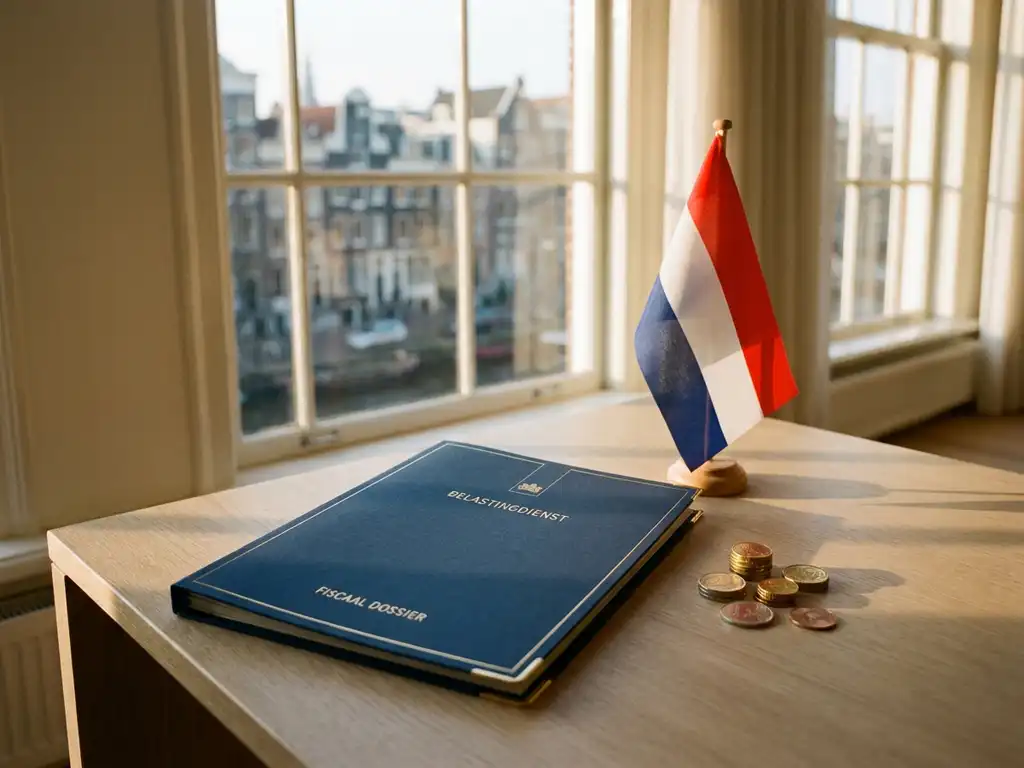
It is worth noting that the 30% ruling is a formal arrangement between your employer and the Dutch Tax Authority (Belastingdienst). Your employer must agree to apply the ruling and file the application on your behalf. You cannot apply independently as an employee.
How much money does the 30% ruling actually save?
The 30% ruling allows your employer to pay up to 30% of your agreed gross salary as a tax-free allowance. In practice, this means that only 70% of your salary is subject to Dutch income tax. Since Dutch income tax rates can reach over 49% in the highest bracket, the savings for higher earners can be very substantial over the course of a year.
Beyond the direct income tax benefit, holders of the 30% ruling can also opt to be treated as partial non-resident taxpayers. This means certain foreign assets, such as savings or investments held abroad, may not be subject to Dutch wealth tax (Box 3). For expats with significant assets in their home country, this additional benefit can add meaningful financial value.
The actual savings depend on your salary level, your personal situation, and how your employer structures the arrangement. Speaking with a Dutch tax advisor is the most reliable way to calculate your specific benefit.
How long does the 30% ruling last?
As of 2026, the 30% ruling lasts for a maximum of five years. This period was reduced from the previous eight-year maximum following legislative changes introduced in recent years. The five-year clock starts from your first working day in the Netherlands under the ruling, not from the date your application is approved.
Any periods you previously lived or worked in the Netherlands are deducted from your total entitlement. So if you spent two years in the Netherlands within the past 25 years, your maximum remaining duration would be reduced accordingly. This makes it important to be transparent about your residential history when applying.
How do you apply for the 30% ruling in the Netherlands?
Your employer applies for the 30% ruling on your behalf by submitting a request to the Dutch Tax Authority. The application must be filed within four months of your first working day in the Netherlands for the ruling to apply retroactively from your start date. If you apply after this window, the ruling will only take effect from the month following the application.
The application requires documentation that proves you meet the qualifying conditions, including:
- Proof of your home address in the 24 months before starting work (showing the 150 km requirement)
- A copy of your employment contract and salary details
- Evidence of your qualifications or expertise
- Your employer’s registration details with the Dutch Tax Authority
Once approved, the Belastingdienst issues a ruling letter that your employer uses to apply the tax-free allowance to your monthly payslip. The process typically takes several weeks, so it is wise to start gathering documents as early as possible after your arrival.
Does the 30% ruling apply to expat partners and family members?
The 30% ruling applies only to the employee who meets the qualifying criteria. It does not automatically extend to a partner or other family members. However, partners and dependents who move to the Netherlands alongside the ruling holder can benefit indirectly through the partial non-resident taxpayer status, which may reduce their Dutch wealth tax obligations on foreign assets.
For expat partners who are not working or who are looking for employment in the Netherlands, the financial relief provided by the ruling can ease the transition significantly. It can reduce household financial pressure while a partner focuses on building a new life, learning the language, and finding their footing in a new country.
Speaking Dutch makes that process much smoother. Learning Dutch from scratch helps expat partners navigate daily life, build social connections, and eventually re-enter the workforce with greater confidence. Integration in the Netherlands is about more than paperwork — it is about feeling at home.
What happens to the 30% ruling if you change jobs?
If you change employers in the Netherlands, your 30% ruling does not automatically transfer. Your new employer must submit a fresh application to the Belastingdienst within three months of your new employment start date. As long as there is no gap of more than three months between your jobs, the ruling can be continued without interruption, and your remaining entitlement period carries over.
If the gap between jobs exceeds three months, you lose the right to continue the ruling. Your remaining entitlement period is also not extended by any interruption — the five-year maximum continues to count from your original start date. This makes careful timing important when considering a job change during your ruling period.
In the event of redundancy or a career break, it is advisable to consult a tax specialist promptly to understand your options and avoid losing your entitlement unnecessarily.
How Dutch on Track Helps with Expat Life in the Netherlands
Understanding financial arrangements like the 30% ruling is just one piece of settling into life in the Netherlands. The bigger challenge for many expats and their partners is feeling genuinely at home — being able to talk to neighbors, handle appointments independently, and build real friendships beyond the expat bubble. That is where we come in.
At Dutch on Track, we offer Dutch language courses designed specifically for internationals and expat partners in Eindhoven and Tilburg. Our approach goes beyond grammar exercises:
- Small groups of 8 to 10 people create a social, fun environment where you make real connections with fellow internationals
- Our blended learning method combines e-learning preparation with interactive classroom sessions, so every lesson feels practical and relevant to daily life
- All courses run after work hours and are taught by certified specialists in Dutch as a Second Language
- We offer levels from absolute beginner (A0) right through to intermediate (B1), including our flagship Dutch in 1 Year programme
Learning Dutch is one of the most meaningful investments you can make in your integration in the Netherlands. It builds independence, opens doors professionally, and turns daily life from something stressful into something genuinely enjoyable. If you are ready to take that step, schedule a free introductory meeting with Dutch on Track and find out which course fits your life right now.
Frequently Asked Questions
Can I still apply for the 30% ruling if my employer didn't submit the application within the four-month window?
Yes, you can still apply after the four-month deadline, but the ruling will only take effect from the first day of the month following the date your application is submitted — meaning you will lose the retroactive benefit from your start date. This can represent a significant amount of foregone tax savings, so it is worth chasing your employer early if they have not yet initiated the process. If your employer is hesitant or unfamiliar with the procedure, a Dutch tax advisor can guide both parties through the steps.
What is the current minimum salary threshold for the 30% ruling, and what happens if my salary drops below it?
The minimum taxable salary threshold is adjusted each year by the Dutch Tax Authority, so it is important to check the current figure on the Belastingdienst website or with a tax advisor. If your salary falls below the threshold at any point — for example, due to a pay cut, reduced hours, or a role change — you may no longer qualify and the ruling can be revoked. Employees under 30 with a master’s degree benefit from a lower threshold, and scientific researchers are exempt from the requirement entirely.
What are the most common mistakes expats make when applying for the 30% ruling?
The most frequent pitfalls include missing the four-month application deadline, failing to accurately disclose previous periods of residence in the Netherlands (which reduce your entitlement), and not gathering the required documentation before starting work. Another common mistake is assuming the ruling transfers automatically when changing jobs — it does not, and your new employer must file a fresh application within three months. Working with a Dutch tax specialist from the outset can help you avoid costly errors that are difficult to correct after the fact.
Does the 30% ruling affect my Dutch state pension (AOW) build-up or other social benefits?
The 30% ruling itself does not directly affect your AOW (Dutch state pension) accrual, as pension build-up is based on your years of legal residence in the Netherlands rather than your taxable income. However, the partial non-resident taxpayer status that often accompanies the ruling can have implications for other tax-related benefits and deductions, so it is worth reviewing your full financial picture with a tax advisor. Entitlement to certain income-dependent allowances, such as healthcare or housing allowances, may also be influenced by how your income is structured under the ruling.
Can self-employed expats or freelancers in the Netherlands benefit from the 30% ruling?
No — the 30% ruling is exclusively available to employees working under a formal employment contract with a Dutch-registered employer. Self-employed individuals, freelancers, and contractors working through their own business entity (such as a ZZP or BV structure) are not eligible. If you are considering a move from employment to self-employment in the Netherlands, be aware that this transition will end your 30% ruling entitlement, and the remaining period cannot be resumed if you later return to employed work.
What happens to the 30% ruling if I work partly from home in another country or travel frequently for work?
If you regularly work from a country other than the Netherlands — for example, working remotely from your home country for extended periods — this can affect both your tax residency status and the validity of your 30% ruling. The ruling is tied to your employment in the Netherlands, and significant time spent working abroad may trigger tax obligations in another country or jeopardise your Dutch tax residency. It is advisable to discuss your working arrangements with a cross-border tax specialist, particularly as remote and hybrid work patterns have become more complex to navigate.
Is it worth getting a Dutch tax advisor specifically for the 30% ruling, or can my employer handle everything?
While your employer is responsible for submitting the application, their HR or payroll team may not be fully up to date on all the nuances — particularly around partial non-resident status, foreign asset exemptions, or the impact of job changes and salary adjustments. A Dutch tax advisor who specialises in expat taxation can help you maximise the full financial benefit of the ruling, ensure your annual tax return is filed correctly, and flag any risks before they become problems. Given the potential savings involved, the cost of professional advice is almost always outweighed by the value it protects.