Which online Dutch course is best for progressing from A1 to A2?
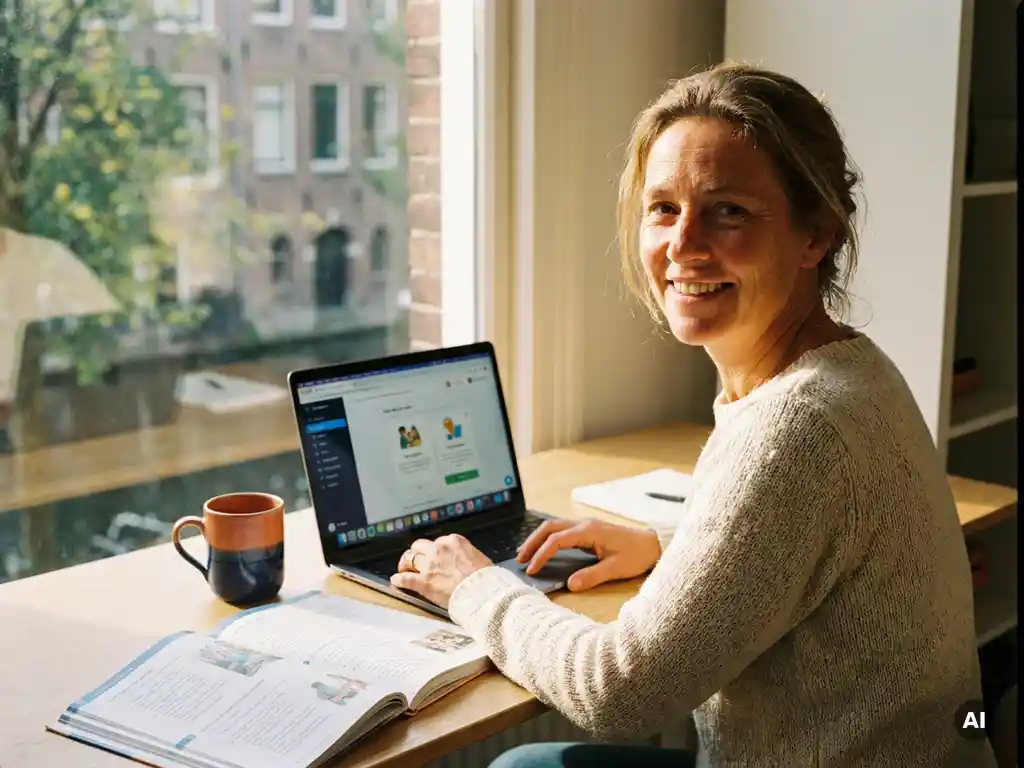
The best online Dutch course for moving from A1 to A2 combines structured grammar progression with plenty of speaking practice and real-life listening exercises. For most learners, a guided course with a qualified teacher outperforms self-study apps at this stage, because the A1 to A2 jump requires active feedback, not just passive exposure. Below, we answer the most common questions about making this transition effectively.
How long does it take to go from A1 to A2 in Dutch?
Most motivated adult learners take between three and six months to move from A1 to A2 in Dutch, assuming they study consistently for around four to six hours per week. The exact timeline depends on your native language, how much Dutch you encounter in daily life, and whether you get regular speaking practice alongside your formal study time.
Learners who already speak German or another Germanic language often progress faster because they recognise vocabulary patterns and sentence structures. If your first language is further from Dutch, such as Japanese or Arabic, allow yourself more time and be patient with the process. What matters most is consistency. Short, regular practice sessions beat occasional long study marathons every time.
Living in the Netherlands gives you a real advantage at this stage. Hearing Dutch on the street, in shops, and on television adds hours of passive input that accelerates your progress in ways that pure classroom study cannot replicate.
What skills are tested at the A2 Dutch level?
At A2 level, Dutch learners are expected to understand and use everyday expressions related to familiar topics such as shopping, directions, health, and simple social interactions. The Common European Framework of Reference (CEFR) defines A2 as the ability to communicate in simple, routine situations that require a direct exchange of information.
Specifically, you should be able to:
- Introduce yourself and others, and ask and answer basic personal questions
- Understand short, simple texts and notices
- Write brief messages, such as a note to a neighbour or a simple email
- Follow slow, clearly spoken Dutch on familiar subjects
- Handle routine transactions at a shop, a doctor’s office, or a school
The emphasis at A2 is firmly on practical communication rather than grammatical perfection. You do not need to master complex verb tenses or lengthy sentences. What examiners and teachers look for is whether you can get your meaning across confidently in familiar, real-world situations.
What should an online Dutch course include to move you from A1 to A2?
A good online Dutch course for the A1 to A2 transition should include structured vocabulary building, grammar explanation in context, regular speaking opportunities, and listening exercises based on realistic everyday scenarios. Without all four elements, progress tends to stall at one particular skill while others fall behind.
Look specifically for these features:
- Graded listening exercises that use natural Dutch speech, not just slow, over-pronounced recordings
- Speaking or conversation practice, either with a teacher, a tutor, or other learners in a group setting
- Grammar taught through example, not just rules in isolation, so you understand how structures work in real sentences
- Vocabulary linked to daily life, covering topics like the supermarket, public transport, healthcare, and social situations
- Progress tracking so you can see where you are improving and where you need more work
Avoid courses that focus almost entirely on written exercises or vocabulary drilling. At this level, the biggest risk is becoming a learner who can write reasonably well but freezes the moment a Dutch person speaks to them at normal speed.
What’s the difference between self-paced and guided online Dutch courses?
Self-paced courses let you study whenever and however you like, using pre-recorded videos, apps, or written materials. Guided courses follow a set schedule with a teacher or trainer who provides feedback, corrects your Dutch, and keeps you accountable. For moving from A1 to A2, these two approaches produce noticeably different results.
Self-paced courses
Self-paced options like apps and video platforms are excellent for building vocabulary and getting comfortable with written Dutch. They are flexible, affordable, and useful as a supplement. The limitation is that they rarely give you the speaking practice or personalised correction that this stage of learning genuinely requires. Many learners plateau on self-paced courses because there is no one to push them past their comfort zone.
Guided courses
Guided Dutch language courses, especially those taught in small groups or one-to-one, give you structured progression, real-time feedback, and the social pressure that motivates consistent study. A teacher notices when you are avoiding certain grammar patterns or mispronouncing the same sounds repeatedly, and corrects you in the moment. That kind of feedback is very difficult to replicate with software alone.
The ideal approach at A1 to A2 level is to combine both: use a self-paced tool for daily vocabulary review and listening, and attend a guided course for speaking practice and structured grammar work.
Which type of online Dutch course works best for expat partners?
For expat partners, a guided group course that focuses on practical, conversational Dutch works best. This is because the primary goal for most expat partners is not passing a formal exam but becoming independent in daily life, whether that means talking to a doctor, chatting with a neighbour, or navigating a parent-teacher evening at school.
Group courses offer something that apps and solo study simply cannot: community. Learning alongside other internationals who are navigating the same experiences creates a sense of connection and shared purpose that makes the process genuinely enjoyable. Many expat partners find that their classmates become their first real social circle in the Netherlands, which is itself a powerful motivator to keep showing up and keep improving.
The best courses for this group also teach Dutch in context. Rather than drilling abstract grammar rules, they use scenarios drawn from real life in the Netherlands, so what you practise on Tuesday you can actually use on Wednesday.
We built our Dutch on Track programme around exactly this principle. Our small group classes of eight to ten participants meet after work hours, combine e-learning preparation with interactive classroom sessions, and focus on building the confidence to speak from day one. Whether you are aiming for A2 or working toward B1, here is what we offer:
- Certified teachers specialised in Dutch as a Second Language
- Small, friendly groups where you practise with other internationals in the same situation
- A blended learning method that combines online preparation, live classroom practice, and consolidation exercises
- Practical, real-life content relevant to daily life in Eindhoven and Tilburg
- A social, fun environment where making mistakes is encouraged, not penalised
Ready to take the next step? Schedule a free meeting and we will help you find the right course level and format for where you are right now.
How can you practise Dutch outside of class to reach A2 faster?
Practising Dutch outside of formal lessons is one of the most effective ways to accelerate your progress from A1 to A2. Even thirty minutes of daily real-world exposure can significantly shorten the time it takes to reach the next level, because it forces you to use Dutch in unpredictable, authentic situations rather than controlled exercises.
Here are practical ways to build that daily habit:
- Talk to your neighbours, even briefly. A simple “goedemorgen” or a comment about the weather counts as real practice.
- Switch your phone or social media to Dutch so you absorb common words and phrases passively throughout the day.
- Listen to Dutch radio or podcasts during commutes or household tasks. You do not need to understand everything. Regular exposure trains your ear.
- Shop in Dutch. Ask where something is, read labels, and try to make small talk at the checkout.
- Watch Dutch television with Dutch subtitles rather than subtitles in your native language.
- Find a language exchange partner online or through a local expat group who wants to practise your language in return for helping you with Dutch.
The key is removing the pressure of perfection. At A1 to A2 level, every conversation attempt, however imperfect, builds the neural pathways that make Dutch feel more natural over time. The learners who reach A2 fastest are not the ones who study the most grammar. They are the ones who speak the most, make the most mistakes, and keep going anyway.
Frequently Asked Questions
Can I take an online Dutch course if I have no prior experience with the language at all?
Yes, absolutely. A1 is the true beginner level, so a course designed for A1 to A2 learners starts from the very basics, including greetings, numbers, and simple sentence structures. You do not need any prior knowledge of Dutch to enrol. That said, if you have never encountered the language before, spending a week or two with a free app like Duolingo to familiarise yourself with Dutch sounds and basic words can make your first few lessons feel less overwhelming.
What if I already tried a Dutch course and stopped? Is it hard to pick up again from where I left off?
Returning to Dutch after a break is very common, and most learners find that their passive knowledge comes back faster than expected once they start again. The key is to do a brief review of core A1 vocabulary and verb conjugations before jumping back in, rather than starting entirely from scratch. A placement conversation with a teacher, like the free meeting Dutch on Track offers, is one of the most efficient ways to quickly identify exactly where you left off and what needs refreshing before you continue.
How do I know if I am ready to move on from A1 to an A2-level course?
A good rule of thumb is that you are ready for A2 content when you can introduce yourself, talk about your daily routine, and handle very simple transactions like ordering food or asking for directions, even if slowly and with some mistakes. If you are unsure, many language schools offer a short placement test or a free intake conversation to assess your level before you commit to a course. Choosing a level that is slightly challenging rather than completely comfortable is actually ideal, because productive struggle is what drives the most progress.
Is it possible to reach A2 Dutch purely through free online resources, without paying for a course?
It is technically possible, but for most learners it takes significantly longer and results in noticeable skill gaps, particularly in speaking and listening comprehension. Free tools like Duolingo, YouTube channels, and language exchange apps can cover vocabulary and basic grammar, but they rarely provide the structured progression or real-time feedback needed to build genuine conversational confidence. If budget is a concern, a practical middle ground is to use free resources for daily practice while investing in even a short guided course for the speaking and grammar components that are hardest to develop alone.
What are the most common mistakes Dutch learners make at the A1 to A2 stage?
The most frequent mistake is over-focusing on grammar rules and written accuracy while avoiding speaking practice. Many learners feel they need to be “ready” before they speak, but waiting for perfection means missing the very practice that builds fluency. Other common pitfalls include neglecting listening skills by only studying written materials, failing to review vocabulary regularly so it never moves into long-term memory, and studying in long infrequent sessions rather than short daily ones. Addressing all four skills, speaking, listening, reading, and writing, from early on prevents these imbalances from becoming entrenched habits.
Do I need to pass a formal A2 Dutch exam, and if so, which one should I take?
Whether you need a formal exam depends entirely on your goals. For daily life integration and personal confidence, no certificate is required. However, if you are applying for Dutch citizenship, a residence permit, or certain jobs, you may need to sit an official exam such as the Staatsexamen NT2 (Programme I or II) or the Inburgeringsexamen, both of which are aligned to CEFR levels. If exam preparation is your goal, make sure your course explicitly covers the format and skills tested in your target exam, as general language courses and exam-preparation courses are structured quite differently.
How do I stay motivated when progress feels slow or I hit a plateau?
Plateaus between A1 and A2 are extremely normal and usually signal that your brain is consolidating what it has already learned rather than stalling permanently. Tracking small wins, such as understanding a sentence on the radio or successfully completing a transaction at a shop, helps you recognise progress that pure grammar tests might not capture. Changing up your study routine with a new podcast, a Dutch film, or a conversation partner can also reignite momentum. If you are learning in a group course, simply staying consistent and showing up is often enough, because the social accountability and shared experience of classmates carries you through the difficult patches.
Related Articles
- What happens if expats skip integration in the Netherlands?
- What is the hardest thing about learning Dutch?
- What is the climate like in the Netherlands?
- How do Dutch language courses prepare you for real conversations, not just exams?
- How do you combine learning Dutch with a full-time job in the Netherlands?