Why do Dutch people eat dinner so early?
If you have recently arrived in the Netherlands, you may have noticed something that catches almost every expat off guard: your Dutch neighbours are already sitting down for dinner at a time when you are still thinking about an afternoon snack. Understanding the food habits and daily rhythms of Dutch life is one of those small but genuinely important steps towards settling in the Netherlands and feeling at home. Once you understand the reasoning behind these customs, daily life starts to make a lot more sense.
Dutch food culture can feel puzzling at first, especially if you come from a country where dinner is a late, leisurely affair. But there is a logic to it, rooted in history, work culture, and a deeply practical national character. This guide answers the most common questions expats ask about Dutch eating habits, so you can navigate expat life in the Netherlands with a little more confidence and a lot less confusion.
What time do Dutch people typically eat dinner?
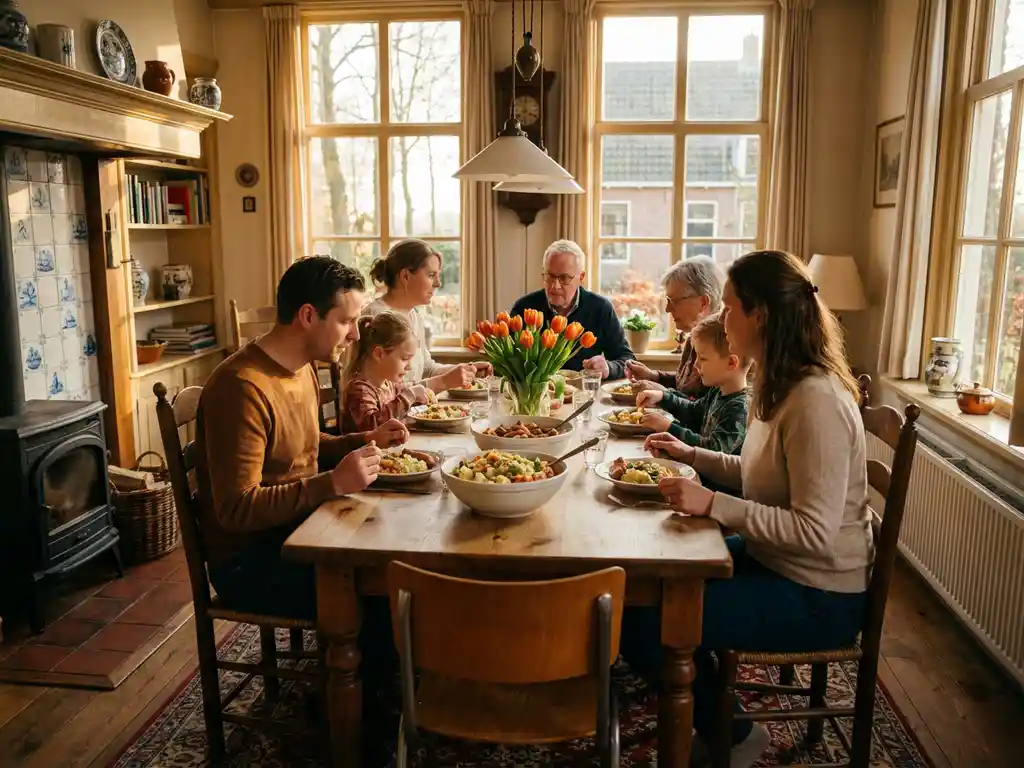
Dutch people typically eat dinner between 17:30 and 18:30. This is noticeably earlier than in most Southern European, Latin American, or Middle Eastern countries, where dinner often starts at 20:00 or later. In many Dutch households, the evening meal is on the table by 18:00 at the latest, and children are often fed even earlier.
This early dinner time is closely tied to the Dutch working day. Many offices and schools operate on schedules that end in the mid-afternoon, and the culture strongly values being home in time for a family meal. There is also a long-standing tradition of structuring the day around three clear mealtimes: a simple breakfast, a light lunch, and an early dinner. Snacking between meals is not as ingrained in Dutch culture as it is elsewhere, which makes that early dinner feel less surprising once you understand the full rhythm of the day.
How does Dutch food culture differ from other countries?
Dutch food culture differs from many other countries primarily in its emphasis on simplicity, practicality, and efficiency over elaborate preparation or social spectacle. While food in countries like Italy, Spain, or Lebanon is often a central social event lasting hours, in the Netherlands a meal tends to be functional, straightforward, and relatively brief.
The role of food in daily Dutch life
In the Netherlands, food is generally seen as fuel rather than entertainment. A typical Dutch lunch, for example, consists of two slices of bread with a single topping, eaten quickly at a desk or kitchen table. This contrasts sharply with the long, multi-course lunches common in France or the elaborate mezze spreads of Mediterranean cultures. The Dutch approach is not about indulgence but about getting on with the day.
Social eating versus practical eating
That said, the Dutch absolutely do socialise around food. Birthday parties, Friday afternoon drinks, and holiday meals are important social rituals. The difference is that everyday eating is kept simple, while special occasions are treated as genuine celebrations. As an expat living in the Netherlands, recognising this distinction helps you understand when a dinner invitation is a big deal and when it is simply a practical arrangement.
Why do Dutch people eat such simple meals?
Dutch people eat simple meals largely because of historical and cultural factors that have shaped a national preference for practicality over extravagance. The Netherlands has a Protestant heritage that historically valued modesty and frugality, and this mindset has carried through into everyday habits, including how people eat.
The classic Dutch dinner is known as stamppot, a mashed combination of potatoes and vegetables, often served with sausage or meatballs. It is hearty, filling, and requires minimal preparation. Many traditional Dutch dishes follow this same logic: they are designed to be nutritious and satisfying without demanding hours of cooking. For a culture that prizes efficiency and directness, this makes complete sense. You will also notice that portion sizes tend to be moderate, and that wasting food is genuinely frowned upon.
Another factor is the Dutch climate and agricultural history. Root vegetables, dairy, and preserved foods formed the backbone of the Dutch diet for centuries, and that legacy is still visible on dinner tables today. Understanding this history makes it easier to appreciate Dutch cuisine on its own terms rather than comparing it unfavourably to richer culinary traditions.
How can understanding Dutch food habits help with integration?
Understanding Dutch food habits helps with integration by giving you practical insight into the rhythms, values, and social codes of Dutch daily life. Food is one of the most immediate and personal ways that cultural differences show up, and navigating those differences thoughtfully opens doors to genuine connection with your Dutch neighbours and colleagues.
When you understand that a Dutch colleague who eats lunch at their desk in ten minutes is not being antisocial but is simply following a deeply ingrained cultural norm, you stop reading it as rudeness. When you know that an invitation to dinner at 18:00 is meant literally and not as a suggestion, you show up on time and make a good impression. These small moments of cultural fluency add up quickly.
- Accepting food customs without judgement builds trust with Dutch colleagues and neighbours
- Knowing meal timing helps you plan your own day and social life more effectively
- Engaging with Dutch food traditions, even simple ones, shows genuine interest in the culture
- Sharing your own food culture in return creates natural conversation and friendship
Food is also one of the easiest entry points into social connection. Bringing something from your home country to share, or asking a Dutch person to explain a dish you have seen at the supermarket, opens conversations that are warm, low-stakes, and genuinely enjoyable. Integration is rarely about grand gestures. It is built in small, everyday moments exactly like these.
How Dutch on Track helps with living in the Netherlands as an expat
Understanding Dutch food habits is just one piece of the puzzle. Truly feeling at home in the Netherlands means being able to communicate, connect, and navigate daily life with confidence. That is exactly what we help you do at Dutch on Track. Our Dutch language courses are designed specifically for expats, internationals, and their partners in Eindhoven and Tilburg, and we know that language learning is about so much more than grammar.
Our classes are small, with just 8 to 10 participants, which means you practise speaking in a supportive and social environment from day one. You will not just learn Dutch. You will make friends, share experiences, and build a real sense of community with other internationals who are navigating the same journey. It is fun, it is practical, and it is one of the most effective ways to feel less like a visitor and more like someone who belongs.
- Courses from absolute beginner (A0) to intermediate (B1), including the flagship Dutch in 1 Year programme
- Evening classes from 17:45 to 19:45, designed around work and family schedules
- Central locations in Eindhoven and Tilburg, easy to reach after work
- Certified teachers specialising in Dutch as a Second Language for internationals
If you are ready to take the next step in your Dutch adventure, explore our Beginner Dutch Course or schedule a free meeting with Dutch on Track to find the right course for you.
Frequently Asked Questions
Is it considered rude to bring your own food customs to a Dutch dinner or social gathering?
Not at all — Dutch people are generally curious and open about other food cultures, and sharing a dish from your home country is often warmly received. The key is to be mindful of timing and practicality; if you are invited to dinner at 18:00, arriving with a dish that takes another two hours to prepare may not land as well as something ready to share. Offering food from your culture is one of the easiest and most natural ways to start genuine conversations and build friendships with Dutch hosts.
What should I expect if I am invited to a Dutch person's home for dinner for the first time?
Expect the invitation time to be exact — if you are told 18:00, arrive at 18:00, not 18:30. The meal will likely be straightforward and hearty rather than elaborate, and the evening may wrap up earlier than you are used to, often by 21:00 or 22:00. Bringing a small gift such as wine, flowers, or something from your home country is a thoughtful gesture that is always appreciated, even if it is not strictly required.
I am used to eating dinner much later in the evening. How do I adjust to the Dutch meal schedule without feeling constantly hungry?
The most practical approach is to gradually shift your lunch and dinner times forward by 30 minutes every few days until you align with the Dutch rhythm, rather than making an abrupt change. You can also allow yourself a small, light snack in the late afternoon while you are adjusting — this is perfectly normal and will help bridge the gap. Over time, your body clock will adapt naturally, especially once your work or school schedule starts anchoring your day to Dutch timings.
Are there any common mistakes expats make when navigating Dutch food culture?
One of the most common mistakes is interpreting Dutch simplicity around food as a lack of hospitality or warmth — it is neither, it is simply a different set of values. Another is assuming that a casual lunch invitation carries the same social weight as a dinner invitation, when in Dutch culture the latter is usually a more deliberate and meaningful gesture. Finally, expats sometimes over-explain or apologise for their own different food habits, when in reality most Dutch people are genuinely interested in hearing about them.
How can learning Dutch help me engage more deeply with Dutch food culture and daily life?
Speaking even basic Dutch unlocks a whole layer of everyday cultural connection that stays out of reach when you rely solely on English. Being able to ask a neighbour about a traditional recipe, read a product label at the supermarket, or chat with a market vendor in their own language transforms routine moments into genuine cultural experiences. Language is the bridge between observing a culture from the outside and actually participating in it — and Dutch food culture, with its rich vocabulary of regional dishes and culinary traditions, is a wonderfully practical place to start.
Are there regional differences in Dutch food habits that expats should be aware of?
Yes, there are subtle but noticeable regional differences across the Netherlands. The south of the country, particularly Noord-Brabant and Limburg — where cities like Eindhoven and Tilburg are located — tends to have a slightly more relaxed and food-celebratory culture, influenced by proximity to Belgium and a stronger Catholic heritage compared to the more Protestant north. You may find that social meals in the south are a little longer and more elaborate than the Dutch average, which can feel like a gentler introduction to Dutch food culture for expats arriving in that region.
What are some approachable Dutch dishes to try first as a newcomer?
Stamppot is the obvious starting point — it is comforting, filling, and widely available in supermarkets and traditional Dutch restaurants, making it easy to try without much effort. Stroopwafels, bitterballen, and Dutch cheese (kaas) are also excellent entry points because they are universally loved and come up constantly in social settings, from office birthdays to Friday afternoon drinks. Starting with these familiar, crowd-pleasing foods gives you an easy way to connect with Dutch colleagues and neighbours over something they genuinely enjoy talking about.