Why do expats find Dutch culture so difficult to understand?
Expats find Dutch culture difficult to understand because it operates on a set of deeply held values, such as radical directness, fierce egalitarianism, and a strong preference for privacy, that are rarely explained and even more rarely apologized for. These values shape everything from how Dutch people give feedback at work to how they greet their neighbors, and they can feel bewildering or even rude to someone raised in a different cultural context. The questions below unpack the most common points of confusion, one by one.
What makes Dutch directness so shocking for newcomers?
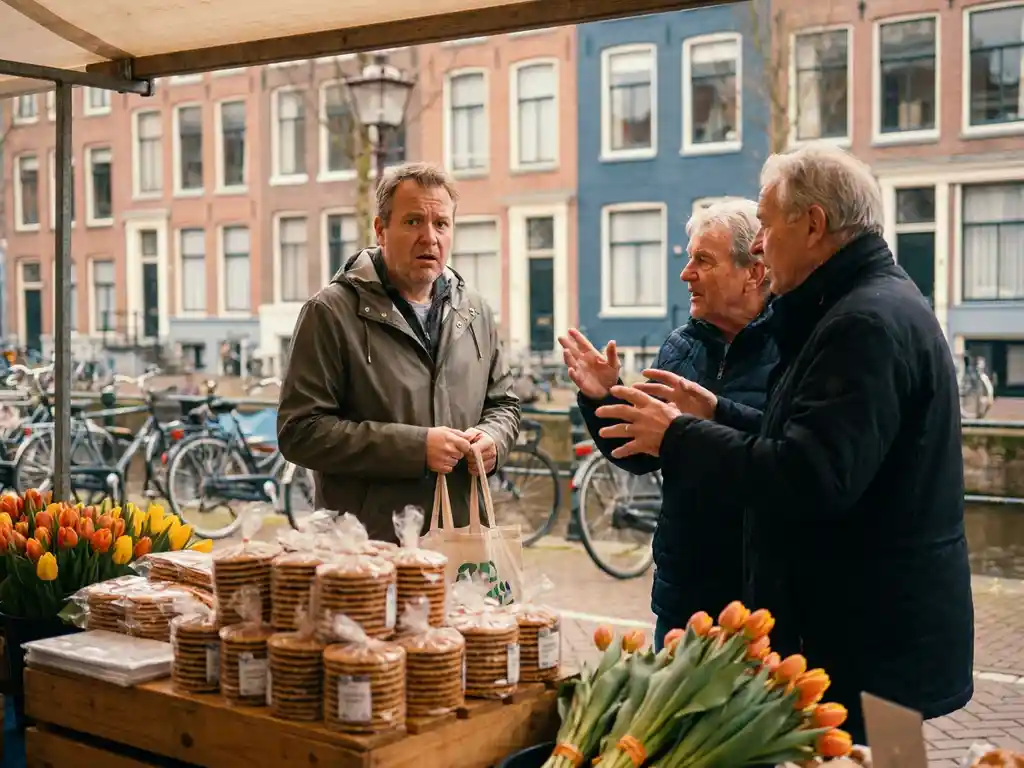
Dutch directness is shocking for newcomers because the Netherlands has one of the lowest-context communication cultures in the world. Dutch people say exactly what they mean, without softening language or diplomatic detours, because they genuinely believe that honesty is more respectful than politeness. For someone from a high-context culture, this bluntness can feel like rudeness or even hostility, even when no offense is intended.
In practice, this means a Dutch colleague will tell you plainly that your idea has a flaw. A Dutch acquaintance will tell you that your haircut does not suit you. A shop assistant will tell you that the item you want is not worth the price. None of these comments carry the social weight they would in many other cultures. They are simply information, delivered efficiently.
Understanding this reframe is one of the most liberating moments for expats settling in the Netherlands. Once you recognize that directness is a form of respect rather than an attack, Dutch interactions start to feel refreshingly honest rather than unsettling.
Why do Dutch people seem unfriendly at first?
Dutch people seem unfriendly at first because they draw a clear distinction between acquaintances and friends, and they do not perform warmth they do not yet feel. In many cultures, social warmth is extended freely as a default. In the Netherlands, it is earned gradually through repeated, genuine interaction. A Dutch person who does not know you well will not pretend otherwise.
This cultural norm is sometimes called the “Dutch wall.” It is not hostility. It is simply that Dutch social culture places a high value on authenticity. Small talk for its own sake feels hollow to many Dutch people, and they would rather say little than say something insincere.
The good news is that once you are inside that wall, Dutch friendships tend to be remarkably loyal and low-maintenance. Dutch friends show up, keep their word, and treat you as an equal. Getting there takes patience, but the payoff is real.
How does Dutch egalitarianism affect daily life for expats?
Dutch egalitarianism affects daily life for expats in ways that are both liberating and disorienting. The Netherlands has a deeply rooted belief that no person is inherently more important than another, regardless of title, wealth, or status. This shows up in flat workplace hierarchies, direct communication with authority figures, and a general suspicion of anyone who seems to consider themselves above the group.
For expats coming from cultures with strong hierarchical norms, this can be confusing. Your manager may sit in an open office, invite disagreement in meetings, and expect you to use their first name from day one. A government official will speak to you as a peer. A doctor will explain your options and ask what you think rather than simply issuing instructions.
On the other hand, egalitarianism also means that standing out or drawing attention to your achievements can backfire socially. There is even a well-known Dutch concept, doe maar gewoon, dan doe je al gek genoeg, which roughly translates as “just act normal, that’s already crazy enough.” Modesty and fitting in are valued. Understanding this unwritten rule saves expats from a great deal of social friction.
What are the unwritten rules of Dutch social life?
The unwritten rules of Dutch social life center on a few core principles: respect for personal boundaries, punctuality, reciprocity, and a strong preference for planning over spontaneity. Breaking any of these without realizing it is one of the most common reasons expats feel like they are struggling to connect.
- Always make appointments in advance. Dropping by unannounced, even at a friend’s home, is considered intrusive in most Dutch households.
- Be on time. Arriving late to a dinner or social event is genuinely considered disrespectful, not fashionably relaxed.
- Going Dutch is the norm. Splitting bills equally is standard, and offering to pay for everyone can even feel patronizing rather than generous.
- Respect privacy and personal space. Asking personal questions too early in a relationship, or commenting on someone’s home or lifestyle without being invited to, crosses a line most Dutch people will notice but not mention.
Once you know these rules exist, navigating Dutch social life becomes far more manageable. Many expats describe the moment they understood these norms as a turning point in feeling settled.
Why is learning Dutch so important for cultural integration?
Learning Dutch is important for cultural integration because language is not just a communication tool in the Netherlands, it is a signal of commitment. Dutch people notice and genuinely appreciate when an expat makes the effort to speak their language, even imperfectly. It opens doors, both socially and professionally, that English simply cannot unlock.
Most Dutch people speak excellent English, which can create a false sense of security. You can get through daily life in English, but you will always be slightly on the outside of conversations, humor, and community. The neighbor who chats over the fence, the parent group at your child’s school, the casual exchange at the market: these moments build belonging, and they happen in Dutch.
Beyond the practical benefits, learning the language accelerates your understanding of the culture itself. Dutch idioms, humor, and even the rhythm of conversation reveal how Dutch people think. Many expats find that their confidence and sense of independence grow significantly once they can handle everyday situations in Dutch, from calling the doctor’s office to chatting with a colleague in the corridor.
This is exactly where we come in. Our beginner Dutch course is designed for expats and their partners who want to move from zero to conversational in a structured, practical way, with real speaking practice from the very first lesson.
How long does it take to feel at home in Dutch culture?
Most expats begin to feel genuinely at home in Dutch culture after one to two years, though the timeline varies significantly depending on language skills, social effort, and how actively someone engages with local life rather than staying within an expat bubble. The first six months are typically the hardest, as cultural differences feel most jarring before you have context for them.
The adjustment tends to happen in stages. The first stage is survival: getting through daily tasks, understanding systems, and managing the practical side of life in a new country. The second stage is comprehension: starting to understand why Dutch people behave the way they do, even if it still feels foreign. The third stage is belonging: having Dutch-speaking friendships, feeling comfortable in local settings, and no longer needing to translate cultural cues consciously.
Language learning accelerates all three stages. Expats who invest in learning Dutch consistently report feeling more independent, more connected, and more confident in their daily lives far sooner than those who rely solely on English. Social connection through a language course also matters more than people expect. Shared learning experiences, conversations with fellow internationals, and the humor that emerges in a small group classroom all contribute to a sense of community that helps counter the isolation many expats feel in their first year.
How Dutch on Track Helps You Feel at Home in the Netherlands
Understanding Dutch culture is one thing. Building the language skills and social confidence to actually live it is another. Dutch on Track is a language program designed specifically for highly educated internationals and expat partners who want to do more than just get by. We combine structured language learning with a communicative approach that gets you speaking from day one, because the fastest way to feel at home is to stop being afraid to try.
- Small group classes of 8 to 10 people, held after work hours in central Eindhoven and Tilburg, so learning fits around your life.
- A blended learning method that combines e-learning preparation, interactive classroom practice, and consolidation, giving you both structure and real conversational experience.
- Certified teachers who specialize in Dutch as a Second Language and understand exactly what expats find challenging about the language and the culture.
Beyond the language itself, our courses are a place to meet people, build friendships, and feel part of something. Many of our students describe their classmates as some of their first real social connections in the Netherlands. That community aspect is not a side effect of learning Dutch. For many expats, it is just as valuable as the language itself.
If you are ready to move from feeling like an outsider to feeling genuinely at home, Dutch on Track is the place to start. Schedule a free meeting and find out which course fits your level and your life.
Frequently Asked Questions
I understand Dutch directness intellectually, but I still find it hurtful in the moment. How do I actually adjust emotionally?
The key is to build a mental habit of pausing before reacting and asking yourself, u0022Would a Dutch person interpret this comment as an attack?u0022 If the answer is no, try to receive it as information rather than criticism. Over time, many expats find it helpful to reframe directness as a form of trust — a Dutch person who tells you the truth is treating you as capable of handling it, which is actually a sign of respect in their cultural framework. Journaling about specific interactions and how you reinterpreted them can also speed up the emotional adjustment significantly.
How do I actually break through the u0022Dutch wallu0022 and start building real friendships?
Consistency and repeated low-pressure contact are the most reliable way through. Rather than trying to have one big, meaningful conversation, focus on showing up regularly — at a sports club, a language course, a neighborhood event, or a recurring work lunch. Dutch friendships tend to form through shared activity over time, not through the kind of quick emotional bonding common in other cultures. Joining a structured group, like a language class or a hobby association, is one of the most practical strategies because it creates natural, repeated contact without the pressure of initiating one-on-one plans.
What are the most common mistakes expats make when navigating Dutch workplace culture?
The three most common mistakes are: staying silent in meetings when you disagree (Dutch colleagues will interpret this as agreement or disengagement, not politeness), over-explaining decisions to your manager when a short, direct summary is expected, and waiting to be formally invited to contribute before sharing your opinion. Dutch workplace culture rewards initiative, honesty, and efficiency. If something is not working, say so clearly and propose a solution — that approach will earn you far more credibility than diplomatic hedging.
Is it really worth learning Dutch if I only plan to stay in the Netherlands for two or three years?
Yes — even a short stay benefits enormously from basic Dutch skills, and the investment pays off faster than most expats expect. Reaching a functional conversational level (around A2) typically takes three to six months of structured study, and the quality-of-life difference is immediate: everyday tasks feel less stressful, social interactions open up, and you stop feeling like a permanent tourist in the country where you live. Dutch is also more transferable than people assume — it provides a strong foundation for German and Afrikaans, and the cognitive benefits of language learning are well-documented regardless of how long you stay.
What should I do if I accidentally break a Dutch social norm and offend someone?
Acknowledge it directly and briefly — which, fittingly, is exactly what a Dutch person would do. A simple, sincere apology without excessive explanation or self-flagellation is the most effective response. Dutch people generally appreciate honesty and do not expect cultural perfection from newcomers; what they do notice is whether you are making a genuine effort to understand and respect their norms. If you are unsure what you did wrong, it is completely acceptable to ask — most Dutch people will respect the directness of the question and give you a straight answer.
How do I avoid falling into an expat bubble while still maintaining the international friendships I already have?
The key is to treat local integration as an active, intentional effort rather than something that happens automatically. Set a concrete goal — such as joining one Dutch-language activity per week — while continuing to nurture your existing international connections. The two are not mutually exclusive. Many expats find that a Dutch language course strikes the ideal balance: it builds local language skills and connects you with fellow internationals who are also actively trying to integrate, which creates a community that bridges both worlds rather than reinforcing the bubble.
Are there specific regions in the Netherlands where Dutch culture feels more or less intense for expats?
Yes, there are noticeable regional differences. Amsterdam and other large cities tend to be more internationally oriented, with a higher tolerance for English and more exposure to diverse cultural norms — which can make initial adjustment easier but can also make it harder to connect with Dutch culture specifically. In cities like Eindhoven, Tilburg, or Groningen, the culture feels more distinctly Dutch, which can be a steeper initial curve but often leads to deeper integration over time. The south of the Netherlands (Noord-Brabant and Limburg) is also widely noted as being somewhat warmer and more sociable in style compared to the more reserved north and west.
Related Articles
- What are the biggest challenges of integration in the Netherlands for expats?
- Do you need a Dutch driving licence as an expat?
- How much income do you need to live in the Netherlands?
- How do Dutch language courses prepare you for real conversations, not just exams?
- How do Dutch language courses help with job opportunities?