Can you take Dutch language courses part-time?
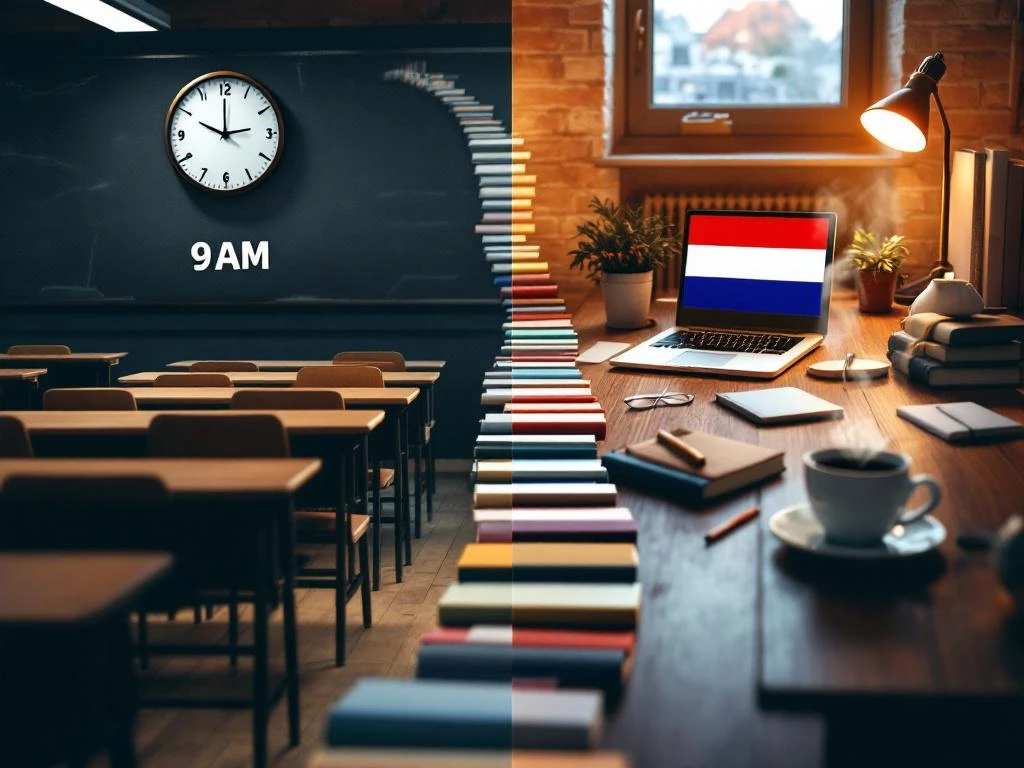
Yes, you can absolutely take Dutch language courses part-time. Many schools offer evening classes, weekend sessions, and flexible scheduling designed specifically for working professionals and busy expats. Part-time Dutch courses typically meet two to three times per week in the evenings, allowing you to maintain your work commitments while steadily progressing in your language-learning journey and connecting with fellow internationals who share similar experiences.
What makes a Dutch course truly part-time friendly?
A truly part-time-friendly Dutch course offers flexible scheduling that accommodates the lives of working professionals. This means evening classes typically starting after 17:30, weekend options, or self-paced components that let you study when it’s convenient. Part-time courses usually meet two to three times per week rather than running daily intensive sessions.
The key difference between part-time and intensive programs lies in the pacing and structure. Part-time courses spread learning over longer periods, giving you time to absorb and practise new concepts while building meaningful connections with your classmates. They often include homework assignments you can complete at your own pace, plus online components that support classroom learning without overwhelming your schedule.
Look for courses that offer small group sizes of 8–10 students, as these provide personal attention while creating a welcoming social environment where friendships naturally develop. The best part-time programs also include practical elements that connect directly to daily life in the Netherlands, including cultural insights and social customs that help you integrate more effectively into Dutch society.
How do you balance learning Dutch with a full-time job?
Balancing Dutch lessons with full-time work requires consistent scheduling and realistic expectations about your progress timeline. Set aside specific times for homework and review, treating them as important appointments you cannot skip. Most successful part-time learners dedicate 30–45 minutes daily to review and practice outside of class time, often finding that studying with classmates or Dutch conversation partners makes this time more enjoyable and effective.
Create a weekly study routine that works with your energy levels and social commitments. Many professionals find that attending evening classes provides the ideal structure for after-work learning, while weekend group study sessions with fellow expats offer additional practice opportunities. Use your commute time for listening practice or vocabulary review through language apps or Dutch podcasts that also introduce cultural topics.
Set realistic goals for your progress while celebrating cultural milestones along the way. Part-time learners typically advance one level every four to six months, compared to two to three months for intensive courses. This slower pace actually benefits retention and allows you to gradually understand Dutch humor, social etiquette, and workplace culture alongside language skills.
Plan your homework around your work schedule and social life. Break larger assignments into smaller daily tasks, and use weekends for more intensive review sessions or cultural activities like visiting Dutch museums or joining local events where you can practice your language skills in authentic settings.
What are the benefits of choosing part-time over intensive Dutch courses?
Part-time Dutch courses offer better retention rates because you have more time to practise and internalise new concepts between lessons. The slower pace allows your brain to process information naturally while giving you opportunities to explore Dutch culture through festivals, local events, and social activities that reinforce your learning in meaningful contexts.
You experience less stress and overwhelm with part-time learning while building a supportive network of fellow expats facing similar challenges. Instead of trying to absorb large amounts of information quickly, you can gradually build confidence as you apply new Dutch skills in daily situations and share experiences with classmates who understand the expat journey.
Part-time courses provide more opportunities for cultural immersion and practical application. Between classes, you can practise new vocabulary and grammar in real conversations at work, in shops, or at social gatherings, while also learning about Dutch traditions, holidays, and social customs that help you feel more at home in the Netherlands.
The extended timeline also allows for sustainable learning habits and deeper cultural understanding. You develop consistent study routines that become part of your lifestyle rather than a temporary intensive effort, while gradually building friendships with both classmates and Dutch locals who appreciate your commitment to learning their language and culture.
When should you consider part-time Dutch lessons as an expat?
Consider part-time Dutch lessons when you have stable work commitments and want to maintain your current lifestyle while adding language learning and cultural exploration. This approach works particularly well when combined with evening classes, allowing you to build both language skills and social connections at a comfortable pace without disrupting your daytime schedule.
Part-time learning suits expats who are planning long-term stays in the Netherlands and want to truly integrate into Dutch society. If you’re here for at least two years, the gradual approach allows you to build solid language foundations while developing meaningful relationships with both fellow internationals and Dutch locals, creating a support network that extends far beyond the classroom.
Choose part-time lessons if you’re managing other major life changes, such as starting a new job, moving house, or adjusting to life in the Netherlands. The flexible pace accommodates these transitions while still advancing your language skills and providing a social outlet where you can share experiences with others navigating similar challenges.
Part-time courses also work well for expats with families, as evening classes don’t interfere with family time during weekends or require extensive childcare arrangements. The predictable schedule helps you plan around family commitments while creating opportunities to meet other expat families and learn about Dutch family culture and traditions.
How Dutch on Track helps with part-time Dutch learning
We specifically designed our blended learning approach for busy professionals who need flexible yet effective Dutch language training that includes cultural integration and social connection. Our evening classes run from 17:45 to 19:45, perfectly timed for after-work learning without disrupting your evening routine, and create natural opportunities to socialize with fellow internationals before or after class.
Our three-component system maximises your limited study time through strategic preparation, focused practice, and cultural reinforcement. You prepare with e-learning modules at your convenience, participate in interactive classroom sessions where you practise with fellow internationals while learning about Dutch culture and customs, and consolidate learning through follow-up activities that often include cultural exploration and social elements.
With convenient locations just eight minutes from Eindhoven Central Station and directly opposite Tilburg Central Station, you can easily attend our evening classes without lengthy travel time, and our central locations make it simple to continue socializing with classmates at nearby cafés or cultural venues. Our small groups of 8–10 participants ensure personal attention while fostering the close-knit community atmosphere that helps expats feel at home in the Netherlands.
Our comprehensive program takes you from complete beginner to intermediate level over 43 weeks, designed specifically for working professionals who want to combine language learning with cultural understanding and social connection. Ready to start your part-time Dutch learning journey and connect with a welcoming community of fellow expats? Schedule a free meeting to discuss how our evening classes fit your schedule and social goals, or visit our main page to explore all course options.
Frequently Asked Questions
How much does a part-time Dutch course typically cost compared to intensive programs?
Part-time Dutch courses generally cost between €400-800 per level, spread over 4-6 months, making monthly payments more manageable than intensive courses. While the total cost may be similar, the extended payment period and slower pace often provide better value for money as you have more time to practice and retain what you learn between sessions.
What happens if I miss a class due to work commitments or travel?
Most part-time Dutch programs offer make-up options such as attending a parallel class, accessing recorded sessions, or receiving additional materials to catch up. Choose schools that provide flexible attendance policies and online resources to support missed sessions, as work-related absences are common for busy professionals.
Can I switch from part-time to intensive courses if my schedule changes?
Many language schools allow transfers between part-time and intensive programs, though timing depends on course schedules and availability. It's best to discuss this flexibility upfront when enrolling, as some schools offer modular approaches that make switching easier mid-program.
How do I know if I'm progressing fast enough in a part-time course?
Track your progress through regular self-assessment, such as having simple conversations with Dutch colleagues or understanding basic Dutch emails at work. Most part-time learners should feel comfortable with basic greetings and introductions after 6-8 weeks, and be able to handle simple workplace or shopping interactions after 3-4 months.
What study materials work best for part-time Dutch learners with limited time?
Focus on mobile-friendly resources like language apps (Duolingo, Babbel), Dutch podcasts for commuting, and flashcard apps for vocabulary review. Combine these with your course textbook and prioritize materials that offer short, focused lessons you can complete in 10-15 minute sessions throughout your day.
Should I take part-time Dutch courses if I'm planning to take the civic integration exam?
Part-time courses can effectively prepare you for the civic integration exam, but plan for 12-18 months to reach the required A2 level. Ensure your chosen program specifically covers exam preparation and includes practice with the speaking, listening, reading, and knowledge of Dutch society components required for the test.