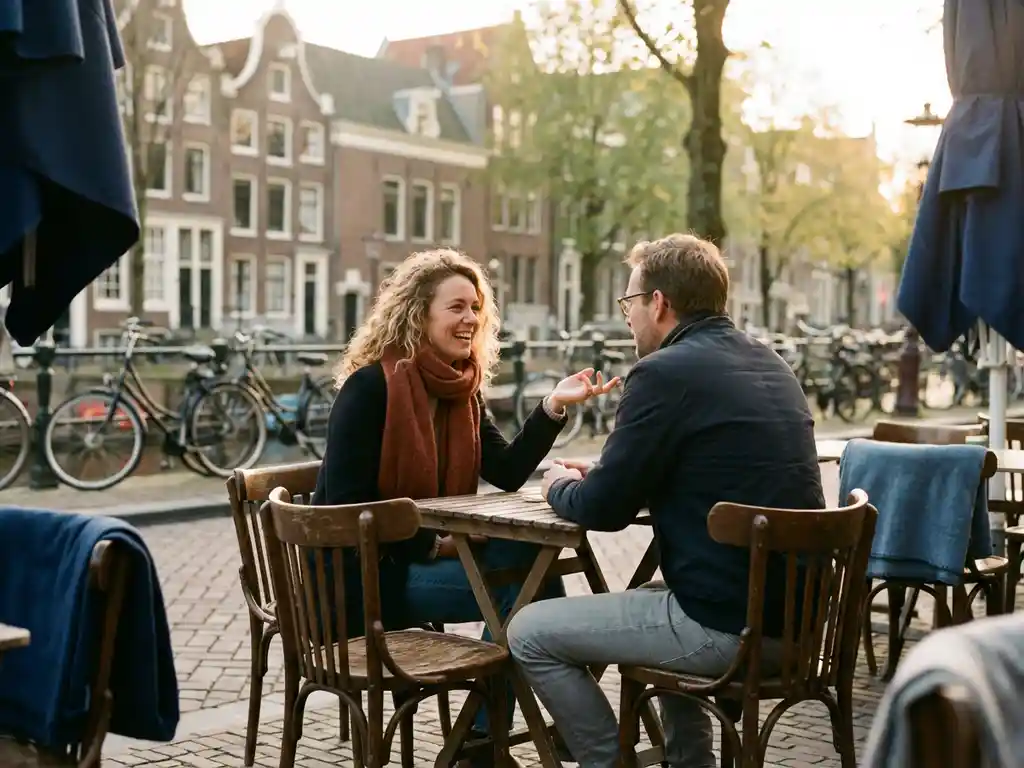
How do Dutch language courses prepare you for real conversations, not just exams?
Moving to the Netherlands is exciting, but it can also feel overwhelming when you cannot quite connect with the people around you. Learning Dutch is one of the most meaningful steps you can take to feel at home, make real friends, and truly understand the culture you are now part of. The good news is that the right Dutch language course does not just prepare you for a grammar test. It prepares you for life.
Whether you are brand new to Eindhoven or Tilburg, or you have been here for a while and finally feel ready to take the plunge, this article answers the questions that matter most to newcomers who want to actually speak Dutch, not just study it.
What does ‘conversation-focused’ Dutch language learning actually mean?
Conversation-focused Dutch language learning means that speaking is the primary goal from the very first lesson. Rather than spending weeks memorizing grammar rules before you are allowed to open your mouth, you practice real dialogues, respond to real situations, and build the confidence to communicate in Dutch right away.
This approach is rooted in the idea that language is a social skill, not an academic subject. You learn to introduce yourself at a neighbor’s door, order something at a local market, or navigate a conversation with a Dutch colleague, all before you have mastered every verb conjugation. The focus is always on communication over perfection.
This matters especially for expats and internationals who are living in the Netherlands right now. Every day brings real opportunities to use Dutch, and a conversation-focused course makes sure you are ready to take them.
Why do most Dutch courses leave expats still struggling to speak?
Most traditional Dutch courses leave expats struggling to speak because they prioritize written exercises and grammar theory over actual spoken practice. Students finish a course knowing the rules but freezing the moment a Dutch person speaks to them at full speed in a real-life situation.
There are a few common reasons this happens:
- Too much time spent on passive learning, such as reading and listening exercises, with very little active speaking practice
- Large class sizes where individual students rarely get the chance to speak
- A focus on formal or exam-style language rather than the everyday Dutch people actually use
- No real connection between what is taught in class and what students experience outside it
The result is a frustrating gap between knowing Dutch and using Dutch. Closing that gap requires a different kind of course, one that treats speaking as the core activity rather than the end goal. You can also explore learning Dutch with AI-powered tools as a way to practice more actively outside the classroom.
How does a blended learning method prepare you for daily Dutch conversations?
A blended learning method prepares you for daily Dutch conversations by combining structured preparation, live interactive practice, and consolidation into one connected experience. You arrive at each class already familiar with the vocabulary and phrases you need, which means your time with other students is spent actually using the language rather than being introduced to it for the first time.
We use exactly this approach. Before each class, students complete e-learning preparation covering new vocabulary and key dialogues. In class, the focus is entirely on interaction, practicing with fellow internationals in a safe, supportive environment. After class, consolidation exercises help lock in what you have learned so it becomes natural over time.
This three-part rhythm means that Dutch is not something you only think about during class hours. It becomes part of your week, your routine, and eventually your daily life in the Netherlands.
What kind of real-life situations do Dutch language courses cover?
A good Dutch language course covers the situations you actually encounter in the Netherlands every day, from chatting with a neighbor or visiting the doctor to navigating the workplace, understanding cultural customs, and making friends. The goal is to make you functional and confident in the real world, not just in a classroom.
Practical topics typically include greetings and small talk, shopping and public transport, work-related conversations, understanding Dutch directness, and social situations like invitations or community events. These are the moments where language skills truly matter and where many expats feel most vulnerable.
Learning Dutch through real-life contexts also helps you understand Dutch culture more deeply. You start to see why Dutch people communicate the way they do, which makes social connections feel much more natural and less intimidating. That cultural understanding is often just as valuable as the language itself.
How does learning Dutch in a small group help you speak more confidently?
Learning Dutch in a small group helps you speak more confidently because you get more opportunities to practice, more personal feedback from your teacher, and the support of peers who are going through the exact same experience as you. In a large class, it is easy to stay quiet and hide. In a small group, you are gently encouraged to participate in every lesson.
There is also a social dimension that makes a genuine difference. When your group is small, you get to know your fellow students. You laugh together, make mistakes together, and celebrate progress together. Many people find that their Dutch class becomes one of their first real social circles in the Netherlands, a place where friendships form naturally because everyone is in the same boat.
We keep our classes to a maximum of 8 to 10 participants for exactly this reason. It creates the kind of warm, low-pressure atmosphere where speaking feels fun rather than frightening, and where showing up each week becomes something you genuinely look forward to. You can learn more about our teaching philosophy on our about Dutch on Track page.
When should you start Dutch lessons as a newcomer to the Netherlands?
You should start Dutch lessons as soon as you feel settled enough to commit to a regular schedule, which for most newcomers means within the first few months of arriving. The earlier you begin, the faster you build the language foundation that makes daily life easier, more enjoyable, and more connected.
Starting early also means you avoid the habit of relying entirely on English, which is easy to do in the Netherlands because so many Dutch people speak it well. That reliance can quietly delay your integration and leave you feeling like an outsider even after years in the country.
There is no perfect moment to start, but there is a real cost to waiting. Every week you delay is a week of conversations missed, friendships not yet formed, and cultural experiences that pass you by. The best time to start is now, and you can schedule a free meeting with our team to find the right course for you.
How Dutch on Track helps you have real conversations from day one
Dutch on Track is a Dutch language course designed specifically for expats, knowledge workers, and their partners in Eindhoven and Tilburg. We believe that learning Dutch should be practical, social, and genuinely enjoyable, not a chore you dread after a long workday.
Here is what makes our approach different:
- A blended learning method that combines e-learning preparation, interactive group classes, and consolidation so you are always ready to speak
- Small groups of 8 to 10 students that create a friendly, low-pressure environment where real friendships form
- Certified teachers specialized in Dutch as a Second Language, with lessons focused on daily life in the Netherlands
- Courses from absolute beginner (A0) to intermediate (B1), including our flagship Dutch in 1 Year program
Our classes take place after work hours at central locations in Eindhoven and Tilburg, so they fit into your life rather than disrupting it. More than a language course, Dutch on Track is a community where you grow your confidence, deepen your cultural understanding, and meet people who are on the same journey as you. Ready to start speaking Dutch? Discover Dutch on Track and take your first step today — get in touch with us here.
Frequently Asked Questions
How long does it typically take to reach conversational Dutch as an expat?
Most expats reach a basic conversational level within 3 to 6 months of consistent, speaking-focused practice — especially when combining structured lessons with real-life daily use. Reaching a comfortable intermediate level (around B1) typically takes about a year, which is why programs like Dutch in 1 Year are designed around that realistic timeline. The key variable is consistency: showing up every week and actively using Dutch outside the classroom makes an enormous difference.
Do I need any prior knowledge of Dutch before joining a beginner course?
No prior knowledge is needed at all — a true beginner course (A0 level) starts from absolute zero, assuming you know nothing beyond perhaps 'hallo' and 'dank je wel.' You will be introduced to pronunciation, basic vocabulary, and simple dialogues from the very first lesson, all in a supportive environment where everyone is in the same position. The most important thing you need to bring is a willingness to speak and make mistakes.
What if I already took a Dutch course before but still can't hold a real conversation?
This is actually one of the most common situations expats find themselves in, and it usually means your previous course was too grammar-heavy and did not give you enough live speaking practice. Rather than starting from scratch, look for a placement assessment that identifies your actual conversational level, then join a course that prioritizes interactive speaking over written exercises. A conversation-focused environment with a small group will often unlock progress faster than months of self-study or traditional classroom work.
How do I keep practicing Dutch between weekly classes so I don't forget what I've learned?
The most effective between-class habits are also the most natural ones: try greeting your neighbors in Dutch, switch your phone or favorite app to Dutch, and use any e-learning or consolidation exercises provided by your course. Even 10 to 15 minutes of daily exposure — listening to a Dutch podcast on your commute or reading a short news headline — builds retention significantly over time. The goal is to make Dutch a small but regular part of your daily routine, not something you only think about on class night.
Is it worth learning Dutch if most people in the Netherlands speak English so well?
Absolutely — the fact that Dutch people speak English well makes daily survival easy, but it also makes it tempting to never push past the surface level of integration. Speaking Dutch, even imperfectly, signals respect and genuine effort, and it dramatically changes how Dutch people respond to you in social and professional settings. More importantly, it gives you access to the culture, humor, and community connections that simply do not translate through English.
What common mistakes should I avoid when choosing a Dutch language course?
The biggest mistakes are choosing a course based on price alone, opting for a very large group class to save money, or selecting a program built around exam preparation when your real goal is everyday communication. It is also worth checking whether the course content reflects real Dutch life — workplace conversations, social situations, cultural nuances — rather than textbook scenarios that rarely come up in practice. Always ask about class size, the speaking-to-grammar ratio, and whether the teaching methodology matches your learning goals before enrolling.
Can learning Dutch actually help me make friends and feel less isolated as an expat?
Yes, and this is often the most underestimated benefit of learning the language. Even a basic ability to engage in small talk, understand a joke, or follow a conversation at a neighborhood event creates a sense of belonging that English simply cannot replicate in a Dutch-speaking environment. Beyond the language itself, joining a small group Dutch course puts you in a room with other internationals who share your experience — and those classmates frequently become some of the first genuine friendships people build after moving to the Netherlands.
Related Articles
- What does a Dutch language course look like for a complete beginner?
- What follow-up options exist after completing Dutch language courses?
- How do you keep speaking Dutch when everyone around you speaks English?
- How do Dutch language courses use interactive methods?
- Why does your Dutch improve faster when you live in a smaller city like Eindhoven?