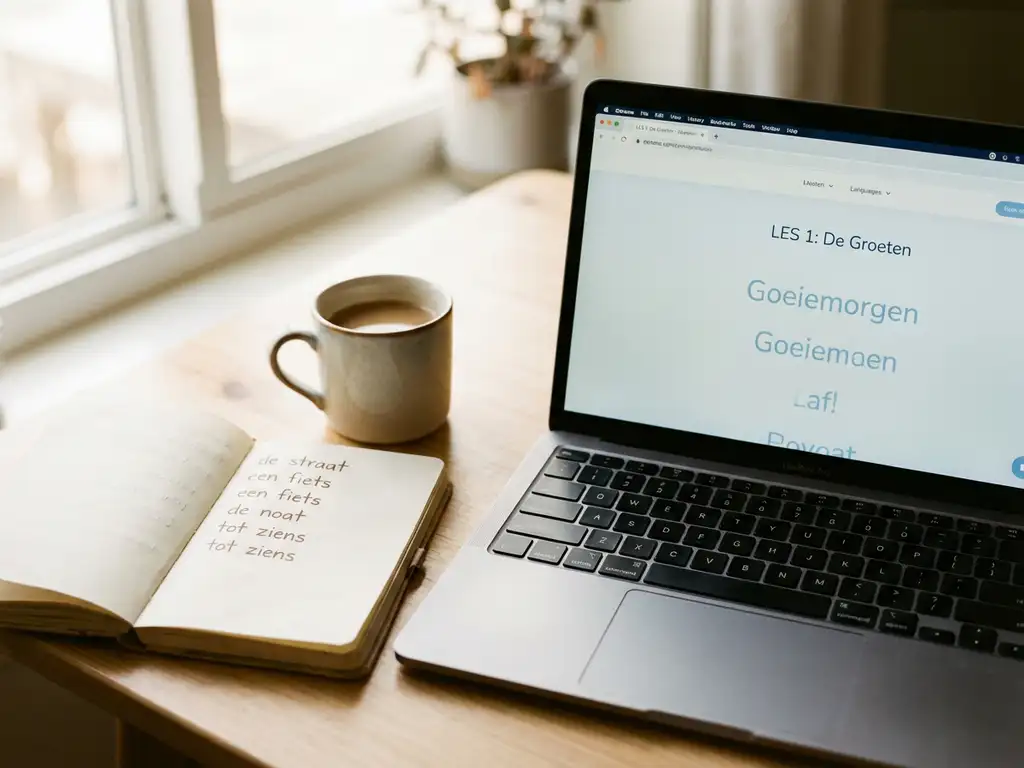
How does Dutch on Track use e-learning to help you prepare for every class?
Learning a new language is so much more than memorizing vocabulary lists and grammar rules. When you move to the Netherlands as an expat or international professional, you want to actually use Dutch in real life—whether that means chatting with your neighbors, navigating the workplace, or simply feeling at home in your new city. That is exactly why we built our approach around a blended learning model that combines the flexibility of digital tools with the energy and social warmth of in-person classes.
If you have been searching for an online Dutch course that does more than just drill you with exercises on a screen, this article walks you through exactly how our method works and why it is designed to help you speak Dutch with confidence from day one.
What is blended learning, and how does Dutch on Track use it?
Blended learning is an educational approach that combines digital self-study with face-to-face instruction. At Dutch on Track language school, blended learning means every lesson cycle flows through three connected phases: e-learning preparation before class, an interactive group session in the classroom, and e-learning consolidation after class to lock in what you learned.
This three-phase structure is not accidental. Language acquisition research consistently shows that exposure, practice, and reinforcement work together to build lasting fluency. By splitting the workload between digital preparation and live interaction, we make sure valuable classroom time is spent doing the thing that matters most: actually talking with other people. The result is an online Dutch course component that supports, rather than replaces, the social and communicative experience of learning together in a group.
The social dimension of this model is genuinely one of its most rewarding aspects. Because everyone arrives in class already familiar with the day’s vocabulary and dialogues, conversations flow more naturally, and the group dynamic becomes more fun and relaxed. Many of our students find that their classmates become some of their first real friends in the Netherlands.
How does the e-learning preparation work before each class?
Before each classroom session, you complete a focused e-learning module that introduces the vocabulary and dialogues relevant to that lesson’s theme. This preparation phase typically covers new words, short listening exercises, and example conversations so that you arrive in class already familiar with the building blocks you will use.
The logic here is simple but powerful. When you encounter new language material for the first time in a relaxed, self-paced digital environment, you can take your time, replay audio, and build initial recognition without any pressure. By the time you walk into the classroom, the words are no longer completely foreign. This dramatically lowers the anxiety of speaking in front of others, which is one of the biggest barriers for language learners in group settings.
Preparation also makes the class itself feel more like a conversation among people who share a common starting point. You are not learning the material for the first time alongside eight other people who are equally lost. Instead, everyone shows up ready to practice, which makes the energy in the room much more dynamic and encouraging. You can also explore how we learn Dutch with AI-powered tools to further support your preparation.
What happens during the classroom lesson after e-learning prep?
The classroom lesson is where prepared knowledge transforms into real communication. After completing the digital preparation, students practice speaking, listening, and responding in real time with their classmates and teacher. Classes run in small groups of 8 to 10 participants, creating an intimate and supportive environment where everyone gets to speak.
Our communicative teaching approach means you speak Dutch from the very first lesson. Teachers guide conversations, role-play scenarios, and group exercises that mirror situations from daily life in the Netherlands, such as introducing yourself at work, shopping at a local market, or understanding what your Dutch colleagues are actually saying when they give you direct feedback. This practical focus is central to our Dutch language course philosophy.
Beyond the language itself, the classroom is also a genuinely social space. Students come from diverse international backgrounds, and the shared experience of learning Dutch together naturally sparks friendships. Many participants tell us that class night quickly becomes one of the highlights of their week—not just because of the progress they make, but because of the community they find there. Making friends in a new country is hard, and a small, welcoming group of people all navigating the same challenge is a surprisingly easy and fun way to build real connections. You can learn more about our teaching team and values on our about us and our mission page.
How does e-learning consolidation help you remember what you learned?
After each classroom session, a consolidation module in the e-learning platform reinforces what you practiced during class. This phase uses exercises, review activities, and repetition techniques to move new language from short-term memory into long-term retention.
The science behind this is straightforward. Without revisiting new material after learning it, most people forget a significant portion within a day or two. Consolidation exercises close that gap by prompting your brain to retrieve and reuse what you just learned while it is still fresh. Spacing this review activity after the emotional and social experience of the classroom also means you are reinforcing language that already has some context and feeling attached to it, which makes it stick far more effectively.
This phase also lets you move at your own pace. If a particular grammar point felt tricky during class, you can spend more time on it in the consolidation module without slowing down the group. It is a quiet, personal space for reflection that complements the lively energy of the classroom experience.
Who is the Dutch on Track e-learning method designed for?
The Dutch on Track blended learning method is designed for highly educated internationals, including expats, knowledge workers, and their partners, who want to integrate into Dutch life and build genuine connections in their new home. The approach suits people who have busy schedules but are serious about making real progress in Dutch.
Courses run from absolute beginner level (A0) all the way to intermediate (B1), so there is an entry point for everyone, regardless of prior exposure to Dutch. The flagship “Dutch in 1 Year” program takes students through a structured 43-week journey, covering the language skills needed for both professional and personal life in the Netherlands. Classes take place after work hours, from 17:45 to 19:45, which means you do not have to choose between your career and your language-learning goals.
The method is also specifically designed for people who feel nervous about speaking in a group. The e-learning preparation removes much of that anxiety before you ever set foot in the classroom, and the small group size of 8 to 10 students ensures you never feel lost in a crowd. Whether your goal is to advance at work, understand your Dutch neighbors, or simply feel less isolated in a new country, this approach meets you where you are. If you have questions about which level suits you, feel free to contact us for course guidance.
How Dutch on Track Helps You Learn Dutch and Feel at Home
Dutch on Track offers a complete solution for internationals who want to learn Dutch in a way that is structured, social, and genuinely enjoyable. The blended learning method removes the guesswork from language learning by giving you a clear path forward at every stage of the process. Here is what makes the approach work:
- E-learning preparation builds your confidence before every class, so speaking feels natural, not stressful.
- Small group sessions of 8 to 10 students create a warm, social environment where friendships form alongside fluency.
- Consolidation exercises after class ensure you actually retain what you learned, not just recognize it in the moment.
- All teachers are certified specialists in Dutch as a Second Language, so you are always in expert hands.
Learning a language is also one of the most rewarding forms of personal growth you can invest in when living abroad. It opens doors, builds self-confidence, and connects you to the culture around you in ways that no amount of translation apps ever could. The social side of our classes means that alongside your Dutch skills, you also gain something equally valuable: a community of people who understand exactly what you are going through.
If you are ready to start speaking Dutch with confidence and meet people who make the journey fun, Dutch on Track is here to help. Schedule a free meeting with us and find the level that is right for you.
Frequently Asked Questions
How much time do I need to commit each week to keep up with the Dutch on Track program?
In addition to the two-hour evening classroom session per week, you should budget roughly 1 to 2 hours for the e-learning preparation module before class and another 1 to 2 hours for the post-class consolidation exercises. In total, most students invest around 4 to 6 hours per week—enough to make consistent, meaningful progress without overwhelming a busy professional schedule.
What if I miss a classroom session? Will I fall too far behind?
Missing an occasional class happens, and the blended learning structure actually helps you recover more smoothly than a traditional course would. Because the core vocabulary and dialogues are introduced through the e-learning preparation module, you can still complete that content independently. It is worth reaching out to your teacher after a missed session to flag any speaking practice or group exercises you missed, so they can help you catch up before the next lesson.
I have tried language apps before and never stuck with them. How is this different?
Apps like Duolingo are built around solo, gamified repetition, which works well for passive recognition but rarely develops the confidence to actually speak. Dutch on Track uses digital tools as a support layer, not the main event—the real learning happens in a live classroom with a certified teacher and a small group of people in the same situation as you. That social accountability and human connection is what keeps most students engaged week after week in a way that a screen alone simply cannot replicate.
Is the course taught entirely in Dutch, or will the teacher also explain things in English?
The communicative approach means Dutch is the primary language of the classroom from the very first lesson, which is intentional—immersion in a supportive setting accelerates your speaking confidence significantly. That said, teachers are experienced in working with international learners and will use English strategically to clarify grammar concepts or resolve genuine confusion, especially at beginner levels. The goal is always to get you speaking Dutch as much as possible, not to leave you lost.
Can I join mid-program, or do I have to wait for a new cohort to start?
Dutch on Track runs intake moments at structured points throughout the year, so you do not always have to wait for a brand-new cohort, but joining mid-cycle depends on the current availability and level of the group. The best step is to contact Dutch on Track directly, take the level assessment they offer, and let the team match you to the nearest suitable start date. Starting at the right level matters far more than starting immediately.
What level of Dutch will I reach after completing the 'Dutch in 1 Year' program?
The flagship 43-week program is designed to take you from absolute beginner (A0) to a solid B1 level on the Common European Framework of Reference (CEFR) scale. At B1, you can hold conversations about familiar topics, understand the main points of everyday Dutch interactions at work and in social settings, and handle most practical situations you will encounter living in the Netherlands—a genuinely functional and confidence-building milestone.
Do I need to buy any extra materials or textbooks, or is everything included in the course?
The e-learning platform and all digital course materials are integrated into the Dutch on Track program, so you will not find yourself hunting for separate textbooks or third-party resources to follow along. Your teacher may occasionally recommend supplementary listening or reading content—such as Dutch podcasts or news sources—as optional enrichment, but these are free resources meant to complement your learning, not required purchases.