How does public transport work in the Netherlands?
Navigating public transport in the Netherlands can feel overwhelming when you first arrive, especially if you are used to a completely different system back home. The good news is that the Dutch public transport network is one of the most efficient and well-connected in Europe, and once you understand how it works, getting around becomes second nature. Whether you are settling in the Netherlands as an expat or just starting to explore your new city, this guide covers everything you need to know.
From trains and trams to buses and metros, expat life in the Netherlands is significantly easier when you can get around independently. Understanding the ticketing system, the unwritten rules of Dutch travel etiquette, and how to plan your journeys will save you time, money, and quite a few awkward moments on the platform.
What public transport options are available in the Netherlands?
The Netherlands offers a comprehensive public transport network that includes trains (NS), trams, buses, metros, and ferries. Trains connect cities and towns nationwide, while trams, buses, and metros handle local travel within urban areas. In cities like Amsterdam, Rotterdam, and The Hague, all four modes often operate together as a single integrated system.
For expats settling in the Netherlands, the most relevant options depend on where you live. In Eindhoven and Tilburg, for example, buses are the primary form of local transport, with trains providing fast connections to other major cities. The national train operator, NS, handles intercity and regional rail, while regional transport companies like Arriva, Connexxion, and EBS operate local buses in various provinces. Ferries are particularly useful in cities with waterways, most notably Amsterdam, where free ferries cross the IJ regularly.
How does the OV-chipkaart work in the Netherlands?
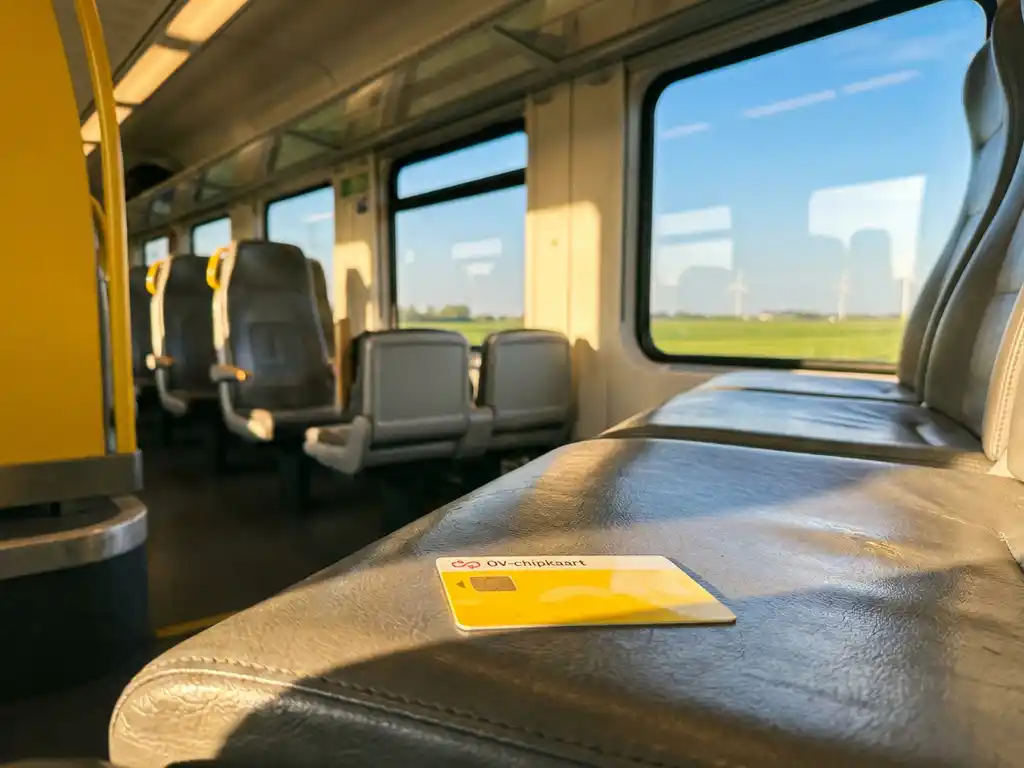
The OV-chipkaart is a rechargeable smart card used to pay for all public transport in the Netherlands. You check in by holding the card against a card reader when boarding and check out when leaving. The correct fare is automatically deducted from your card balance. If you do not check out, you will be charged the maximum fare for that route.
There are two types of OV-chipkaart: the anonymous card, which you can buy at stations and supermarkets for a small fee, and the personal card, which is linked to your name and can be blocked and replaced if lost. For anyone living in the Netherlands long term, a personal card is the smarter choice. You can load credit online or at machines in train stations, and some cards can be set to auto-reload when the balance drops below a certain amount.
One important detail: you need a minimum balance on your card to check in, and this minimum varies slightly depending on the type of transport. Always make sure your card has enough credit before your journey, as the card readers will refuse entry if the balance is too low.
Can you pay for public transport in the Netherlands without an OV-chipkaart?
Yes, you can pay for public transport in the Netherlands without an OV-chipkaart by using contactless bank cards or mobile payment methods like Apple Pay and Google Pay on most NS trains and an increasing number of buses and trams. However, the OV-chipkaart remains the most widely accepted and reliable payment method across the entire network.
Contactless payment with a debit or credit card works directly at NS train gates and on many urban transport systems, making it convenient for new arrivals who have not yet obtained an OV-chipkaart. That said, not every bus operator or regional line accepts contactless bank payments, so relying solely on your bank card outside the main train network can occasionally leave you stranded. If you plan to use public transport regularly as part of your daily life in the Netherlands, getting an OV-chipkaart quickly is strongly recommended.
How do NS trains work in the Netherlands?
NS (Nederlandse Spoorwegen) trains are the backbone of intercity travel in the Netherlands. You check in and out with your OV-chipkaart or contactless payment at the yellow card readers at station gates or on the platform. Trains run frequently on most routes, often every 15 to 30 minutes, and the national network connects virtually every major city and town.
NS trains are divided into two classes: first class and second class. Second class is the standard option used by most commuters and is included in a regular OV-chipkaart journey. First class offers more space and quieter carriages and requires either a first-class supplement or a specific subscription. During peak hours, trains can get busy, particularly on routes between Amsterdam, Utrecht, and Eindhoven.
NS also offers various subscription products called abonnementen, which can significantly reduce travel costs if you commute regularly. These range from weekend discounts to full weekday travel subscriptions. For expats who travel frequently between cities for work, exploring these subscriptions early can save a meaningful amount over time.
What are the rules and etiquette on Dutch public transport?
Dutch public transport has clear unwritten rules that locals follow closely. Keep noise to a minimum, avoid phone calls in quiet carriages, give up your seat for elderly or pregnant passengers, and always check in and out properly. The Dutch are direct and will not hesitate to point it out if you forget to check out or are being too loud.
A few specific points worth knowing when settling in the Netherlands:
- Quiet zones (stiltecoupés) on NS trains are strictly observed and marked with a symbol on the carriage doors.
- Eating strong-smelling food is generally frowned upon, particularly on trains.
- Cyclists have absolute priority at station entrances and exits, so always look both ways before stepping off the platform.
- Blocking doors or standing in the aisle when there are free seats will earn you visible disapproval.
Understanding these social norms is part of the broader experience of integrating into Dutch culture. The directness that can feel blunt at first is simply how the Dutch communicate, and learning to navigate it with confidence makes everyday interactions far smoother.
How do you plan a public transport journey in the Netherlands?
The easiest way to plan a public transport journey in the Netherlands is to use the 9292 app or website, which covers all modes of transport across the entire country. Simply enter your departure point and destination, and it will show you the fastest and most convenient routes, including walking times between connections. Google Maps also works reliably for Dutch public transport planning.
NS has its own app for train-specific journeys, which includes real-time updates on delays and platform changes. For day-to-day life in the Netherlands as an expat, having both the 9292 app and the NS app on your phone covers virtually every journey you will need to make. Both apps are available in English, which makes them immediately accessible when you first arrive.
Planning ahead is especially useful during peak hours and on busy routes. Trains and buses in the Netherlands generally run on time, but disruptions do happen, and knowing your alternative routes in advance reduces stress considerably.
How Dutch on Track Helps You Feel at Home in the Netherlands
Getting around on public transport is just one piece of the puzzle when it comes to truly feeling at home in the Netherlands. Language is the key that unlocks everything else: understanding announcements, reading signs, chatting with fellow commuters, and building the kind of social connections that turn a new country into a real home.
At Dutch on Track, we help expats and internationals in Eindhoven and Tilburg do exactly that. Our Beginner Dutch Course takes you from zero to confident in a small, friendly group of 8 to 10 fellow internationals. Learning Dutch with us is not just about grammar. It is about:
- Speaking from day one in a supportive, fun environment where making mistakes are part of the process.
- Meeting like-minded people who are on the same journey as you, building friendships that extend well beyond the classroom.
- Understanding Dutch culture and social norms so that everyday interactions feel natural rather than nerve-wracking.
- Gaining the confidence to navigate real life in the Netherlands, from the supermarket to the train station to the workplace.
Our classes take place after work hours at central locations close to the train stations in both Eindhoven and Tilburg, making it easy to fit language learning into your life. If you are ready to take that first step toward feeling truly settled in the Netherlands, schedule a free meeting with Dutch on Track and find out how we can support your journey.
Frequently Asked Questions
How quickly should I get an OV-chipkaart after arriving in the Netherlands?
Ideally, getting an OV-chipkaart within your first few days is the smartest move. You can pick up an anonymous card at any train station, Albert Heijn supermarket, or tobacco shop (tabakszaak) almost immediately upon arrival, so there is no reason to delay. Once you have a Dutch bank account set up, upgrading to a personal card gives you the added security of being able to block and replace it if lost.
What happens if I forget to check out of a tram, bus, or train?
If you forget to check out, you will automatically be charged the maximum fare for that route or line, which can be significantly more expensive than your actual journey. You can request a refund for incorrect charges through the NS website or the relevant transport operator's customer service portal, but the process takes time and is not guaranteed. Setting a reminder on your phone until checking out becomes a habit is a simple trick many expats swear by.
Are there any discount options for expats who commute by train every day?
Yes, NS offers a range of subscription products (abonnementen) that can reduce your travel costs by 20% to 40% or more depending on how often and when you travel. The Dal Voordeel subscription, for example, gives you 40% off during off-peak hours and weekends for a modest monthly fee, which pays for itself quickly if you commute regularly. You can compare and purchase subscriptions directly through the NS app or website, and many expats find that switching to a subscription within the first month saves them a noticeable amount.
Is public transport in the Netherlands safe to use at night?
Generally speaking, yes — Dutch public transport is considered safe at night, and trains, trams, and buses continue running late into the evening on most routes. Night buses (nachtbussen) operate in major cities like Amsterdam, Rotterdam, and Eindhoven on weekends and public holidays when regular services stop. That said, it is always wise to stay aware of your surroundings on quieter late-night services, just as you would in any city.
Can I take my bicycle on the train in the Netherlands?
Yes, you can take a full-size bicycle on NS trains, but you need a separate day ticket for your bike (a fietskaart), which costs a few euros and is not included in your regular OV-chipkaart fare. Bikes are not permitted during morning and afternoon peak hours on weekdays, so plan accordingly if you are combining cycling with a train commute. Folding bikes that fit in a bag can be taken on board for free at any time.
What should I do if a train or bus is delayed or cancelled?
Check the NS app for real-time updates and alternative route suggestions if your train is delayed or cancelled — it will automatically recalculate the fastest option available. For significant delays on NS trains (30 minutes or more), you may be eligible for compensation through the NS Delay Compensation (Restitutie bij vertraging) scheme, which you can claim online. For regional buses, check the operator's app or the 9292 app for live updates and alternatives.
Will learning Dutch actually make a difference in how I use public transport day to day?
More than you might expect. While apps and announcements are often available in English, understanding Dutch gives you a real edge when disruptions happen, when a fellow passenger gives you a quick verbal heads-up about a platform change, or when you need to ask a question at a ticket desk. Beyond the practical side, being able to exchange a few words with locals during your commute is one of the small but meaningful ways that language learning helps you feel genuinely at home in the Netherlands rather than just passing through.