How do Dutch people celebrate birthdays?
Dutch birthday traditions can feel surprisingly different from what most expats expect when they first arrive in the Netherlands. If you are living in the Netherlands as an expat, attending your first Dutch birthday party might leave you a little puzzled—maybe even charmed—by the rituals involved. Understanding these customs is one of the most enjoyable parts of settling in the Netherlands, and it opens the door to genuine friendships with your Dutch neighbours and colleagues.
From the famous birthday circle to the very specific snack culture, Dutch celebrations reflect a broader set of values around equality, togetherness, and practicality. This guide answers the most common questions expats ask about Dutch birthday traditions, so you can show up prepared, relaxed, and ready to connect.
What makes Dutch birthday celebrations unique?
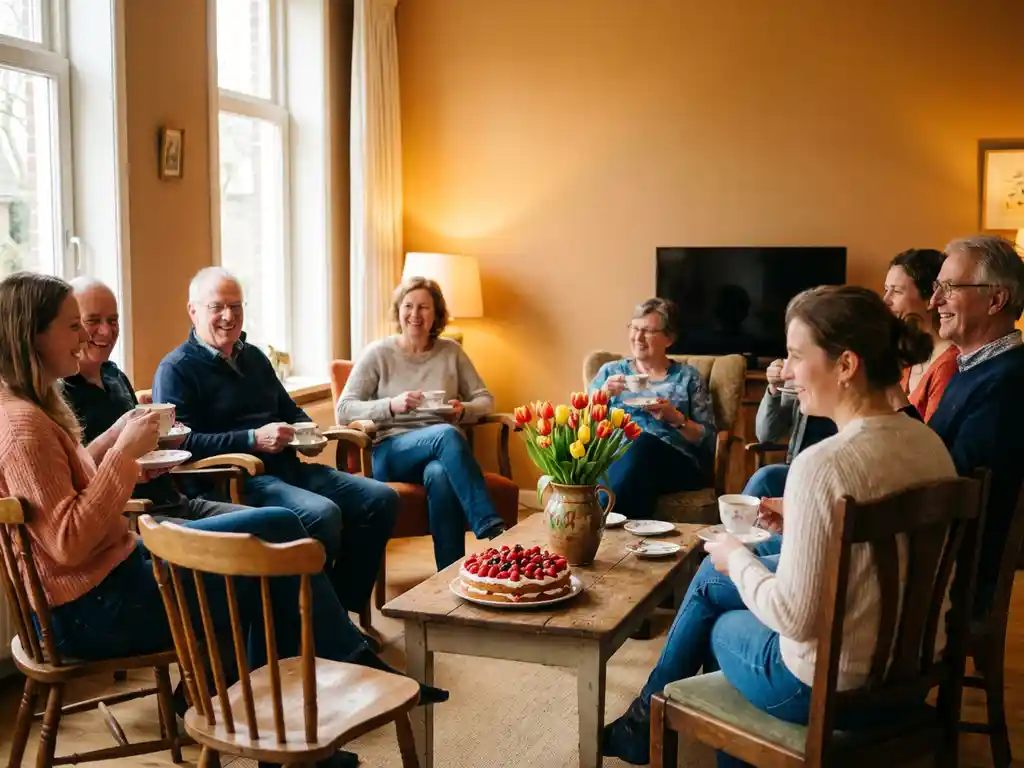
Dutch birthday celebrations are unique because of their informal, egalitarian structure, their strong emphasis on community over spectacle, and a set of very specific social rituals that most outsiders have never encountered. Rather than grand gestures or elaborate parties, Dutch birthdays tend to centre on warmth, conversation, and togetherness in a relaxed home setting.
One of the most distinctive features is the birthday calendar, or verjaardagskalender, which hangs in almost every Dutch bathroom. It lists the birthdays of family and friends so no one is ever forgotten. This small detail says a lot about Dutch culture: relationships matter, and remembering someone’s birthday is a quiet act of care. For expats settling in the Netherlands, noticing this calendar on your first visit to a Dutch home is a genuine cultural moment worth appreciating.
Why do Dutch people congratulate everyone at a birthday party?
Dutch people congratulate everyone at a birthday party because the celebration is seen as a shared family and community event, not just a personal milestone for the birthday person. When you arrive, you are expected to shake hands or kiss on the cheek and say “gefeliciteerd” to everyone in the room, including people you have never met.
This tradition can catch expats completely off guard. You walk in expecting to wish the birthday person well, and suddenly you are working your way around a circle of twenty people, congratulating them all. The reasoning is rooted in Dutch collectivism: if something good happens to one member of the group, the whole group shares in the joy. Embracing this ritual rather than avoiding it is a wonderful way to break the ice and start conversations with people you would otherwise never meet.
What food and drinks are typically served at Dutch birthday parties?
At Dutch birthday parties, the most common offering is coffee or tea accompanied by cake or vlaai, a Dutch fruit tart. Savoury snacks like bitterballen, cheese cubes, and crisps appear later in the evening, often served with beer, wine, or soft drinks. Do not expect a full meal unless you have been explicitly told otherwise.
The birthday person, not the guests, is traditionally responsible for bringing cake to share. This applies at home parties and at work alike. If you are invited to a Dutch birthday party and arrive hungry, expecting a dinner spread, you may be surprised by the modest but genuinely cosy selection on offer. The focus is firmly on conversation and company rather than cuisine, which is something many expats come to appreciate once they understand the intention behind it.
How do Dutch people celebrate birthdays at work?
In Dutch workplaces, the birthday person brings cake, pastries, or traktaties to share with colleagues. It is the birthday person’s responsibility to treat others, which is the reverse of what many expats expect. Colleagues gather briefly, usually during a coffee break, to enjoy the treats and wish the person well.
This workplace tradition is a great opportunity for expats to integrate socially. If your own birthday comes around, bringing something to share—even a simple box of stroopwafels—is a warm gesture that colleagues notice and appreciate. It signals that you are engaging with local customs and opens up easy, natural conversations. For expats who find Dutch colleagues initially reserved, this small act can genuinely shift the dynamic at work.
What should you bring as a gift to a Dutch birthday party?
A thoughtful, personal gift is always appreciated at a Dutch birthday party. Flowers, a bottle of wine, a book, or a small item you know the person will enjoy are all appropriate choices. Dutch people generally value sincerity over extravagance, so an expensive gift is not expected and can sometimes feel out of place.
Gifts are usually opened immediately when received, and the birthday person will thank you warmly in front of others. Avoid bringing something overly generic, and if you know the person well, a personal touch goes a long way. As an expat, you might also consider bringing something from your home country as a gift. Dutch people are genuinely curious about other cultures, and it creates an instant conversation starter that makes the social side of the party much easier to navigate.
How can learning Dutch help you connect at birthday celebrations?
Learning Dutch transforms birthday celebrations from polite but awkward social events into genuinely fun and meaningful experiences. Even a few phrases, such as “gefeliciteerd,” “wat leuk,” or “dank je wel,” signal to Dutch hosts and guests that you are making an effort to integrate, which immediately earns you warmth and respect.
Dutch people are known for their directness, and they tend to appreciate honesty and effort over perfection. Speaking a little Dutch at a birthday party, even imperfectly, opens conversations that would simply never happen in English. You might find yourself laughing over a mispronunciation, sharing a story about learning the language, or discovering a shared interest with someone across the birthday circle. These are the moments that turn acquaintances into real friends, which is exactly what expat life in the Netherlands needs more of.
How Dutch on Track Helps You Connect as an Expat in the Netherlands
Understanding Dutch birthday traditions is just one small piece of the larger puzzle of settling in the Netherlands as an expat. The real challenge is building the language skills and cultural confidence to participate fully in daily Dutch life—at parties, at work, and in your neighbourhood. That is exactly where we come in.
At Dutch on Track, we offer Dutch language courses specifically designed for expats and internationals in Eindhoven and Tilburg. Our approach is communicative and social from day one, meaning you practise speaking in real situations with a small group of fellow internationals who are on the same journey as you. Our courses are not just about grammar; they are about building the confidence to show up at a birthday party, work your way around the circle, and actually enjoy the conversation.
- Small groups of 8 to 10 students, so you genuinely get to know your classmates
- Evening classes after work, from 17:45 to 19:45, designed around busy expat schedules
- A blended learning method combining e-learning preparation, interactive classroom practice, and consolidation
- Certified teachers specialised in Dutch as a Second Language
Learning Dutch with us is not just self-development; it is one of the most fun and social ways to build real friendships and feel at home in your new country. Whether you are starting from zero or looking to build on the basics, our Beginner Dutch Course is the perfect place to start. Ready to take the first step? Schedule a free meeting with Dutch on Track and find out how we can help you feel truly at home in the Netherlands.
Frequently Asked Questions
Is it considered rude to arrive late to a Dutch birthday party?
Punctuality is genuinely valued in Dutch culture, and arriving on time—or even a few minutes early—is considered respectful. Unlike some cultures where fashionably late is acceptable, showing up significantly after the agreed time at a Dutch birthday party can be seen as inconsiderate to the host. If you are running late, a quick message to let the host know is always appreciated and goes a long way in showing that you respect their time.
What should I do if I don't know anyone at the birthday party besides the host?
Lean into the birthday circle ritual—it is actually your best icebreaker. As you make your way around the room saying ‘gefeliciteerd,’ use that moment to introduce yourself briefly and ask how the person knows the birthday host. Dutch people tend to be direct and open once a conversation is started, so a simple question is usually all it takes to get things going. Bringing a gift from your home country can also serve as an instant conversation starter that draws people to you naturally.
Are children's birthday parties in the Netherlands different from adult ones?
Yes, children’s birthday parties in the Netherlands have their own set of traditions, most notably the ‘traktatie’—a small treat the birthday child brings to school to share with classmates, rather than receiving treats themselves. At home, children’s parties often involve games, crafts, and themed activities, and it is common for the entire family, including grandparents and aunts and uncles, to attend. As an expat parent, participating in the traktatie tradition at your child’s school is a lovely and easy way to connect with other parents and the school community.
What if I forget to bring a gift to a Dutch birthday party—is that a big deal?
While a gift is a thoughtful gesture, Dutch culture places far more value on your presence and genuine engagement than on the gift itself. If you arrive without one, a sincere ‘gefeliciteerd’ and warm conversation will be far more meaningful than an obligatory present. That said, if you know you will be attending in advance, even a small, personal token—a bunch of flowers or a bottle of wine—shows consideration and is always warmly received.
How do I find out about Dutch birthday customs specific to the region I live in, like Eindhoven or Tilburg?
The best way to learn regional nuances is simply to attend local events and ask Dutch colleagues, neighbours, or classmates directly—Dutch people are refreshingly candid and are usually happy to explain their customs. Joining a Dutch language course with other expats in your city is another excellent route, as your teacher and classmates can share first-hand local insights alongside language lessons. At Dutch on Track, for example, cultural context is woven into every lesson, so you pick up these kinds of practical social cues naturally as you learn the language.
How quickly can I realistically learn enough Dutch to feel comfortable at social events like birthday parties?
With consistent effort and the right learning environment, most expats can pick up enough conversational Dutch to navigate social situations like birthday parties within just a few months. Focusing on practical, spoken Dutch—greetings, small talk phrases, and common expressions—rather than grammar rules first will get you to social confidence much faster. A structured beginner course that prioritises speaking from day one, like the Dutch on Track Beginner Course, is one of the most efficient ways to reach that level quickly and enjoyably.
Are there any common mistakes expats make at Dutch birthday parties that I should avoid?
The most common mistake is skipping the birthday circle—either out of shyness or simply not knowing about it—which can unintentionally come across as aloof or disinterested to Dutch guests. Another frequent misstep is arriving with a very large or extravagant gift, which can create an awkward imbalance in a culture that values modesty and equality. Finally, expecting a full meal when only snacks are on offer is a practical one to keep in mind—have a bite before you go, and enjoy the ‘bitterballen’ and cake for what they are: a cosy and genuinely Dutch experience.