How do you say sorry in Dutch?
Learning to apologize in Dutch might seem like a small detail, but it opens up something much bigger: the ability to navigate everyday life in the Netherlands with confidence. Whether you bump into someone at the market in Eindhoven, make a mistake at work, or simply want to be polite in a new country, knowing how to say sorry in Dutch helps you feel less like an outsider and more like someone who genuinely belongs. For anyone settling in the Netherlands as an expat, these small linguistic moments matter more than you might expect.
Dutch apologies are deceptively simple on the surface, but the nuances between different expressions can shape how locals perceive you. Getting them right is part of the broader journey of expat life in the Netherlands, and it starts with understanding which word to use, and when.
What is the most common way to say sorry in Dutch?
The most common way to say sorry in Dutch is simply “sorry” — pronounced much like the English word. It is used in everyday situations, from accidentally bumping into someone on the street to apologizing for being late to a meeting. Dutch people use it constantly, and it feels natural in almost any informal context.
Because the Netherlands has such a strong international presence, “sorry” has become fully embedded in everyday Dutch speech. You will hear it in supermarkets, on trams, in offices, and between friends. It is the go-to apology for minor mishaps and social slip-ups alike. If you only learn one apology phrase before arriving in the Netherlands, this is the one to know.
What’s the difference between ‘sorry’, ‘het spijt me’, and ‘pardon’?
These three phrases express different degrees of apology. “Sorry” is casual and everyday. “Het spijt me” means “I am sorry” and carries genuine emotional weight, used for more serious situations. “Pardon” is a polite, brief expression used to get someone’s attention or excuse yourself physically, similar to “excuse me” in English.
Understanding the difference helps you respond appropriately in different social situations, which is a key part of living in the Netherlands as an expat. If you accidentally step on someone’s foot, “sorry” works perfectly. If you have to deliver bad news or apologize for something that caused real inconvenience, “het spijt me” feels more sincere and appropriate. “Pardon” is best reserved for moments like squeezing past someone in a narrow aisle or politely interrupting a conversation.
There is also “sorry hoor”, a softer, more conversational version that adds a friendly, slightly playful tone. Dutch people use “hoor” as a filler particle to soften statements, so adding it to “sorry” makes an apology feel warmer and less formal.
How do Dutch people actually apologize in real life?
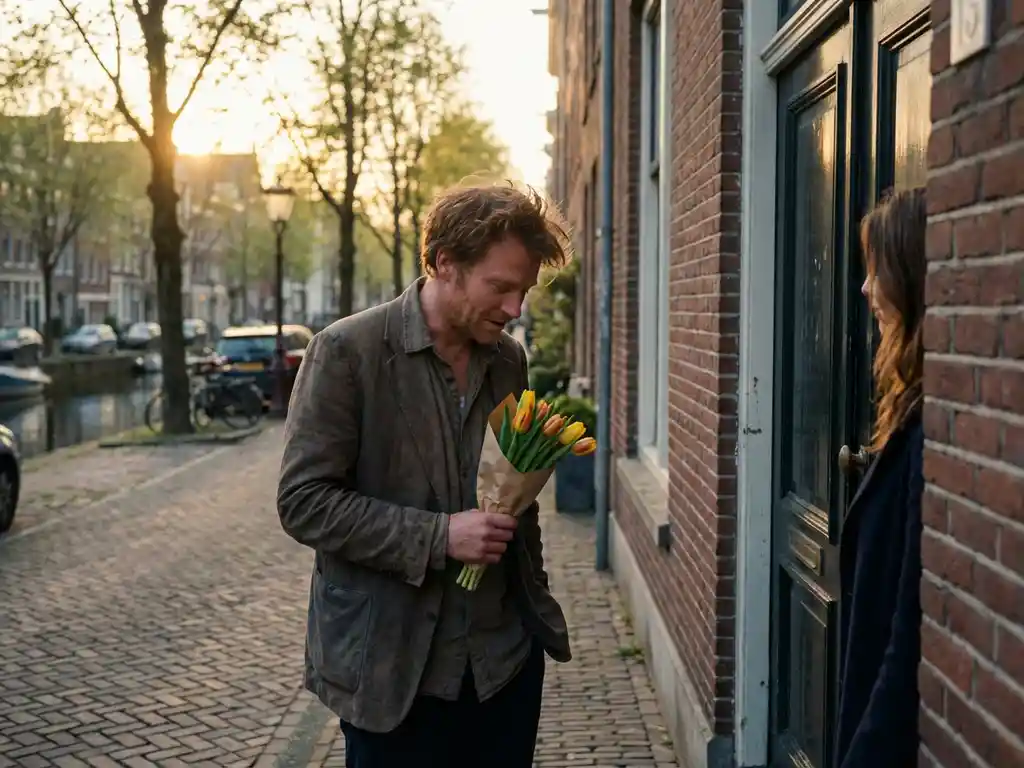
In real life, Dutch apologies tend to be brief and matter-of-fact. Dutch culture values directness, so apologies are usually sincere but not overly dramatic. A quick “sorry” followed by moving on is entirely normal and not considered rude. Over-apologizing, on the other hand, can sometimes feel awkward in Dutch social contexts.
This directness can catch newcomers off guard. If you are used to a culture where apologies come with extensive explanation and emotional expression, the Dutch approach might initially feel cold. But it is not; it is simply efficient. Once you understand this cultural dynamic, it becomes much easier to read social situations and respond in a way that feels natural to locals.
One thing worth knowing: Dutch people appreciate authenticity. A genuine “het spijt me” in the right moment will land far better than a rehearsed, overly polished apology. Settling in the Netherlands means gradually tuning into these social rhythms, and language is one of the most powerful tools for doing exactly that.
What are the most useful Dutch phrases for apologizing?
Beyond “sorry,” a handful of phrases will cover almost every apologetic situation you encounter in daily Dutch life. Here are the most practical ones to learn:
- Sorry — casual, everyday apology for minor situations
- Het spijt me — sincere apology for more serious matters
- Pardon — polite way to excuse yourself or get someone’s attention
- Excuseer me — slightly more formal version of “excuse me,” useful in professional or public settings
Knowing these phrases gives you a solid foundation for navigating social life in the Netherlands. The more you practice them in real conversations, the more naturally they will come to you. Language learning is not just about memorizing words; it is about building the confidence to use them without overthinking.
How do you apologize in Dutch at work or in formal settings?
In formal or professional settings, Dutch apologies become slightly more structured. “Mijn excuses” (my apologies) is the standard professional phrase, and “het spijt me” works well when you need to acknowledge a mistake with genuine sincerity. In written communication, you might use “met excuses voor het ongemak” (with apologies for the inconvenience).
Dutch workplaces tend to be relatively flat in hierarchy, which means apologies between colleagues are often still fairly casual. However, when addressing clients, senior stakeholders, or in formal written correspondence, using “mijn excuses” signals professionalism and respect. For expats navigating Dutch professional culture, understanding this register difference is genuinely useful.
It is also worth knowing that in Dutch business culture, taking responsibility directly and offering a solution is often valued more than the apology itself. A brief, clear acknowledgment followed by a constructive next step tends to go down well with Dutch colleagues and clients.
How can learning Dutch apologies help you connect with locals?
Learning even basic Dutch phrases like apologies signals to locals that you are making a genuine effort to engage with their language and culture. This matters enormously in expat life in the Netherlands, where Dutch people often appreciate the attempt even if your grammar is imperfect. A simple “sorry” or “pardon” in the right moment can turn a brief interaction into a warm exchange.
Language is one of the most direct pathways to social connection. When you can navigate small, everyday moments in Dutch, you stop feeling like a visitor and start feeling like someone who lives here. That shift in confidence is something many expats describe as a turning point in settling in the Netherlands. You begin to feel less anxious in social situations, more willing to strike up conversations, and more at ease in the community around you.
There is also a fun side to this. Learning Dutch with other internationals who are on the same journey creates a shared experience that naturally leads to friendships. You laugh at the same mistakes, celebrate the same small wins, and build connections that go beyond the classroom.
How Dutch on Track helps you feel at home in the Netherlands
Dutch on Track was built specifically for expats, knowledge workers, and their partners who want to do more than just survive in the Netherlands; they want to truly belong. Our Beginner Dutch Course starts from absolute zero and takes you step by step through the language in a way that connects directly to real life: shopping, working, socializing, and yes, apologizing gracefully when you bump into someone at Albert Heijn.
What makes the experience different is the social dimension. Our small group classes of 8 to 10 students create a genuinely enjoyable environment where learning Dutch becomes a way to meet people, share experiences, and build friendships with others who understand exactly what expat life in the Netherlands feels like. It is self-development and social connection wrapped into one.
- Classes after work hours (17:45 to 19:45) at central locations in Eindhoven and Tilburg
- A communicative approach where you speak from day one, mistakes welcome
- Certified teachers specialized in Dutch as a Second Language
- A blended learning method that fits around your busy schedule
If you are ready to move beyond “sorry” and start having real conversations in Dutch, schedule a free meeting with Dutch on Track and find out which course fits where you are right now.
Frequently Asked Questions
How long does it typically take to feel comfortable using Dutch apologies naturally in conversation?
Most expats find that basic phrases like ‘sorry’ and ‘pardon’ feel natural within just a few weeks of arriving in the Netherlands, simply because you encounter situations that require them every day. More nuanced expressions like ‘het spijt me’ or ‘mijn excuses’ tend to click once you’ve had a few real interactions where you needed them. The key is not waiting until your Dutch is ‘good enough’ — using these phrases from day one, even imperfectly, accelerates your comfort level faster than any amount of studying alone.
What if I accidentally use the wrong apology phrase in a serious situation — will Dutch people be offended?
In most cases, no — Dutch people are generally forgiving of language mistakes made by expats who are clearly making an effort. If you use a casual ‘sorry’ in a situation that might have called for ‘het spijt me,’ the sincerity in your tone and body language will usually carry the message. That said, in professional or formal settings, it’s worth defaulting to ‘mijn excuses’ when in doubt, as it covers a wide range of situations without risk of sounding too casual.
Are there any Dutch apology mistakes that expats commonly make that could come across as rude?
One of the most common missteps is over-apologizing — repeating ‘sorry, sorry, sorry’ multiple times, which can feel excessive or even insincere to Dutch people who value directness and brevity. Another mistake is using ‘pardon’ in a situation that calls for a genuine apology, since it can come across as dismissive when something more heartfelt is expected. When in doubt, match the weight of your apology to the seriousness of the situation, keep it concise, and follow it up with a solution or constructive action where possible.
Is it worth learning Dutch at all if most people in the Netherlands speak English so well?
Absolutely — while it’s true that the Dutch are among the most proficient English speakers in the world, relying solely on English keeps you at a social distance from the culture and community around you. Even small efforts, like knowing how to apologize, greet someone, or make small talk in Dutch, signal respect and genuine integration that English simply can’t replicate. Many expats report that starting to speak Dutch, however imperfectly, was the single biggest shift in how welcomed and at home they felt in the Netherlands.
How do I practice Dutch apologies and other everyday phrases if I don't yet have Dutch-speaking friends?
The best low-pressure environments for practicing are everyday interactions: saying ‘pardon’ when passing someone in a shop, using ‘sorry’ if you bump into someone, or trying ‘excuseer me’ to get a cashier’s attention. Language exchange apps like Tandem or HelloTalk can also connect you with native Dutch speakers looking to practice English, making it a mutually beneficial arrangement. Structured group classes are particularly valuable at this stage because they create a safe, regular space to practice with others who are on the same learning journey.
Do Dutch apology phrases differ between the Netherlands and Belgium, where Dutch (Flemish) is also spoken?
The core phrases are largely the same — ‘sorry,’ ‘pardon,’ and ‘het spijt me’ are all understood and used in both countries. However, Belgian Dutch (Flemish) tends to have a softer, more formal tone in everyday interactions, so you may hear ‘excuseer’ or ‘vergeef me’ more frequently in Belgium than in the Netherlands. If you’re based in the Netherlands, the phrases covered in this post will serve you perfectly, though it’s a fun linguistic detail to be aware of if you ever travel south across the border.
What's the best first step for an expat who wants to go beyond basic phrases and start speaking Dutch with real confidence?
The most effective first step is joining a structured beginner course designed specifically for expats, rather than relying on apps alone — apps are great for vocabulary but rarely build the speaking confidence that comes from real conversation practice. Look for small group classes where you’re encouraged to speak from day one, as the social dynamic of learning alongside others in the same situation accelerates both your language skills and your sense of belonging. From there, the goal is simple: use whatever Dutch you have in your daily life, make mistakes freely, and build from there.