Should expats learn Dutch to truly integrate into Dutch culture?
Yes, expats should learn Dutch to truly integrate into Dutch culture — not because English will fail you, but because language is the gateway to belonging. Speaking Dutch transforms your experience from being a visitor who is tolerated to a participant who is welcomed. This article unpacks the real questions expats ask about Dutch, integration, and whether the effort is worth it.
How much does speaking Dutch actually change daily life in the Netherlands?
Speaking Dutch changes daily life in the Netherlands significantly. It shifts you from depending on others to navigating independently — at the doctor’s office, the municipality, the school gate, and the supermarket. Even basic Dutch fluency reduces frustration, builds confidence, and opens doors to friendships that simply do not form in English.
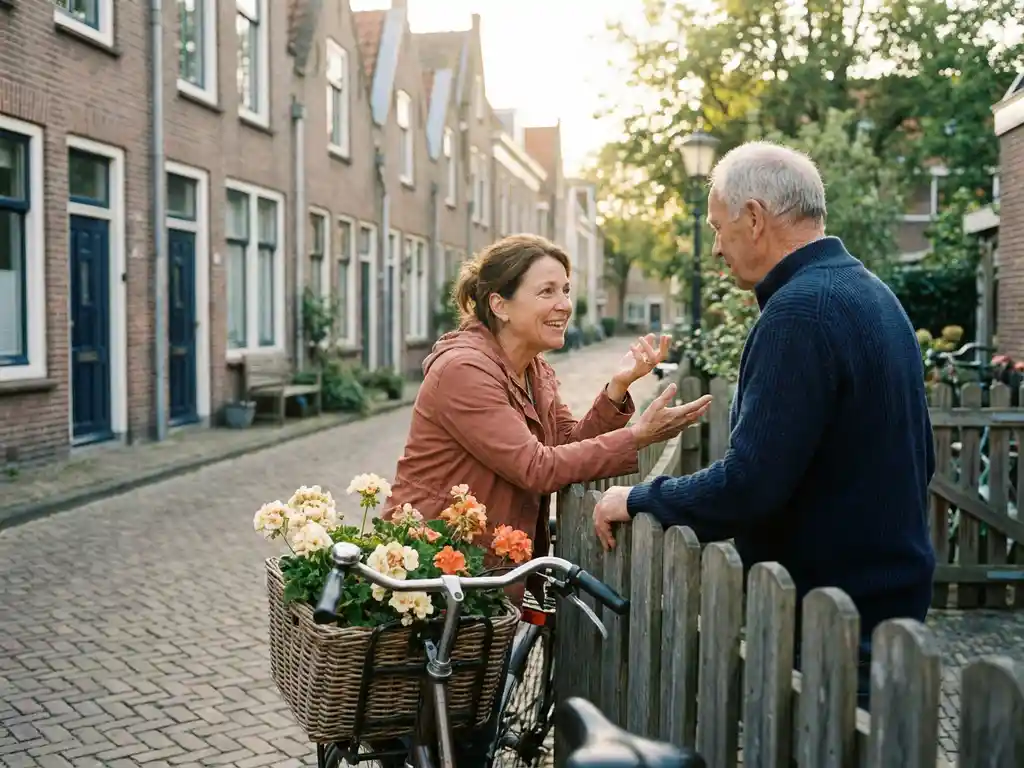
The practical difference is felt almost immediately. When you can call your GP and explain your symptoms, follow a conversation at your child’s school meeting, or chat with a neighbour without switching to English, your daily world expands. These are not small moments. For many expats, especially partners who have relocated for a spouse’s career, these interactions are the difference between feeling at home and feeling invisible.
Beyond logistics, speaking Dutch signals something important to the people around you. Dutch people notice the effort and respond warmly to it. Conversations go deeper, invitations come more naturally, and the sense of social isolation that many internationals describe in their first year begins to lift. Dutch culture explained to expats often focuses on directness and pragmatism, but what is less often mentioned is how much Dutch people appreciate someone who tries to meet them in their own language.
Do Dutch people really speak English — so why bother learning Dutch?
Yes, the Dutch are among the most proficient English speakers in the world outside of native-speaking countries. You can live in Eindhoven or Tilburg for years and manage almost everything in English. But managing is not the same as belonging, and this is the core reason to bother learning Dutch despite the country’s impressive English fluency.
English conversations in the Netherlands tend to stay functional. They cover transactions, instructions, and polite exchanges. Dutch conversations go somewhere different. Humour, nuance, local references, and the kind of casual warmth that builds real friendships live in Dutch. When you only speak English, Dutch people will accommodate you, but the relationship often stays at a courteous distance.
There is also a professional dimension. Many international companies in the Netherlands operate in English internally, but team lunches, corridor conversations, and the unspoken social fabric of a workplace run in Dutch. Learning the language gives you access to that layer of professional life that English alone cannot reach.
What does ‘integration’ actually mean for expats in the Netherlands?
Integration for expats in the Netherlands means becoming an active, comfortable participant in daily Dutch life — not just coexisting alongside it. It involves understanding cultural norms, building genuine local connections, and navigating systems like healthcare, education, and local government with confidence rather than anxiety.
Integration is not about abandoning your own culture or becoming Dutch. It is about developing enough cultural and linguistic fluency to engage authentically with the people and institutions around you. Dutch on Track describes this well: the goal is not perfection, it is participation. Speaking Dutch, even imperfectly, is one of the most direct routes to that participation.
For expat partners in particular, integration often has an emotional dimension that is underestimated. Relocating for a partner’s career can mean leaving behind a professional identity, a social network, and a sense of purpose. Building a new life in the Netherlands requires more than logistics. It requires connection, and language is the foundation of that connection.
How long does it take to learn enough Dutch to feel integrated?
Most expats reach a level of Dutch that meaningfully supports daily social integration within six to twelve months of consistent study. Reaching A2 level, where you can hold simple conversations and handle routine situations independently, typically takes three to four months. Reaching B1, where you can engage in most everyday conversations with confidence, takes around a year with structured learning.
The timeline depends heavily on how you learn and how much you practise outside the classroom. Passive study alone moves slowly. The expats who progress fastest are those who combine structured lessons with real-world practice: speaking Dutch at the market, with neighbours, at the school pickup. Every real conversation accelerates the process in a way that no amount of homework replicates.
It is worth noting that feeling integrated does not require fluency. Many expats describe a turning point much earlier, when they first manage a spontaneous conversation in Dutch and the other person responds naturally rather than switching to English. That moment, which can come within a few months, marks a genuine shift in how you experience life in the Netherlands.
What is the best way to learn Dutch for social and cultural integration?
The best way to learn Dutch for social and cultural integration is through a communicative approach that prioritises speaking from the very first lesson, combined with consistent real-world practice. Grammar has its place, but integration is built through conversation, not conjugation tables.
The most effective learners combine three things:
- Structured lessons in small groups, where you practise with other internationals in a low-pressure environment
- Contextual learning tied to real Dutch life situations, such as visiting a doctor, dealing with local authorities, or socialising with neighbours
- Regular practice outside the classroom, even brief daily interactions in Dutch
The social dimension of learning in a group is often underestimated. Learning Dutch alongside other expats means you share the experience, laugh at the same mistakes, and often build friendships in the process. The classroom becomes a community, not just a course. That sense of belonging, formed while learning the language, mirrors exactly the kind of belonging you are working toward in Dutch society.
Cultural context matters too. Understanding why Dutch people say what they say, how directness functions in Dutch communication, and what social norms govern everyday interactions makes the language feel alive rather than academic.
Should expat partners specifically prioritise learning Dutch?
Yes, expat partners have particularly strong reasons to prioritise learning Dutch. While the working partner often has a built-in social structure through their employer, the accompanying partner frequently faces the sharpest version of social isolation, daily dependency, and loss of professional identity. Dutch language skills directly address all three.
For expat partners, Dutch fluency is not just a nice addition to life in the Netherlands. It is the practical tool that enables independence. It means booking a GP appointment without asking your partner to do it, having a real conversation with your child’s teacher, or joining a local group without feeling like an outsider. These are the moments that rebuild confidence and a sense of self after a major relocation.
There is also a longer-term career dimension. Many expat partners eventually want to re-enter the Dutch job market or build a professional network locally. Dutch language skills are often a prerequisite for that, and starting early means being ready when the opportunity arises.
How Dutch on Track Helps Expats Feel at Home in the Netherlands
Dutch on Track was built specifically for highly educated internationals and their partners who want to do more than survive in the Netherlands. The programme combines structured learning with genuine community, because we believe that integration happens through connection as much as through grammar.
- Small groups of 8 to 10 participants, so every lesson involves real conversation practice, not passive listening
- A blended learning method combining e-learning preparation, interactive classroom sessions, and consolidation exercises
- Courses from absolute beginner (A0) to intermediate (B1), including the 43-week “Dutch in 1 Year” programme
- Evening classes after work hours in central Eindhoven and Tilburg, designed around busy schedules
We teach Dutch the way it is actually used, in the supermarket, at the school gate, with neighbours, and in the workplace. Our certified teachers specialise in Dutch as a Second Language, and our communicative approach means you start speaking from day one. The classroom is also a place to meet other internationals going through the same journey, which means friendships form alongside language skills. If you are ready to start building your life in Dutch, schedule a free meeting with Dutch on Track and take the first step.
Frequently Asked Questions
I've been in the Netherlands for two years without learning Dutch — is it too late to start?
It is absolutely not too late. Many expats begin learning Dutch after several years in the Netherlands and still achieve meaningful integration. In fact, having already lived in the country gives you a head start: you already understand the cultural context, recognise common words, and know exactly which daily situations you want to handle more confidently. Starting later simply means your motivation is sharper and your real-world practice opportunities are already built into your routine.
What if I try to speak Dutch and people immediately switch to English — how do I handle that?
This is one of the most common frustrations expats face, and it happens because Dutch people are genuinely trying to be helpful, not dismissive. The most effective approach is to politely persist: a simple phrase like ‘Ik wil graag in het Nederlands oefenen’ (I’d like to practise in Dutch) signals your intention clearly and most Dutch people will respect it. Over time, as your confidence and fluency grow, the switches happen less frequently — Dutch speakers tend to stay in Dutch once they sense you can keep up.
Can I realistically learn Dutch while working full-time?
Yes, and many successful Dutch learners do exactly that. The key is choosing a programme designed around working schedules — evening or weekend classes — and keeping daily practice habits small but consistent, even ten to fifteen minutes a day adds up significantly over months. Progress may be slightly slower than for someone studying full-time, but structured group courses with a communicative approach mean that every lesson counts, and the social momentum of learning with others helps sustain motivation through a busy week.
Do I need to learn Dutch if I'm only planning to stay in the Netherlands for two or three years?
Even for shorter stays, learning Dutch to at least A2 level pays dividends that far outweigh the time invested. Two or three years is a long time to feel like an outsider in your own daily life, and basic Dutch fluency transforms that experience relatively quickly. Beyond personal wellbeing, the language skills you build are transferable — Dutch is also spoken in Belgium and Suriname, and the discipline of learning a new language strengthens cognitive skills that benefit any future relocation or career move.
What are the most common mistakes expats make when trying to learn Dutch?
The biggest mistake is waiting until you feel ‘ready’ before speaking — fluency comes from practice, not from preparation, and most learners who wait for confidence never find it. A close second is relying too heavily on apps or self-study without real conversational practice, which builds recognition skills but not the speaking confidence needed for actual integration. Choosing a course that gets you speaking from lesson one, in a supportive group environment, addresses both of these pitfalls directly.
How do Dutch language skills affect my chances in the Dutch job market?
Dutch language proficiency significantly expands your employability in the Netherlands, even in international companies. While many multinational roles officially operate in English, hiring managers consistently favour candidates who can function in Dutch because it signals cultural fit, reduces communication friction with Dutch colleagues and clients, and demonstrates commitment to building a life in the country. Reaching B1 level is often the practical threshold at which Dutch language skills become a genuine professional asset rather than just a personal one.
Is group learning really better than private Dutch lessons for integration purposes?
For integration specifically, group learning offers advantages that one-on-one lessons cannot replicate. Practising with other internationals builds the conversational confidence needed for real social situations, where you must listen, respond, and adapt in real time rather than at your own pace. The group itself also becomes a social network — many expats form lasting friendships through their Dutch course, which means the integration process begins in the classroom, not just after it. Private lessons can be valuable as a supplement for focused grammar work, but the communicative and social benefits of group learning are uniquely suited to the goal of feeling at home in the Netherlands.
Related Articles
- Can employers buy individual places in a regular Dutch group course?
- What Dutch phrases do you actually need in a Dutch workplace?
- What is the difference between understanding Dutch and actually speaking it?
- What follow-up options exist after completing Dutch language courses?
- How do Dutch language courses adapt to different learning styles?