What is expat social life in the Netherlands really like?
Expat social life in the Netherlands is genuinely enjoyable, but it takes more intentional effort than in many other countries. Dutch social culture is warm once you break through the initial reserve, but that first layer can feel surprisingly thick. Most expats find a rich social world waiting for them — it just rarely appears on its own.
The good news is that the Netherlands has one of the most established expat communities in Europe, particularly in cities like Eindhoven and Tilburg. Whether you are a working professional or a partner who has just arrived, there are real pathways to connection. This article walks through the questions expats most often ask about building a social life here.
How do expats actually make friends in the Netherlands?
Expats in the Netherlands most often make friends through structured activities rather than spontaneous social encounters. Joining clubs, sports teams, language courses, or expat groups gives you a recurring reason to see the same people, which is how friendships genuinely form. Waiting for friendships to happen organically tends to be a slow and frustrating strategy in the Netherlands.
The most effective routes tend to be:
- Expat community events and international networking groups
- Language classes, where fellow learners share the same experience
- Sports clubs, hobby groups, and local volunteering
- School parent communities if you have children
The key insight most expats share is that consistency matters more than enthusiasm. Showing up to the same group week after week builds familiarity, and familiarity is the foundation of Dutch friendships. One-off events rarely lead anywhere lasting.
Why do Dutch people seem hard to get to know?
Dutch people are not unfriendly, but they tend to keep their social circles small and stable. Most Dutch adults formed their core friendships during school and university, and they are simply not actively looking to expand that circle. This is not rudeness — it is a cultural pattern. Directness and practicality shape Dutch social behavior, which can feel cold to people from more spontaneously warm cultures.
Dutch social life also tends to be planned well in advance. Dropping by unannounced or suggesting last-minute plans rarely fits the Dutch rhythm. Once you understand this, you can work with it rather than against it. Scheduling a coffee or a walk a week ahead shows respect for how Dutch people organise their time, and it dramatically improves your chances of actually connecting.
The other factor worth knowing is that Dutch people value authenticity over politeness. They will not pretend to be interested if they are not, but when they do invest in a friendship, it tends to be genuine and long-lasting. Many expats who stay in the Netherlands for several years describe their Dutch friends as among the most reliable they have ever had.
What social activities are popular among expats in the Netherlands?
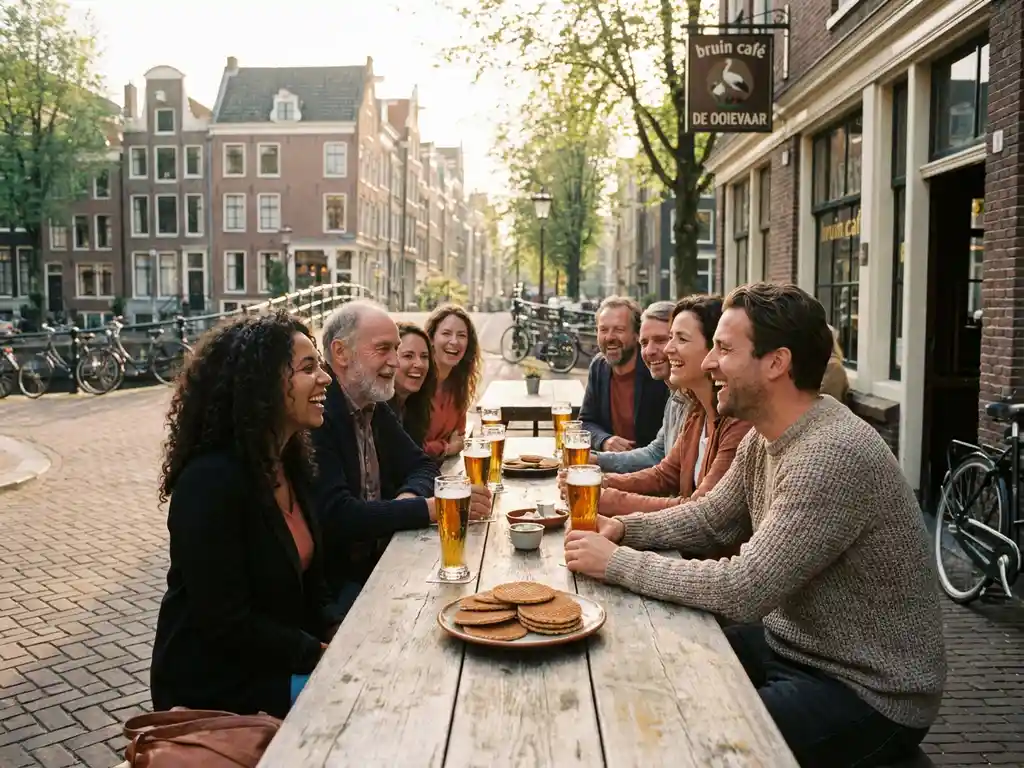
The most popular social activities among expats in the Netherlands include international sports leagues, language exchange meetups, cultural events, hiking and cycling groups, and expat-specific social clubs. Cities like Eindhoven and Tilburg have active international communities with regular events designed specifically for people who are new to the country.
Beyond expat-specific events, many internationals find that joining Dutch-language activities is one of the most rewarding social investments they make. It puts you in contact with both locals and fellow learners, and it gives every outing a clear purpose. Visiting markets, attending local festivals, or simply having a regular coffee spot where staff begin to recognise you all contribute to a growing sense of belonging.
The social side of learning Dutch is something we see firsthand. Our small group classes of 8 to 10 people regularly become genuine social circles, with students meeting outside of class and supporting each other through the shared experience of building a life in a new country.
How long does it take to feel socially settled in the Netherlands?
Most expats begin to feel socially settled in the Netherlands after roughly one to two years, though this varies significantly depending on how actively they pursue connections. The first few months are often the hardest, marked by novelty and logistical demands. Social confidence tends to grow steadily once daily routines are established and a few consistent social touchpoints are in place.
Language ability plays a meaningful role in how quickly this happens. Expats who invest in learning Dutch — even at a basic level — typically report feeling more settled sooner, because they can navigate daily life independently and connect with a wider range of people. Those who rely entirely on English often find their social world remains limited to other English-speaking expats, which is comfortable but can feel isolating over time.
It is also worth noting that feeling settled is not a single moment. It tends to arrive gradually, through small wins: understanding a joke, handling a phone call in Dutch, or being recognised as a regular at a local shop. These moments accumulate into a genuine sense of belonging.
Does speaking Dutch make a difference to your social life?
Yes, speaking Dutch makes a significant difference to your social life in the Netherlands. While most Dutch people speak excellent English, making the effort to learn Dutch signals respect and genuine commitment to integrating. It opens doors to friendships with locals that simply do not form as easily in English, and it removes the subtle barrier of always being “the foreigner” in a conversation.
Even a conversational level of Dutch changes how you experience daily life. You can chat with neighbours, follow conversations at social events, and participate in community life in a way that English alone does not allow. Dutch people genuinely appreciate the effort, and many will switch to Dutch with you gladly once they see you are trying.
For expat partners especially, Dutch language skills can transform the social experience from one of observation to active participation. If you are ready to take that step, our beginner Dutch course is a practical starting point designed specifically for internationals.
What social challenges do expat partners face specifically?
Expat partners face a distinct set of social challenges because their move to the Netherlands is often driven by someone else’s career. Without the built-in social structure of a workplace, building a social life requires more deliberate effort. Many partners describe a combination of social isolation, dependence on their partner for communication, and a loss of the professional identity that previously anchored their sense of self.
The practical daily challenges compound the social ones. Navigating a doctor’s appointment, dealing with the municipality, or communicating with school staff in Dutch can feel overwhelming without language support. This creates a cycle where avoiding these situations leads to less practice and less confidence, which in turn makes integration feel even harder.
The social dimension of this is real and worth taking seriously. Many expat partners find that joining a language class is one of the most effective early steps, not only because of the language skills gained but because of the immediate community it provides. Being in a room with people who share your exact situation — motivated, capable adults navigating the same unfamiliar territory — is genuinely reassuring.
How Dutch on Track Helps You Build a Social Life in the Netherlands
Dutch on Track was built with exactly this kind of experience in mind. We work with expats and their partners in Eindhoven and Tilburg who want to move beyond surface-level integration and genuinely feel at home in the Netherlands. Our approach combines practical language skills with a learning environment that is social, encouraging, and fun from the very first lesson.
Here is what makes our programme different:
- Small groups of 8 to 10 participants, so you practise speaking in a comfortable, supportive setting and get to know fellow internationals
- A communicative method that gets you speaking from day one, because confidence comes from practice, not perfection
- Lessons designed around real daily life in the Netherlands, from conversations with neighbours to handling practical appointments
- Certified Dutch as a Second Language teachers who understand the specific challenges internationals face
Whether you are just arriving or have been in the Netherlands for a while and want to finally feel truly connected, Dutch on Track offers a clear path forward. Schedule a free meeting with Dutch on Track today and take the first step toward a social life in the Netherlands that feels genuinely yours.
Frequently Asked Questions
Is it worth joining expat-specific groups, or is it better to integrate directly into Dutch social circles?
Both approaches have real value and are not mutually exclusive. Expat groups offer an immediate sense of community and are especially helpful in your first months when you need connection quickly. Dutch social circles take longer to enter but offer deeper local integration over time. The most socially fulfilled expats tend to maintain both — using expat networks for easy camaraderie while gradually building Dutch friendships through shared activities, language classes, or neighbourhood involvement.
What if I've been in the Netherlands for over a year and still feel socially isolated — where do I start?
Start by identifying one consistent, recurring activity you can commit to for at least two to three months — a language class, a sports team, or a hobby group. Consistency is the single biggest factor in building friendships, and one-off events rarely move the needle. If language is a barrier to joining Dutch-language activities, addressing that first will unlock significantly more social options. It is never too late to reset your social strategy, and many expats find their social lives transform dramatically after making just one or two deliberate changes.
How do I handle the language barrier at social events when my Dutch is still at a beginner level?
Most Dutch people will happily switch to English once they notice you are struggling, but you can still make a strong impression by opening with a simple Dutch greeting or phrase — it signals effort and goodwill. Be upfront about your level; saying ‘Ik leer Nederlands’ (I am learning Dutch) is a natural conversation starter and often leads to patient, encouraging responses. Over time, even small improvements in your Dutch will noticeably change how social interactions feel, shifting you from an observer to an active participant.
Are there specific apps or platforms expats in Eindhoven and Tilburg use to find social events?
Meetup.com is widely used among expats in the Netherlands and has active groups in both Eindhoven and Tilburg covering everything from hiking to professional networking. InterNations is another popular platform specifically designed for the international community, with regular organised events. Facebook groups for expats in your specific city are also worth joining, as they tend to be active with event announcements, local tips, and informal meet-ups that do not always appear on larger platforms.
How do I make friends at work when Dutch colleagues already have established social circles?
The key is to show up consistently to any optional social moments — team lunches, after-work drinks, or informal coffee breaks — rather than waiting for a formal invitation. Dutch colleagues may not actively recruit you into their social group, but they will warm to you steadily if you are a reliable, genuine presence. Asking a colleague a specific question about the area, a local recommendation, or a shared work challenge is a low-pressure way to start a real conversation without it feeling forced.
What are the most common mistakes expats make when trying to build a social life in the Netherlands?
The most common mistake is expecting social connections to form as quickly or spontaneously as they might in other countries, and giving up too soon when they do not. A close second is relying entirely on English and limiting social contact to other expats, which creates a comfortable but narrow social world. Many expats also underestimate how much a regular routine — a weekly class, a favourite café, a local sports team — does for their sense of belonging compared to attending occasional large events.
How much Dutch do I realistically need to learn to make a meaningful difference to my social life?
You do not need to reach fluency for Dutch to start opening social doors. Even an A1 to A2 level — the ability to handle basic conversations, greet neighbours, and follow the gist of everyday exchanges — creates a noticeably warmer dynamic with Dutch people around you. The effort itself matters as much as the result; Dutch people consistently respond positively to internationals who are visibly trying. From there, each level of improvement compounds, gradually transforming your experience from navigating the Netherlands to genuinely living in it.