What is the Dutch concept of gezelligheid?
If you have recently arrived in the Netherlands, you have probably already heard the word gezellig thrown around in conversation. Maybe someone described a café as gezellig, or a colleague said the evening was gezellig, and you nodded along without quite knowing what it meant. You are not alone. Gezelligheid is one of those Dutch concepts that resists a neat translation, yet understanding it is genuinely key to settling in the Netherlands and feeling at home here.
For expats navigating life in the Netherlands, gezelligheid is more than a vocabulary word. It is a social compass that shapes how Dutch people connect, relax, and build community. Once you understand it, a lot about Dutch culture suddenly starts to make sense.
What does gezelligheid actually mean in Dutch?
Gezelligheid is a Dutch noun that describes a feeling of warmth, togetherness, and cozy conviviality shared between people. It combines a sense of physical comfort with emotional connection and social ease. The closest English translations are “coziness,” “conviviality,” or “a sense of togetherness,” but none of these fully captures the word on its own.
The adjective form, gezellig, can describe a place, a situation, or a person. A candlelit pub is gezellig. A dinner with close friends is gezellig. Even a person can be described as gezellig if they are warm, fun, and easy to be around. What ties all of these uses together is the idea that something or someone creates a positive, connected atmosphere where people feel relaxed and genuinely present with one another.
It is worth noting that gezelligheid is not purely about physical surroundings. You can be in a beautiful restaurant that feels entirely ongezellig (the opposite) if the atmosphere is cold or the company is tense. The feeling is fundamentally social and emotional, not just aesthetic.
Where does the concept of gezelligheid come from?
Gezelligheid has deep roots in Dutch history and geography. The word derives from gezel, an old Dutch word meaning companion or fellow. Over centuries, it evolved into a cultural value that reflects how Dutch communities historically coped with their environment and circumstances.
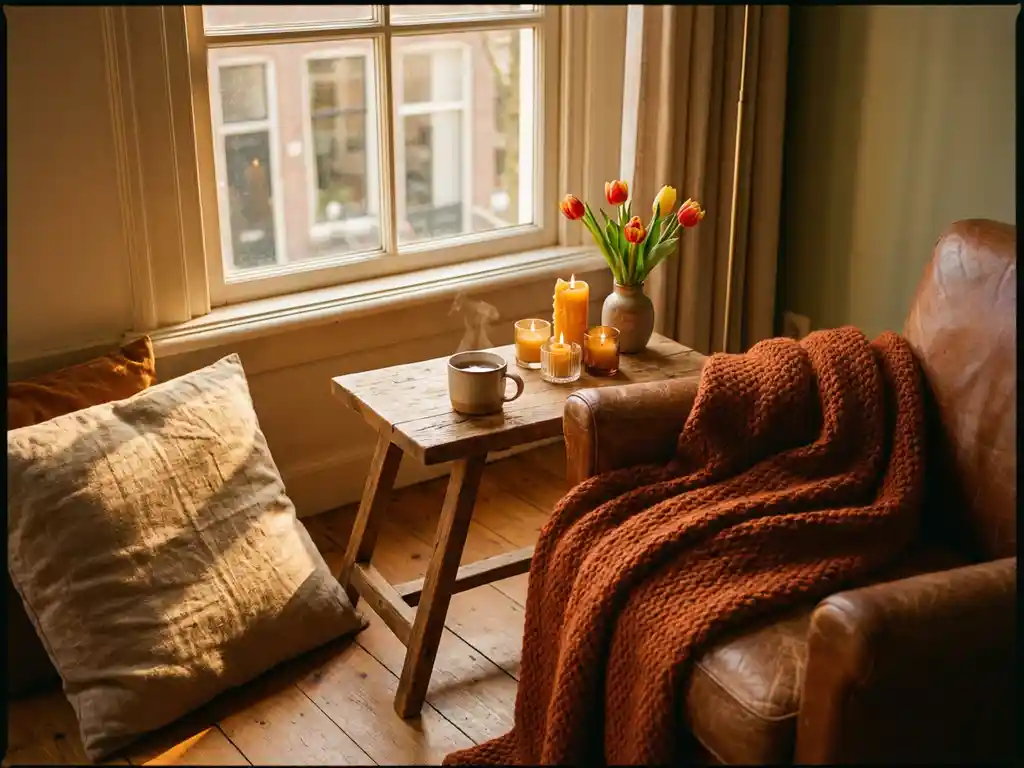
The Netherlands is a small, densely populated country where people have long lived in close proximity to one another. Harsh winters, low-lying landscapes, and a strong tradition of trade and civic life encouraged communities to create warm, welcoming indoor spaces. The Dutch home, with its large windows, soft lighting, and communal living areas, became a central stage for gezelligheid.
This cultural history explains why gezelligheid feels so embedded in Dutch identity today. It is not a trend or a lifestyle aesthetic imported from elsewhere. It is a social value that has been passed down through generations as a genuine way of connecting with the people around you.
What makes a moment or place gezellig?
A moment or place is gezellig when it combines warmth, good company, and a relaxed atmosphere where conversation flows naturally. The specific ingredients can vary, but a few elements consistently show up in what Dutch people describe as gezellig.
- Soft, warm lighting rather than harsh overhead lights
- A small, intimate setting where people feel close rather than spread apart
- Shared food or drinks that give people something to gather around
- Genuine conversation without distractions or formality
Importantly, gezelligheid is not about luxury or perfection. A simple kitchen table with good friends and a pot of coffee can be far more gezellig than an expensive dinner where everyone feels uncomfortable. The Dutch tend to value authenticity and ease over impressiveness, which is why a local brown café (bruine kroeg) with mismatched furniture and regular customers often feels more gezellig than a sleek, modern bar.
How is gezelligheid different from the Scandinavian concept of hygge?
Gezelligheid and hygge are related concepts, but they are not the same. The key distinction is that hygge leans more toward personal comfort and solitary coziness, while gezelligheid is almost always social. Gezelligheid requires other people. You cannot truly experience it alone.
Hygge, the Danish and Norwegian concept, became internationally famous in the mid-2010s and is often associated with candles, blankets, hot drinks, and a sense of personal retreat from the world. It can absolutely be shared with others, but the emphasis is on the individual feeling of warmth and safety.
Gezelligheid, by contrast, is rooted in the relationship between people. The word itself comes from the word for companion. A gezellig evening is one where the social dynamic is right, where people are engaged with each other, laughing, talking, and genuinely enjoying each other’s company. The physical environment supports this, but it is the human connection that creates the feeling. For anyone living in the Netherlands, this distinction matters because it signals that Dutch social life is built around togetherness, not retreat.
Why is gezelligheid important for expats living in the Netherlands?
For expats living in the Netherlands, understanding gezelligheid is important because it unlocks the logic behind Dutch social behavior. Many internationals find Dutch people initially reserved or hard to get to know. Gezelligheid helps explain both why Dutch social gatherings matter so much and what Dutch people are actually looking for when they invite you somewhere.
When a Dutch colleague invites you for a borrel (an informal drinks gathering) or a neighbor suggests having coffee, they are extending an invitation into their social world. Accepting and contributing to the gezelligheid of that moment by being present, warm, and engaged is how you begin to build genuine friendships in the Netherlands.
Settling in the Netherlands is significantly easier when you understand that Dutch people do not separate socializing from a sense of comfort and belonging. They are not just being polite when they describe something as gezellig. They are telling you that this moment, this place, or this group of people genuinely matters to them. Recognizing that signal and responding to it is one of the most practical social skills you can develop as a newcomer.
How can you create gezelligheid as a newcomer in the Netherlands?
You can create gezelligheid as a newcomer by focusing on small, genuine social moments rather than grand gestures. The most practical starting point is to put your phone away, show up consistently, and invest in the people around you. Gezelligheid is built through repetition and familiarity, not one-off events.
A few concrete ways to cultivate it in your daily life include hosting a simple dinner or drinks evening at home, becoming a regular at a local café or neighborhood spot, joining a group activity where you see the same people week after week, and learning a few Dutch phrases so that conversations with locals can begin more naturally.
That last point matters more than many expats expect. Speaking even basic Dutch signals that you are making an effort to belong, and that effort is something Dutch people genuinely appreciate. It lowers the social barrier and creates the kind of ease that gezelligheid depends on. You do not need to be fluent. You just need to try.
How Dutch on Track helps you feel at home in the Netherlands
Learning Dutch is one of the most effective steps you can take toward experiencing real gezelligheid and building a social life in the Netherlands. At Dutch on Track, we offer Dutch language courses specifically designed for expats and internationals in Eindhoven and Tilburg, and we have built our approach around exactly the kind of social, communicative learning that makes settling in the Netherlands feel less daunting and more enjoyable.
Here is what makes our approach different:
- Small groups of 8 to 10 students create a warm, gezellig classroom atmosphere where you practice with fellow internationals who understand exactly what you are going through
- Our communicative method means you speak Dutch from day one, building the confidence to actually use the language in real social situations
- Evening classes after work (17:45 to 19:45) fit around your schedule and naturally become a social highlight of the week
- Our Beginner Dutch Course takes you from zero to conversational A1 level, giving you the tools to start connecting with Dutch people in everyday life
Many of our students tell us that the course itself becomes a source of gezelligheid. You come to learn Dutch, and you leave with new friends, cultural confidence, and a genuine sense of belonging. If you are ready to take that step, schedule a free meeting with Dutch on Track and find out which course fits your level and goals.
Frequently Asked Questions
How long does it typically take for expats to feel a genuine sense of gezelligheid in the Netherlands?
There is no fixed timeline, but most expats report that gezelligheid starts to feel natural once they have built a small circle of recurring social connections, which can take anywhere from a few months to a year. The key is consistency rather than speed. Showing up regularly to the same café, class, or social group builds the familiarity that gezelligheid depends on. Trying to rush it with one-off social events rarely works as well as slow, repeated investment in the same people and places.
Can you experience gezelligheid with Dutch people if you do not speak Dutch?
Yes, but it is noticeably harder. Most Dutch people speak excellent English, so language is rarely an absolute barrier, but speaking even basic Dutch signals effort and belonging, which lowers social walls considerably. The ease and naturalness that gezelligheid requires tends to flow more freely when people share a common language and cultural shorthand. Learning even a handful of Dutch phrases, greetings, and small talk expressions can make a meaningful difference in how quickly you feel included in social moments.
What are some common mistakes expats make that can unintentionally kill the gezelligheid of a moment?
The most common mistakes are being distracted by your phone, treating social gatherings as networking opportunities, or being overly formal in casual settings. Gezelligheid thrives on presence and ease, so anything that creates distance, whether physical, emotional, or conversational, works against it. Another frequent misstep is skipping small social invitations because they seem low-key or informal. In Dutch culture, a casual coffee or a quick borrel is often where real connection begins, and declining repeatedly sends the signal that you are not interested in belonging.
Are there specific Dutch traditions or events where gezelligheid plays a central role?
Absolutely. Sinterklaas celebrations in early December are considered one of the most gezellig times of the year in the Netherlands, centered around family gatherings, poems, and gift-giving. King’s Day (Koningsdag) in April, with its street parties and flea markets, is another deeply gezellig national event where strangers become temporary neighbors. On a smaller scale, the Friday afternoon borrel is a weekly workplace ritual built entirely around gezelligheid, and the bruine kroeg (brown café) culture exists specifically to provide a reliable, low-key space for it year-round.
How is gezelligheid expressed in the Dutch home, and what can expats learn from it when hosting?
The Dutch home is deliberately designed for gezelligheid: large front windows that signal openness, soft ambient lighting, and living spaces arranged for conversation rather than performance. When hosting, Dutch people tend to prioritize comfort and informality over impressive presentation, so a simple spread of snacks, good drinks, and a relaxed atmosphere will always land better than an elaborate but stiff dinner party. As an expat host, the most gezellig thing you can do is make guests feel genuinely welcome and at ease, keep the setting intimate, and let conversation happen naturally without a rigid agenda.
Does gezelligheid apply to workplace culture in the Netherlands, and how should expats navigate it professionally?
Yes, gezelligheid extends into Dutch workplace culture in meaningful ways. Team lunches, Friday afternoon borrels, and informal coffee chats are not just perks but genuine social rituals that help colleagues build trust and camaraderie. Expats who skip these moments consistently may find it harder to integrate into their team, even if their work performance is strong. Participating, being approachable, and contributing warmth to the group dynamic are all ways of demonstrating that you value the relationship side of Dutch professional life, not just the transactional side.
Is gezelligheid something that can be found outside the home and café, such as in outdoor or daytime settings?
Definitely. While gezelligheid is most strongly associated with cozy indoor settings, it is not limited to them. A sunny terrace during a Dutch summer, a neighborhood street market, or a group bike ride with friends can all be gezellig when the social energy is right. The concept travels with the people, not just the setting. That said, the Dutch climate means that indoor gezelligheid dominates for much of the year, which is part of why café culture and home entertaining are so central to social life in the Netherlands.