What is the work-life balance like in the Netherlands?
The Netherlands consistently ranks among the happiest countries in the world, and a big part of that comes down to how Dutch people approach the balance between work and personal life. For anyone considering expat life in the Netherlands, understanding this balance is one of the most important steps toward feeling at home. Whether you are settling in the Netherlands as a professional, a partner, or both, knowing what to expect from Dutch culture can make your transition smoother and far more enjoyable.
From shorter working hours to a deep respect for personal time, the Dutch have built a lifestyle that many expats find refreshing, but also occasionally puzzling. This guide answers the most common questions about work-life balance in the Netherlands so you can hit the ground running.
What does work-life balance actually mean in the Netherlands?
In the Netherlands, work-life balance means that personal time, family, and leisure are treated as equally important as professional output. Dutch culture actively discourages overworking. Employees are expected to be productive during working hours and then genuinely switch off. Staying late at the office is not seen as a sign of dedication; it is more often interpreted as poor time management.
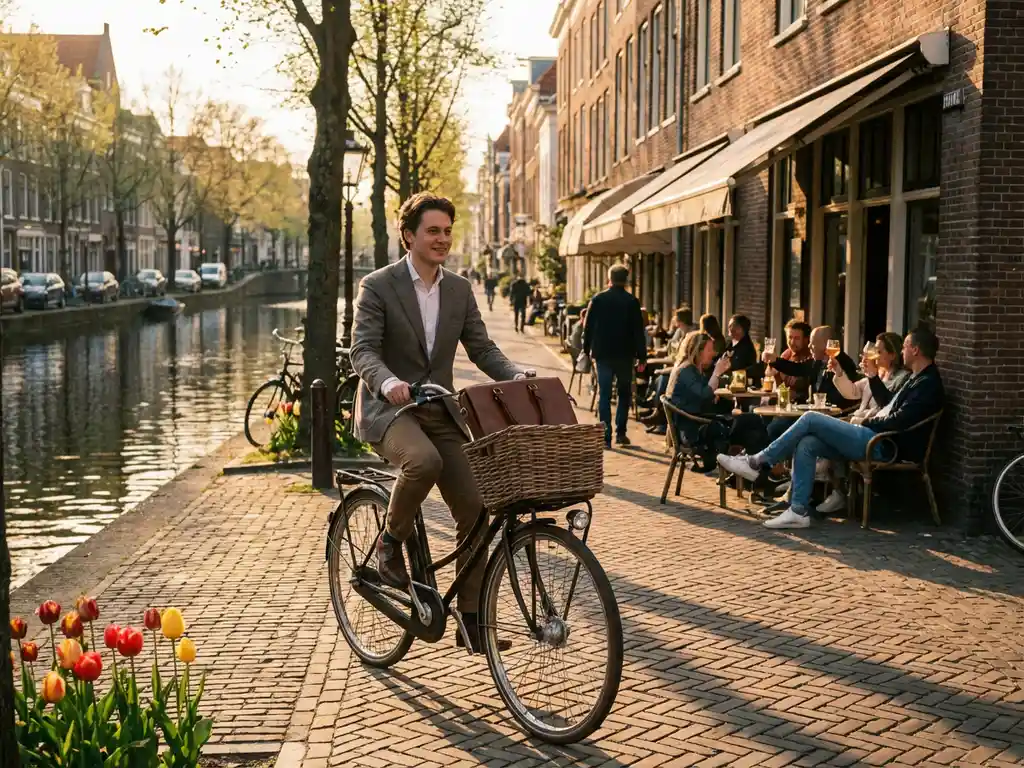
This mindset shapes everything from how meetings are scheduled to how colleagues interact. You will rarely receive work emails late in the evening, and most Dutch professionals fiercely protect their weekends. The concept of “gezelligheid” (a uniquely Dutch sense of coziness and togetherness) reflects how much value the Dutch place on relaxed, quality time with family and friends outside of work.
How many hours do Dutch people typically work per week?
Dutch employees work an average of around 29 to 32 hours per week, making the Netherlands one of the countries with the shortest average working weeks in Europe. Part-time work is extremely common, particularly among parents, and is not considered a career setback. Many highly skilled professionals deliberately choose part-time arrangements to protect time for family, hobbies, and personal development.
For expats coming from countries with a 40- to 50-hour workweek culture, this can feel disorienting at first. You may wonder whether you are expected to do more. The answer is generally no. Efficiency during working hours is valued far more than clocking extra time. Dutch workplaces tend to be results-oriented, meaning what you deliver matters more than how long you sit at your desk.
What are the most important Dutch holidays and time-off traditions?
The Netherlands has several public holidays and a strong culture of taking annual leave. Key holidays include King’s Day (Koningsdag) on April 27, Liberation Day (Bevrijdingsdag) on May 5, and the Christmas period, which the Dutch celebrate over two days. Easter Monday and Whit Monday are also public holidays, giving the spring months a particularly relaxed feel.
Beyond public holidays, Dutch workers typically receive between 20 and 25 days of paid annual leave, and using that leave is actively encouraged. Summer holidays in July and August are taken seriously, and many businesses operate at reduced capacity during school breaks. If you are living in the Netherlands as an expat, embracing these rhythms will help you feel more integrated into the local culture rather than out of step with it.
How does Dutch work culture differ from other countries?
Dutch work culture is notably flat, direct, and collaborative. Hierarchy exists but is not emphasized the way it is in many other countries. Employees at all levels are expected to voice their opinions, challenge ideas respectfully, and contribute to decisions. This can be a significant cultural shift for expats from more hierarchical professional environments.
Directness is perhaps the most striking difference. Dutch colleagues will give honest feedback without much diplomatic softening, and they expect the same in return. This is not rudeness; it is simply efficiency and respect. Meetings tend to be structured and purposeful, and decisions are often made by consensus rather than through top-down instruction. Once you understand this framework, it becomes one of the most refreshing aspects of settling in the Netherlands.
Why do expats sometimes struggle with the Dutch social balance?
Expats often find that while Dutch work culture is welcoming, breaking into Dutch social circles outside of work is genuinely challenging. Dutch people tend to have well-established friendships from childhood and school, and they can appear reserved or even closed off to new acquaintances. This is not unfriendliness; it is simply a different social rhythm.
A few common friction points for expats include:
- The directness of Dutch communication, which can feel blunt or even cold at first
- The tendency for social plans to be scheduled far in advance rather than made spontaneously
- A sense of isolation when colleagues are friendly at work but do not extend that friendliness to social settings
- Difficulty joining established friend groups without a natural shared context
Understanding these patterns helps enormously. Many expats find that shared activities, language classes, and community groups are the most natural ways to build genuine friendships in the Netherlands. The key is creating contexts where connection can happen organically over time.
How can learning Dutch help you enjoy life in the Netherlands more?
Learning Dutch is one of the most practical and personally rewarding steps you can take as an expat. While many Dutch people speak excellent English, making the effort to speak Dutch signals respect for the local culture and opens doors that can remain closed if you rely on English. From navigating everyday situations to building real friendships, language is the bridge between being a visitor and truly belonging.
Beyond the practical benefits, learning Dutch in a group setting is genuinely fun. You meet other internationals who are navigating the same experiences, share laughs over pronunciation challenges, and build friendships in the process. It becomes a social experience as much as an educational one, and that combination is powerful for anyone who wants to feel less isolated and more connected to their new home.
Speaking even basic Dutch changes how locals respond to you. Shopkeepers, neighbors, and colleagues warm up noticeably when they hear you trying. Over time, those small interactions build into a sense of confidence and belonging that transforms expat life in the Netherlands from something you are enduring into something you are genuinely enjoying.
How Dutch on Track Helps You Settle into Life in the Netherlands
Dutch on Track was built specifically for people in your situation: highly educated internationals, expats, and their partners who want to integrate meaningfully into Dutch society. We understand that language learning is about more than grammar; it is about confidence, connection, and feeling at home.
Here is what makes our approach different:
- Small groups of 8 to 10 students create a warm, social atmosphere where friendships form naturally alongside language skills
- Our communicative method means you speak Dutch from day one, building real confidence rather than just theoretical knowledge
- Classes run after work hours from 17:45 to 19:45, fitting around your professional life
- Our blended learning method combines e-learning preparation, interactive classroom sessions, and consolidation so progress sticks
Whether you are starting from zero or building on some basic knowledge, Dutch on Track offers courses from absolute beginner (A0) all the way to intermediate (B1) level, including our flagship Beginner Dutch Course for those just getting started. It is one of the most enjoyable and effective ways to meet people, grow personally, and start feeling genuinely at home in the Netherlands. Ready to take the first step? Schedule a free meeting with Dutch on Track and find out which course fits you best.
Frequently Asked Questions
How long does it typically take to feel settled as an expat in the Netherlands?
Most expats report that the adjustment period takes anywhere from six months to two years, depending on how actively they engage with local culture and community. The transition tends to speed up significantly when you combine practical steps — like learning Dutch, joining local groups, and understanding workplace norms — rather than relying on work alone to build your social life. Setting realistic expectations and celebrating small wins, like your first full Dutch conversation, makes the process feel much more manageable.
Is it realistic to maintain a career at the same level while working part-time in the Netherlands?
Yes, and this is one of the most empowering aspects of Dutch work culture. Part-time work is normalized at all career levels, including senior and specialist roles, so choosing a four-day week or reduced hours is unlikely to hold back your progression the way it might in other countries. The key is having an open conversation with your employer about expectations and deliverables, since Dutch workplaces are generally results-focused and receptive to flexible arrangements.
What are the most common mistakes expats make when adapting to Dutch work culture?
One of the biggest mistakes is interpreting Dutch directness as personal criticism or hostility, which can lead to unnecessary tension with colleagues. Another common pitfall is overworking to prove yourself, which can actually signal poor efficiency rather than dedication in a Dutch professional context. Finally, many expats wait too long to engage socially, assuming work relationships will naturally evolve into friendships — being proactive about joining shared activities outside of work makes a significant difference.
How do I handle it if my home country's work culture clashes with Dutch expectations at a multinational company?
Many international companies in the Netherlands operate with a blend of cultures, so it is worth observing how your Dutch colleagues behave and using that as your primary guide rather than defaulting to your home country’s norms. If you are in a management role, be especially mindful of the flat hierarchy preference — Dutch employees respond much better to collaborative decision-making than to top-down directives. When in doubt, asking a trusted Dutch colleague for candid feedback is both culturally appropriate and genuinely useful.
Do I need to speak Dutch fluently to fully integrate, or is conversational Dutch enough?
Fluency is not a prerequisite for feeling at home — even a conversational A1 or A2 level makes a meaningful difference in how locals respond to you and how comfortable you feel in everyday situations. The goal at the start is not perfection but effort; Dutch people genuinely appreciate when expats try, and that goodwill opens doors to warmer interactions and deeper connections. As your confidence grows, so does your ability to participate in social settings where English might not be the default.
What practical steps can expat partners (who may not be working) take to build a social life in the Netherlands?
Expat partners often face a steeper social challenge since they do not have a workplace as a ready-made social entry point, making it especially important to create structured opportunities for connection. Dutch language classes, local sports clubs, volunteer organizations, and expat community groups are all excellent starting points that provide both routine and a shared context for friendships to develop naturally. Dutch on Track’s small-group Dutch courses are particularly well-suited for this situation, since they are specifically designed for internationals and double as a social experience alongside the language learning.
Are there any Dutch cultural events or local traditions that expats should make a point of participating in to feel more integrated?
Absolutely — immersing yourself in Dutch traditions is one of the fastest ways to feel like a local rather than a visitor. King’s Day (Koningsdag) on April 27 is a must, with its nationwide street parties and flea markets creating an incredibly welcoming atmosphere even for newcomers. Sinterklaas in early December, local cycling culture, and neighborhood market days are also great touchpoints that give you natural conversation starters and shared experiences with Dutch colleagues and neighbors.
Related Articles
- What are the biggest cultural shocks expats face in the Netherlands?
- How does public transport work in the Netherlands?
- What makes Dutch humour different from British humour?
- What support do you get during Dutch language courses?
- How do you combine learning Dutch with a full-time job in the Netherlands?