How do you impress a Dutch person?
Moving to the Netherlands as an expat is exciting, but cracking the social code of Dutch culture can feel like a puzzle. Dutch people have a reputation for being direct, pragmatic, and fiercely independent—qualities that can catch newcomers off guard. If you want to build real connections and feel at home in your new country, understanding what makes Dutch people tick is a great place to start.
Whether you are settling in the Netherlands for work, love, or adventure, knowing how to navigate local social norms will make your expat life in the Netherlands far more enjoyable. This guide answers the questions that most internationals quietly wonder about but rarely ask out loud.
What do Dutch people actually value in social interactions?
Dutch people value authenticity, equality, and straightforwardness above almost everything else in social settings. They appreciate people who say what they mean, treat others as equals regardless of status, and show genuine interest rather than perform politeness. Small talk for the sake of appearances is not something most Dutch people enjoy or trust.
Punctuality is also taken seriously. Arriving on time for social events—even casual ones—signals respect. Dutch culture places a strong emphasis on planning ahead, too, so do not be surprised if someone pulls out their agenda to schedule a coffee three weeks from now. It is not coldness; it is how they show they genuinely want to see you.
Equality runs deep in Dutch social life. Hierarchy is downplayed, and people at different professional levels tend to interact in a relaxed, informal way. Trying to impress someone with your job title or salary will rarely go over well. What earns respect is being genuine, reliable, and unpretentious.
Why is Dutch directness so hard to navigate as an expat?
Dutch directness feels harsh to many expats because it lacks the softening phrases that other cultures use to cushion honest feedback. In the Netherlands, saying exactly what you think is considered respectful—it means you trust the other person enough to be honest with them. But if you grew up in a culture where indirect communication is the norm, a blunt Dutch comment can feel like a personal attack.
The key insight is that Dutch directness is rarely malicious. When a Dutch colleague tells you your idea needs work, or a neighbor points out that your recycling is in the wrong bin, they are not trying to embarrass you. They are simply communicating efficiently. Once you reframe directness as a form of respect rather than rudeness, social interactions start to feel much less stressful.
Cultural misunderstandings often peak in the early months of expat life in the Netherlands, when everything still feels unfamiliar. Giving yourself time to observe and adjust—rather than judging Dutch behavior through the lens of your home culture—makes a significant difference.
What topics do Dutch people love to talk about?
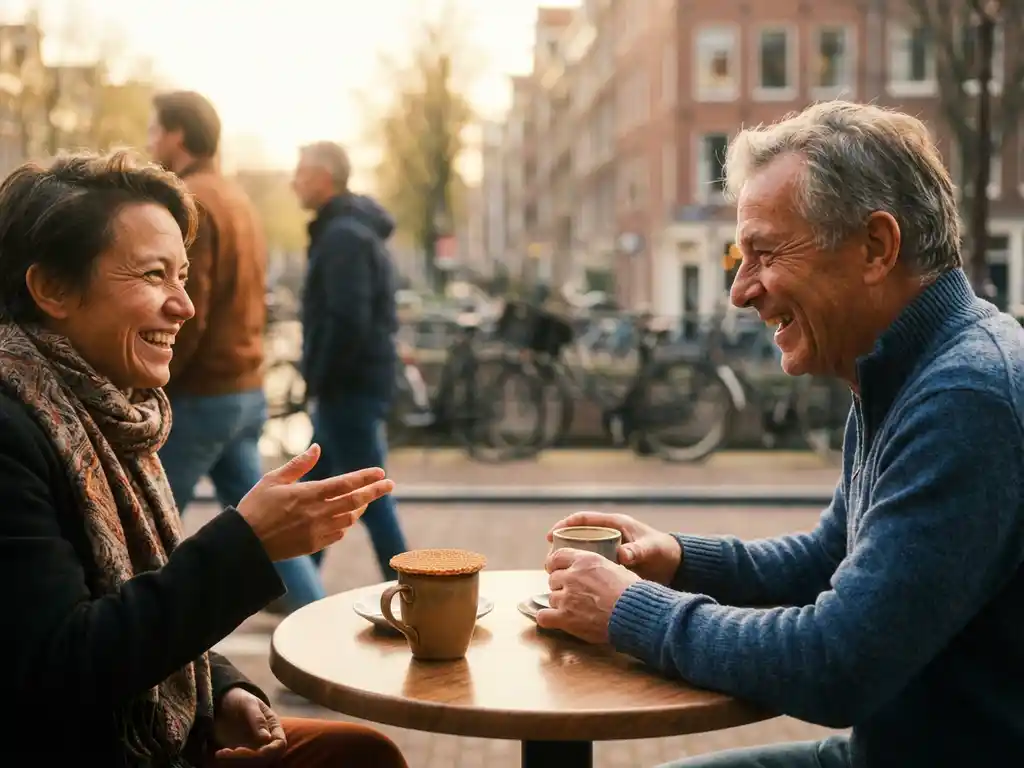
Dutch people genuinely enjoy conversations about cycling, travel, sports, sustainability, and current events. They tend to be well-informed, curious, and happy to debate ideas—as long as the conversation feels real rather than performative. Asking for someone’s actual opinion on a topic is a great way to open up a meaningful exchange.
A few conversation starters that tend to work well:
- Cycling routes and bike culture in their city
- Weekend trips or travel destinations
- Local food markets and Dutch cuisine
- Dutch football (voetbal) and major sporting events
Avoid being overly formal or stiff in conversation. Dutch social settings tend to be relaxed, and humor is welcome—self-deprecating jokes often go down particularly well. Showing that you do not take yourself too seriously signals that you are comfortable and confident, which is exactly the kind of energy Dutch people respond to.
How do Dutch social customs differ from other European cultures?
Dutch social customs are notably more egalitarian and less ceremony-driven than those in many other European cultures. Where French or Italian social life often revolves around elaborate meals, formal greetings, and clear social hierarchies, Dutch gatherings tend to be casual, practical, and focused on genuine connection over ritual.
The concept of “going Dutch”—splitting bills equally—is a real cultural practice, not just a stereotype. It reflects a broader value around financial independence and fairness. In Southern European cultures, one person often insists on paying as a gesture of generosity, but in the Netherlands, splitting costs is simply the norm and carries no negative social meaning.
Dutch homes are also more private than those in some other cultures. Being invited to someone’s home is genuinely meaningful and not something offered lightly. If you receive an invitation, treat it as a real sign of trust and warmth—not just a casual gesture.
How can you make a good impression when meeting Dutch people?
To make a good impression with Dutch people, be honest, be on time, and be yourself. Avoid over-complimenting, name-dropping, or trying to impress with status markers. Dutch people respond well to people who are grounded, direct, and genuinely curious about them as individuals.
A few practical ways to start strong:
- Show up on time—or message ahead if you are running late
- Ask genuine questions and listen to the answers
- Share your own opinions rather than just agreeing with everything
- Learn a few words of Dutch—even a simple “dankjewel” goes a long way
Consistency matters more than grand gestures in Dutch friendship. Showing up reliably, following through on plans, and being a straightforward person to deal with will earn you more social capital than any single impressive moment.
Does speaking Dutch help you connect with local people?
Yes, speaking Dutch—even at a basic level—makes a meaningful difference in how local people respond to you. While most Dutch people speak excellent English, making the effort to learn their language signals respect for their culture and a genuine commitment to settling in the Netherlands. It opens doors that staying in English simply does not.
Even a few phrases in Dutch can shift the tone of an interaction. Dutch people tend to light up when an expat tries to speak the language, and they are generally patient and encouraging with learners. It shows that you are not just passing through—you are choosing to be part of the community.
Beyond practical communication, learning Dutch gives you access to the humor, nuance, and everyday culture that gets lost in translation. Understanding a Dutch joke, following a local conversation, or reading a menu without switching to English are small moments that add up to a much richer experience of expat life in the Netherlands.
How Dutch on Track helps you connect with local people and Dutch culture
Dutch on Track was built precisely for internationals who want to do more than survive in the Netherlands—we help you thrive socially and culturally. Our Dutch language courses in Eindhoven and Tilburg are designed not just to teach grammar, but to give you the confidence and cultural understanding to build real connections with local people.
Here is what makes our approach different:
- Small groups of 8 to 10 students mean you practice in a warm, social setting where friendships form naturally
- Our communicative method gets you speaking from day one, so you build confidence fast
- Lessons are built around real-life situations—exactly the kinds of conversations you will have with Dutch neighbors, colleagues, and friends
- Evening classes after work (17:45 to 19:45) fit around your life, not the other way around
Learning Dutch with us is genuinely fun. Our students regularly describe the course as one of the best social decisions they made after arriving in the Netherlands—a place to meet other internationals, laugh through the tricky parts of the language, and grow together. If you are ready to stop feeling like an outsider and start feeling at home, schedule a free meeting with Dutch on Track and find out which course suits you best. Or explore our Beginner Dutch Course if you are just starting out—it is the perfect first step toward a more connected life in the Netherlands.
Frequently Asked Questions
How long does it typically take to form genuine friendships with Dutch people as an expat?
Building real friendships with Dutch people generally takes longer than in many other cultures—often six months to a year of consistent contact. Dutch people tend to be warm but cautious about letting new people into their inner circle, so patience and reliability are key. The good news is that once a Dutch person considers you a friend, that friendship tends to be sincere, low-drama, and long-lasting. Joining a local club, sports team, or language course is one of the fastest ways to accelerate the process.
What are the most common mistakes expats make when trying to integrate into Dutch social life?
The most common mistake is interpreting Dutch directness or reserved behavior as personal rejection and pulling back as a result. Another frequent misstep is relying entirely on the expat bubble—socializing only with other internationals—which makes it easy to avoid the discomfort of cultural adjustment but also prevents real integration. Over-performing friendliness, excessive complimenting, or trying to impress with status can also backfire, as Dutch people tend to find this kind of behavior inauthentic. The simplest fix is to be consistent, genuine, and willing to step slightly outside your comfort zone.
Is it considered rude to show up to a Dutch social event without being explicitly invited?
Yes, dropping by unannounced is generally not well-received in Dutch culture, even among people you know fairly well. Dutch social life is structured around planning, and spontaneous visits can feel like an intrusion rather than a pleasant surprise. If you want to see someone, the expected approach is to reach out in advance and agree on a time—even for something as casual as coffee. This is not unfriendliness; it is simply how Dutch people protect their time and personal space.
How do I handle it if a Dutch person says something that feels blunt or even offensive to me?
The most effective approach is to pause before reacting and remind yourself that bluntness in Dutch culture is almost never intended as an attack—it is simply the default communication style. If a comment genuinely crosses a line, it is perfectly acceptable to say so directly, since Dutch people respect honest responses and will not be offended by you pushing back calmly. Avoid passive-aggressive reactions or silent resentment, as these indirect signals are often missed entirely. A straightforward 'I found that a bit harsh' will land far better than stewing in silence.
What is the best way to get started learning Dutch if I have zero experience with the language?
The best starting point is a structured beginner course that gets you speaking from day one, rather than spending months on apps or grammar books alone. Courses designed for expats—like the Dutch on Track Beginner Course—are built around real-life situations you will actually encounter, which makes the learning immediately practical and motivating. Pairing formal lessons with small daily habits, like labeling objects around your home or listening to Dutch radio, accelerates progress significantly. The most important thing is to start speaking early, even imperfectly, because Dutch people are genuinely encouraging toward learners.
Are there regional differences in Dutch social culture I should be aware of, for example between cities like Amsterdam, Eindhoven, and Tilburg?
Yes, there are noticeable regional differences worth keeping in mind. Amsterdam tends to be more cosmopolitan, fast-paced, and accustomed to international visitors, which can make it feel slightly easier to navigate at first but also more transient. Cities like Eindhoven and Tilburg in the south (Noord-Brabant) have a reputation for being warmer, more community-oriented, and a little more relaxed in their directness compared to the Randstad. Southern Dutch people are often described as gezellig—a key Dutch concept meaning cozy, convivial, and sociable—which can make social integration feel more natural for many expats.
Can learning Dutch really improve my career prospects in the Netherlands, or is English enough professionally?
English is widely spoken in Dutch workplaces, especially in international companies, but Dutch fluency opens doors that English alone cannot. Many local businesses, government services, networking events, and informal workplace conversations default to Dutch, and colleagues often bond more naturally in their native language. Speaking Dutch signals long-term commitment to your employer and makes you a stronger candidate for roles that involve client-facing work or collaboration with Dutch-speaking teams. Even a conversational level of Dutch can meaningfully shift how colleagues perceive and include you day to day.