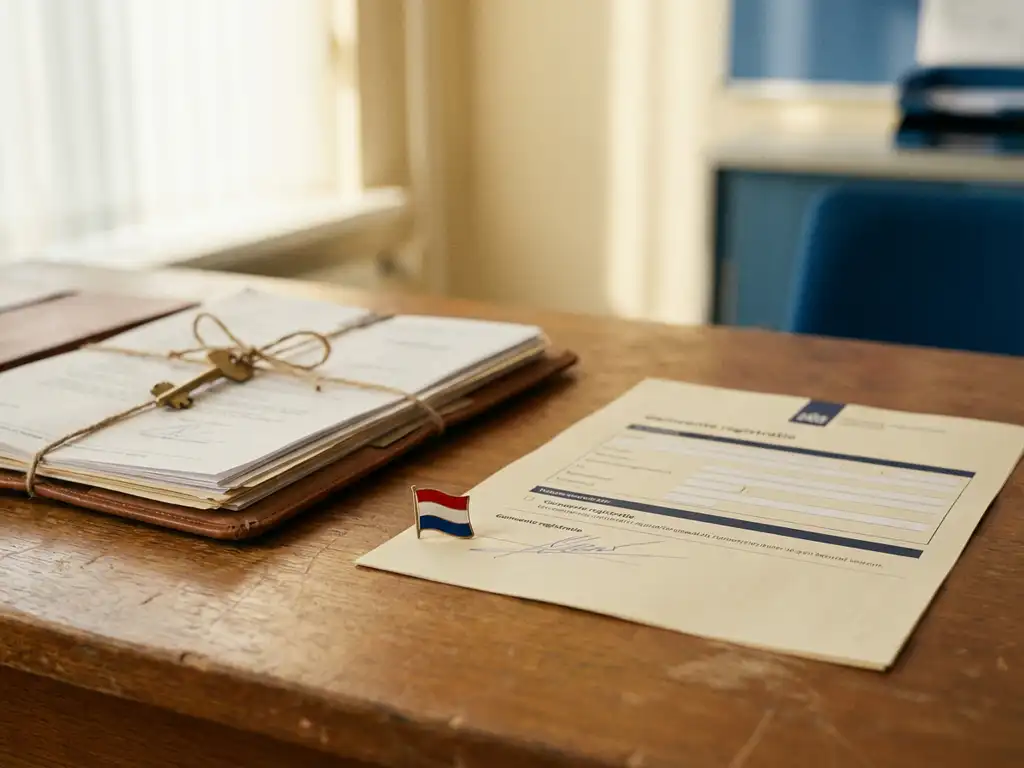
How do you register with a municipality in the Netherlands?
Moving to the Netherlands is an exciting adventure, but settling in comes with a long to-do list. One of the very first things you need to tackle as an expat is registering with your local municipality. This step is not optional—it unlocks almost everything else in Dutch life, from getting a bank account to accessing healthcare. Understanding how municipal registration works will save you time, stress, and a lot of confusion.
Whether you have just arrived in Eindhoven, Tilburg, or anywhere else in the Netherlands, this guide walks you through the entire process in plain English. Consider it your friendly roadmap to becoming an official resident and starting your life in the Netherlands on the right foot.
What does it mean to register with a municipality in the Netherlands?
Registering with a municipality in the Netherlands means registering your address in the Basisregistratie Personen (BRP), the national personal records database. Every municipality maintains a local section of this database, and your registration links your identity to your Dutch address. This record is the foundation for almost all official interactions you will have with Dutch authorities and institutions.
Once you are in the BRP, government agencies, healthcare providers, and financial institutions can verify your residency status. Your registration also generates your BSN (Burgerservicenummer), a citizen service number that functions similarly to a Social Security number in other countries. Without it, daily life in the Netherlands becomes surprisingly complicated, so this step is genuinely foundational to settling in the Netherlands.
Who needs to register with a Dutch municipality?
Anyone who plans to live in the Netherlands for more than four months within a six-month period is legally required to register with their local municipality. This applies to EU and non-EU citizens alike, including expats, knowledge workers, students, and the partners or family members who accompany them.
Even if your employer handles your work permit or visa, municipal registration is your personal responsibility. Partners and children must also register individually—each person living at the address needs their own entry in the BRP. If you are only visiting for a short period or staying temporarily for fewer than four months, registration is not required, but it is still possible in some municipalities if you have a fixed address.
What documents do you need to register at a Dutch municipality?
To register with a Dutch municipality, you typically need a valid passport or identity card, proof of your Dutch address, and, depending on your nationality, a residence permit or visa. Having these documents ready before your appointment will make the process much smoother.
Here is what most municipalities ask for:
- A valid passport or national ID card
- Proof of your address in the Netherlands (a rental contract, a letter from your landlord, or a signed declaration from the person you are staying with)
- For non-EU citizens: a valid residence permit (MVV or residence sticker)
- For newborns or children: a birth certificate, often requiring an official Dutch translation
Requirements can vary slightly between municipalities, so it is always wise to check your specific city’s website before your appointment. Eindhoven and Tilburg, for example, both have clear online checklists that help you prepare exactly what to bring.
How does the municipal registration process work step by step?
The municipal registration process in the Netherlands involves booking an appointment at your local gemeente (city hall), attending in person with your documents, and completing the registration form. The entire appointment typically takes between fifteen and thirty minutes.
Here is how the process unfolds in practice. First, visit your municipality’s official website and look for the section on “inschrijven” or “first registration.” Most municipalities require you to book an appointment in advance rather than walk in. When your appointment arrives, bring all your documents and be ready to fill in or confirm your personal details. The civil servant will process your registration, and you will receive confirmation that your address has been registered. Your BSN is usually issued on the spot or sent to you within a few days. If you are registering as a non-EU citizen, the municipality may also notify the Immigration and Naturalisation Service (IND) automatically.
One thing that surprises many expats is how straightforward the appointment itself tends to be. Dutch administrative processes are generally efficient, and the staff at the front desk are accustomed to helping internationals. Speaking a few words of Dutch never hurts, but most municipalities in larger cities have English-speaking staff available.
What happens after you register with the municipality?
After registering with a Dutch municipality, you receive your BSN, which you can immediately use to open a bank account, register with a GP (huisarts), arrange health insurance, and complete other essential steps for expat life in the Netherlands. Your registration is also automatically shared with relevant government agencies.
The BSN becomes your key to Dutch bureaucracy. You will need it when signing contracts, filing taxes, enrolling children in school, and accessing public services. Some expats are surprised to discover how quickly life opens up once this single number is in hand. Health insurance, for instance, is legally required within four months of arrival, and you cannot arrange it without a BSN. Opening a Dutch bank account, which is essential for paying rent and receiving your salary, also requires this number at most major banks.
It is also worth knowing that if you move to a different address within the Netherlands, you must update your registration with your new municipality. This is called a “verhuismelding” and is equally important for keeping your records accurate.
What are the most common problems when registering with a Dutch municipality?
The most common problems when registering with a Dutch municipality include not having the correct proof of address, missing or untranslated foreign documents, difficulty booking an appointment due to limited availability, and confusion about which municipality to register with when living between two cities.
Proof of address is the issue that trips up most newcomers. If you are staying temporarily with a friend or in a short-stay apartment, you will need a written and signed declaration from the main resident or property owner confirming that you live there. Some landlords are reluctant to provide this, which can delay your registration significantly. If you run into this problem, contact your municipality directly—many have alternative procedures for people in temporary housing situations.
Another frequent challenge is documents in foreign languages. Dutch municipalities generally require official translations for documents like birth certificates or marriage certificates. Using a sworn translator (beëdigd vertaler) ensures your documents are accepted without issue. Finally, appointment slots can fill up quickly in larger cities, so book as soon as you have a confirmed address rather than waiting until everything feels perfectly settled.
How Dutch on Track helps you feel at home while living in the Netherlands as an expat
Sorting out your municipal registration is just the beginning of living in the Netherlands as an expat. Once the paperwork is done, the real adventure starts: building a social life, understanding Dutch culture, and actually feeling at home. That is exactly where we come in.
At Dutch on Track, we offer Dutch language courses designed specifically for expats, knowledge workers, and their partners in Eindhoven and Tilburg. Learning Dutch is not just about ticking a practical box—it is one of the most fun and effective ways to make real connections, understand the people around you, and feel genuinely confident in your new environment. Our small group classes of 8 to 10 people create a natural social setting where friendships form alongside language skills. Many of our students describe their classes as the highlight of their week, not just a lesson.
Here is what makes our approach different:
- A blended learning method that combines e-learning preparation, interactive classroom sessions, and consolidation practice
- Classes after work hours (17:45 to 19:45) at central locations near Eindhoven and Tilburg stations
- A communicative approach where you speak Dutch from day one, in a safe and encouraging group setting
- Certified teachers who specialize in Dutch as a Second Language for internationals
Whether you are starting from absolute zero or already picking up some basics, our Beginner Dutch Course is a great place to start your language journey. Ready to take the next step? Schedule a free meeting with Dutch on Track and discover how learning Dutch can make your life in the Netherlands richer, more social, and a whole lot more enjoyable.
Frequently Asked Questions
Can I register with a Dutch municipality before I have a permanent address?
In most cases, you need a confirmed address before you can register, but many municipalities have provisions for people in temporary housing situations. If you are staying in a short-stay apartment, with a friend, or in temporary corporate housing, you can ask the main resident or property owner to sign a written declaration confirming your stay. It is worth contacting your municipality directly to explain your situation, as some cities have specific procedures designed to help newcomers who are still searching for permanent accommodation.
How long does it take to receive my BSN after registering?
In many municipalities, your BSN is issued on the spot during your registration appointment, meaning you can walk out with it the same day. In some cases, it may be sent to you by post within a few days. Because you need your BSN to open a bank account, arrange health insurance, and register with a GP, it is important to book your municipal registration appointment as soon as you have a confirmed address — do not wait until you feel fully settled.
What if my landlord refuses to provide proof of address for my registration?
A landlord refusing to provide a tenancy agreement or signed declaration is unfortunately a known issue, particularly in tight rental markets. First, try requesting a simple signed letter confirming your name and address — it does not need to be a formal contract. If your landlord still refuses, contact your municipality's registration desk directly, as many cities have alternative verification procedures or can conduct a home visit to confirm your residency. Documenting your rental payments (for example, via bank transfers) can also support your case.
Do I need to re-register if I move to a different city in the Netherlands?
Yes — if you move to a different address within the Netherlands, you are legally required to report your change of address, known as a "verhuismelding." If you move within the same municipality, you update your registration at your current gemeente. If you move to a different city, your new municipality handles the update. This process is generally simpler than your initial registration and can often be done online. Keeping your address up to date in the BRP is important because official correspondence, tax documents, and government notifications are sent to your registered address.
Can my partner or children register at the same appointment as me?
Policies vary by municipality, but many do allow family members to register together during the same appointment slot, especially for partners and dependent children sharing the same address. It is best to confirm this when booking your appointment online or by phone, and to bring all required documents for each person — including passports, residence permits, and birth certificates for children. Each family member will still receive their own individual BSN, even if registered at the same time.
What happens if I miss the four-month registration deadline?
Failing to register within four months of arrival is a legal violation in the Netherlands and can result in fines or complications with your residency status. If you have missed the deadline, the best course of action is to register as soon as possible rather than delay further — municipalities are generally more focused on getting you registered correctly than on penalizing late arrivals, especially when the delay was due to housing or documentation challenges. If you are concerned about your specific situation, consulting an expat legal advisor or relocation specialist can help you navigate any complications.
Will learning Dutch actually help me integrate faster, or is English sufficient for daily life?
While the Netherlands has one of the highest English proficiency rates in the world, relying solely on English does create a ceiling on how deeply you can integrate. Dutch is the language of local news, neighborhood conversations, workplace small talk, and cultural nuance — and speaking it signals genuine effort and respect to the people around you. Many expats find that even basic Dutch skills dramatically improve their social confidence, open doors to friendships outside the expat bubble, and make everyday interactions — from the supermarket to the doctor's office — far more comfortable and enjoyable.