Is the Netherlands a good country to raise children?
For many expat families, choosing where to settle is one of the most important decisions they will ever make. If you are considering living in the Netherlands as an expat, you have probably wondered whether this small but remarkably well-organized country is truly a good place to raise children. The short answer is yes, and the reasons go far beyond tulips and cycling lanes.
The Netherlands consistently ranks among the top countries in Europe for child well-being, family quality of life, and social safety. Whether you are newly arrived or still in the planning stage, understanding what expat life in the Netherlands looks like for families will help you feel more confident and prepared for the journey ahead.
Why is the Netherlands considered a great place for families?
The Netherlands is widely regarded as one of the best countries in the world to raise children because of its strong social safety net, high standard of living, excellent healthcare, and a culture that genuinely values childhood happiness and independence. Dutch children consistently rank among the happiest in international well-being studies, and that reputation is well earned.
Family life here is supported by generous parental leave policies, affordable childcare subsidies, and a work culture that increasingly embraces part-time arrangements for parents. Cities like Eindhoven and Tilburg offer green spaces, safe cycling infrastructure, and a pace of life that allows families to spend time together. Settling in the Netherlands as an expat family means stepping into a society that has thoughtfully built itself around the needs of children and parents alike.
What is the Dutch education system like for expat children?
The Dutch education system is high-quality, well-structured, and welcoming to international children. Primary school starts at age four, and the system emphasizes creativity, independence, and well-being alongside academic achievement. Many cities with large expat communities also offer international schools that follow the IB curriculum, giving families flexibility in how they approach their children’s education.
For expat children who enroll in Dutch public schools, the experience can be both challenging and deeply rewarding. Most schools have experience supporting non-Dutch-speaking children through language support programs. Over time, children tend to pick up Dutch remarkably quickly, often surpassing their parents in fluency within a year or two. This makes the Dutch school system a genuine gateway to integration for the whole family.
How safe is the Netherlands for children growing up?
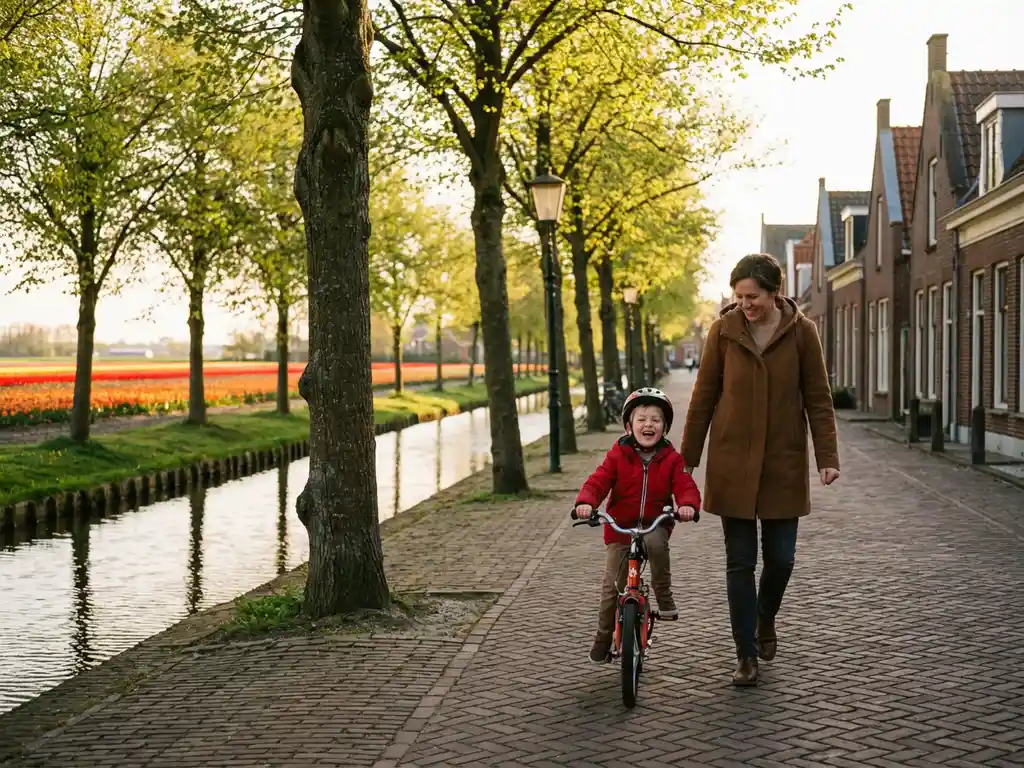
The Netherlands is one of the safest countries in Europe for children. Crime rates are low, public spaces are well maintained, and the culture of outdoor independence means children are trusted and encouraged to navigate their surroundings from a young age. It is entirely normal to see primary school children cycling to school alone, which speaks to both the infrastructure and the social trust embedded in Dutch communities.
Road safety is taken seriously, with dedicated cycling paths and traffic-calmed neighborhoods making it genuinely safe for children to move around independently. For expat parents coming from countries where children are rarely unsupervised outdoors, this freedom can feel surprising at first, but most families quickly come to appreciate it as one of the great gifts of raising children in the Netherlands.
What are the biggest cultural differences expat parents notice in the Netherlands?
Expat parents settling in the Netherlands most commonly notice the Dutch emphasis on directness, independence, and egalitarianism. Dutch parenting culture tends to avoid overscheduling children and instead prioritizes free play, outdoor time, and letting children make their own decisions from an early age. This can feel refreshingly relaxed or unexpectedly hands-off, depending on where you come from.
A few cultural differences that often stand out include:
- Dutch directness in communication, which can feel blunt but is rarely meant unkindly.
- A strong emphasis on children’s autonomy and decision-making.
- Birthday celebrations that center on the family rather than lavish parties.
- A relaxed attitude toward academic pressure in the early school years.
Understanding these cultural nuances takes time, and many expat parents find that learning some Dutch opens up these conversations in a much more natural way. When you can chat with other parents at the school gate or understand what teachers are saying at parent evenings, the cultural picture becomes much clearer.
How can expat children make friends and feel at home in the Netherlands?
Expat children tend to make friends most effectively through school, sports clubs, and neighborhood activities. Dutch children are generally open and curious, and once the language barrier begins to fade, friendships often follow naturally. Enrolling children in local sports teams, music groups, or after-school activities is one of the most effective ways to help them build a social circle beyond the expat bubble.
For younger children especially, language acquisition happens quickly in social settings. Parents can support this process by encouraging Dutch friendships, attending local community events, and showing their children that learning a new language is something the whole family is doing together. When children see their parents making the effort to speak Dutch, it normalizes the experience and makes it feel like an adventure rather than a challenge.
Should expat parents learn Dutch to support their children’s integration?
Yes, expat parents who learn Dutch play a meaningful role in their children’s integration. When parents can communicate with teachers, neighbors, and other school parents, the whole family becomes more embedded in the local community. Children feel more supported and less isolated when they see that their parents are navigating the same language journey alongside them.
Beyond the practical benefits, learning Dutch together as a family creates shared experiences and a sense of shared purpose. It also signals to the Dutch community around you that you are genuinely invested in becoming part of it, which opens doors socially in ways that staying within English-speaking expat circles simply cannot.
How Dutch on Track Helps Expat Families Settle in the Netherlands
Learning Dutch as a parent is one of the most powerful things you can do to support your family’s life in the Netherlands. That is exactly where we come in. Dutch on Track offers Dutch language courses specifically designed for expats, highly educated internationals, and their partners in Eindhoven and Tilburg. Our approach is practical, communicative, and genuinely enjoyable.
Here is what makes learning Dutch with us different:
- Small groups of 8 to 10 students, so you can practice speaking in a comfortable, social setting and make real connections along the way.
- A blended learning method combining e-learning preparation, interactive classroom sessions, and consolidation exercises.
- Evening classes from 17:45 to 19:45, designed to fit around work and family life.
- Certified teachers who specialize in Dutch as a Second Language, guiding you from A0 to B1 level.
Our courses are not just about grammar and vocabulary. They are a fun, social experience where you meet other internationals who are navigating the same journey. Many of our students find that the friendships they build in class become some of their closest connections in the Netherlands. If you are ready to take the first step toward feeling at home here, explore our Beginner Dutch Course or schedule a free meeting with Dutch on Track to find the right course for you.
Frequently Asked Questions
How quickly can expat children realistically become fluent in Dutch?
Most expat children who are enrolled in Dutch schools and actively socializing with local peers reach conversational fluency within one to two years, with younger children (under age 10) often progressing even faster. Children in international schools may take longer since their daily environment is primarily English-speaking. To accelerate the process, encourage Dutch playdates, limit screen time in the home language, and consider supplementary Dutch language classes designed for children.
Is it better to enroll expat children in a Dutch public school or an international school?
The right choice depends on how long you plan to stay in the Netherlands and your family’s priorities. Dutch public schools offer faster language acquisition and deeper cultural integration, which is ideal for families settling long-term. International schools following the IB curriculum provide continuity for children who may relocate again and reduce the initial language barrier, making them a strong choice for families on shorter assignments. Many expat families start in an international school and transition to a Dutch school once the children have gained some language confidence.
What childcare options are available for expat families with young children?
The Netherlands has a well-developed childcare system that includes daycare centers (kinderdagverblijf) for children from around 6 weeks to 4 years old, and after-school care (buitenschoolse opvang, or BSO) for school-age children. As an expat working in the Netherlands, you may be eligible for kinderopvangtoeslag, a government childcare subsidy that significantly reduces your out-of-pocket costs. It is worth registering with a childcare provider as early as possible, as waiting lists in cities like Eindhoven and Tilburg can be several months long.
What are the most common mistakes expat parents make when settling in the Netherlands?
One of the most common mistakes is staying exclusively within the expat bubble, which can make integration feel slower and more isolating for both parents and children. Another frequent misstep is delaying Dutch language learning, assuming that English will be sufficient long-term — while Dutch people do speak excellent English, building relationships with local parents, teachers, and neighbors becomes significantly easier once you speak some Dutch. Finally, many families underestimate how much children benefit from joining local clubs and activities rather than only socializing within international school communities.
How can expat parents connect with other families in their local area?
Many cities in the Netherlands have active expat communities with organized meetups, family events, and online groups on platforms like Meetup, Facebook, and Internations. School parent associations (ouderraad) are also a great way to meet both Dutch and international parents in your immediate community. Signing your children up for local sports clubs or neighborhood activities naturally creates connection points for parents as well, since Dutch sports culture tends to be very community-oriented.
At what Dutch language level can expat parents comfortably handle school-related communication?
A solid A2 level of Dutch is enough to follow basic school newsletters, understand simple messages from teachers, and participate in casual conversations at the school gate. Reaching B1 level allows you to attend parent-teacher evenings, understand school reports, and engage more meaningfully in your child’s educational journey. Most Dutch schools are accommodating and will often have an English-speaking staff member available, but even a modest level of Dutch makes these interactions feel far more natural and builds goodwill with the school community.
Are there specific Dutch language courses designed for parents or families learning together?
Yes, several language schools in the Netherlands offer Dutch courses tailored specifically to expats and international professionals, including parents balancing busy family schedules. Dutch on Track, for example, offers evening courses in Eindhoven and Tilburg designed to fit around work and family commitments, with small group sizes that make the experience social and practical. Some community centers and libraries also offer informal Dutch practice groups, which can be a low-pressure complement to a structured course.