What surprises expats most about living in the Netherlands?
Moving to the Netherlands is an adventure full of unexpected moments. Whether you have just landed in Eindhoven or have been settling into life in the Netherlands for a few months, you will quickly discover that Dutch culture has a personality all its own. From the refreshing honesty of your new colleagues to the surprisingly tricky task of making local friends, expat life in the Netherlands comes with a learning curve that no relocation package fully prepares you for.
The good news is that understanding Dutch culture makes everything easier, from navigating the workplace to building a genuine social life. This article answers the questions that expats living in the Netherlands ask most often, so you can move from confusion to confidence a little faster.
What do expats find most surprising about Dutch culture?
Expats living in the Netherlands are often most surprised by the combination of radical directness, fierce independence, and a deeply egalitarian attitude. Dutch society operates on the assumption that everyone is equal, everyone has an opinion, and honesty is always more respectful than politeness for its own sake. This can feel jarring if you come from a culture where social harmony takes priority over candid feedback.
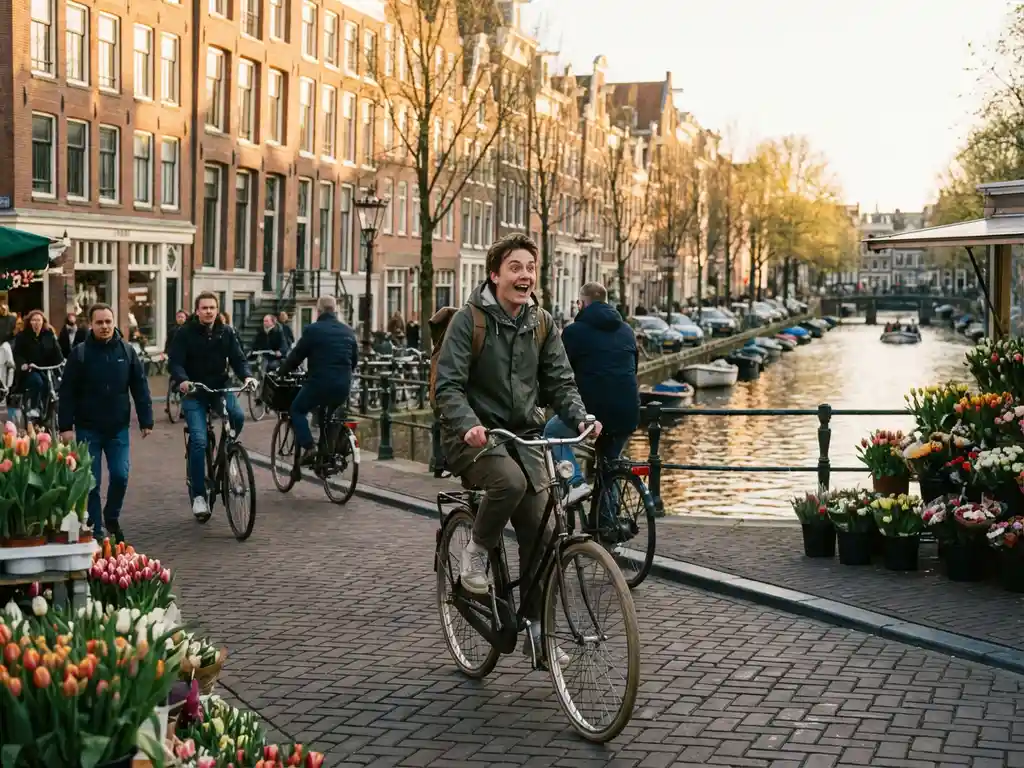
Beyond directness, a few other things catch newcomers off guard. The Dutch love of cycling is not just a transport choice but a genuine lifestyle commitment. The concept of gezelligheid, a warm, cozy sense of togetherness, is central to social life but can feel exclusive to outsiders who have not yet broken into local circles. Planning is also taken very seriously. Dropping by a friend’s house unannounced is generally not appreciated, and even casual coffee dates are often scheduled weeks in advance.
- Radical directness in everyday conversations and professional feedback
- A strong culture of planning and structured social appointments
- The importance of gezelligheid as social glue
- Deep respect for personal independence and individual boundaries
Once you understand these values, Dutch behavior starts to make a lot of sense. The directness is not rudeness; it is respect. The planning is not coldness; it is consideration.
Why are Dutch people considered so direct?
Dutch people are considered direct because their culture places a high value on honesty, efficiency, and equality. Saying exactly what you mean is seen as a sign of respect, not aggression. Softening a message too much is often interpreted as being unclear or even dishonest. This directness applies equally to everyone, regardless of social status or seniority.
This cultural trait has historical roots in a trading nation where clear agreements and transparent communication were essential for commerce and cooperation. Today it shows up everywhere, from a colleague telling you bluntly that your idea needs work to a neighbor asking directly why you have not introduced yourself yet. For many expats, the initial shock gives way to genuine appreciation. You always know where you stand with a Dutch person, and that kind of clarity can be deeply reassuring once you adjust to it.
The key is not to read emotion into the tone. A Dutch person delivering critical feedback is not angry or dismissive. They are simply being efficient and, in their view, kind enough to tell you the truth.
How do expats make friends with Dutch people?
Expats make friends with Dutch people most successfully by showing up consistently in shared spaces over time. Dutch friendships tend to develop slowly and deliberately. Unlike cultures where friendships form quickly and casually, Dutch social bonds are built through repeated, genuine interaction, shared activities, and mutual trust that grows gradually.
This means that the best strategy is to find recurring activities where you will see the same people regularly. Sports clubs, neighborhood associations, volunteer groups, and language courses are all excellent entry points. The regularity matters more than the activity itself. Showing up once to a social event rarely leads to lasting connections, but showing up every week to the same class or club creates the kind of familiarity that Dutch friendships are built on.
Learning Dutch also plays a significant role here. Even a basic level of Dutch signals genuine commitment to integrating into the community, and Dutch people respond warmly to that effort. Many expats find that language classes themselves become an unexpected social lifeline, connecting them with other internationals who are navigating the same journey.
What are the biggest cultural misunderstandings expats experience?
The biggest cultural misunderstandings expats experience in the Netherlands usually revolve around interpreting directness as rudeness, mistaking privacy for unfriendliness, and misreading Dutch humor. These misunderstandings can create unnecessary friction in both professional and personal relationships during the early months of expat life in the Netherlands.
One of the most common sources of confusion is the Dutch practice of splitting bills equally. Going Dutch, as it is known internationally, is standard practice here and carries no negative social meaning. Newcomers sometimes interpret it as a sign that they are not truly welcome, when in reality it reflects the cultural value of equality and independence.
Another frequent misunderstanding involves work-life boundaries. Dutch colleagues are often warm and collegial during work hours but keep their personal and professional lives quite separate. Being excluded from after-work plans does not mean you are disliked. It often simply means that Dutch people guard their personal time carefully and need to know you well before inviting you into it.
Dutch humor is also famously dry and self-deprecating, and it can be difficult to read until you are tuned into the frequency. What sounds like a complaint is often a joke, and what sounds like a joke is occasionally a complaint. Time and exposure are the best remedies.
How does learning Dutch help expats integrate socially?
Learning Dutch helps expats integrate socially by removing the invisible barrier that separates passive observers from active participants in daily Dutch life. Even at a beginner level, speaking Dutch signals respect for the local culture and opens doors that remain closed to those who rely entirely on English. Dutch people genuinely appreciate the effort, and that appreciation translates into warmer, more open interactions.
Language learning also provides a natural social structure that many expats lack when they first arrive. A weekly Dutch class creates a regular commitment, a familiar group of faces, and a shared sense of purpose. The friendships that form in language classes often extend well beyond the classroom, precisely because everyone in the room is going through the same experience of building a new life in a new country. That shared vulnerability creates real connection.
Beyond the social benefits, speaking Dutch gives you access to the full texture of daily life here. You can follow conversations at a neighborhood barbecue, understand the joke your colleague just made, or chat with the parent next to you at a school event. These small moments of genuine connection are what transform living in the Netherlands from an assignment into a home.
How Dutch on Track Helps You Feel at Home in the Netherlands
Dutch on Track was built specifically for expats and internationals who want to do more than survive in the Netherlands. We want to help you truly belong here. Our Dutch language courses in Eindhoven and Tilburg are designed around the real challenges of settling in the Netherlands, combining practical language skills with the cultural understanding that makes daily life genuinely enjoyable.
Here is what makes learning Dutch with us different:
- Small groups of 8 to 10 students create a fun, relaxed setting where you practise speaking from day one and meet fellow internationals in the same situation
- Our blended learning method combines e-learning preparation, interactive classroom sessions, and consolidation exercises so new vocabulary actually sticks
- Classes run after work hours from 17:45 to 19:45 at central locations in Eindhoven and Tilburg, making it easy to fit into a busy schedule
- All teachers are certified specialists in Dutch as a Second Language, so you get professional guidance every step of the way
Many of our students tell us that the course itself became one of their first real social experiences in the Netherlands. It is a fun, low-pressure way to build confidence, make friends, and start feeling like yourself again in a new country. Whether you are a complete beginner or already have some Dutch under your belt, Dutch on Track has a course for you. Explore our Beginner Dutch Course or schedule a free meeting to find out which level suits you best.
Frequently Asked Questions
How long does it typically take to feel settled and comfortable in Dutch culture?
Most expats report that it takes between six months to a year before Dutch culture starts to feel genuinely familiar rather than just intellectually understood. The adjustment tends to happen in stages: the directness becomes comfortable first, then the social rhythms, and finally the deeper sense of belonging. Being proactive about building routines, joining recurring activities, and investing in language learning can significantly shorten that timeline.
Is it really necessary to learn Dutch if most Dutch people speak English so well?
While it is entirely possible to get by in English, relying on it long-term keeps you at arm’s length from full integration. Dutch people switching to English for your convenience is a courtesy, not an invitation to stay in that comfort zone indefinitely. Learning Dutch, even at a conversational level, shifts the dynamic considerably and signals that you are here to stay, not just passing through.
What are the most common mistakes expats make when trying to build friendships with Dutch people?
The most common mistake is expecting friendships to form at the same speed they might back home, and giving up too early when they do not. Showing up once to a social event and waiting to be invited back is unlikely to work in the Netherlands. Another frequent misstep is misreading Dutch reserve as rejection, when it is actually just the natural pace at which trust is built here. Consistency, patience, and genuine participation in shared activities are far more effective than grand social gestures.
How should I handle receiving very direct or critical feedback at work without taking it personally?
The most useful reframe is to treat direct feedback as a professional gift rather than a personal attack. Dutch colleagues who give you blunt feedback are investing time and honesty in your development, which in their cultural framework is a sign of respect. Try to respond with curiosity rather than defensiveness, asking follow-up questions to understand their perspective. Over time, you may find that this style of communication actually makes the workplace feel more transparent and fair.
Are there specific social situations or settings where Dutch people are more open to meeting new people?
Yes, structured group settings with a shared purpose tend to work much better than open-ended social events. Sports clubs, hobby groups, volunteer organisations, and structured classes like language courses create the kind of repeated, low-pressure contact that Dutch friendships thrive on. Neighbourhood events and local community initiatives are also good entry points, as they come with a built-in reason to interact beyond small talk.
What is gezelligheid exactly, and how can expats experience it rather than just observe it?
Gezelligheid is best described as a quality of warmth, coziness, and genuine togetherness that makes a moment feel special, whether that is a candlelit dinner with close friends, a lively pub evening, or a relaxed family gathering. Expats tend to experience it most authentically once they have built real relationships with Dutch people, since it is less about the setting and more about the feeling of belonging in the room. Hosting your own gezellig moment, inviting people over for a simple dinner or drinks, can also be a surprisingly effective way to create the conditions for it yourself.
What Dutch language level should I realistically aim for to make a noticeable difference in daily social life?
Reaching A2 level, the upper beginner stage, is generally enough to make a meaningful difference in everyday interactions such as chatting with neighbours, following conversations at social events, and navigating shops and services independently. You do not need to be fluent to feel the social benefits. Even small efforts, like greeting people in Dutch or attempting a sentence or two before switching to English, are noticed and appreciated by Dutch people and create a noticeably warmer response.