What are the biggest challenges of expat social life in the Netherlands?
Expat social life in the Netherlands comes with real challenges. Many internationals find it harder than expected to build genuine friendships, feel at home, and navigate daily life with confidence. Dutch culture, the language barrier, and the specific pressures on expat partners all play a role. Below, we answer the most common questions about social integration so you know exactly what to expect and how to move forward.
Why do expats feel lonely in the Netherlands?
Expats feel lonely in the Netherlands because the social environment here is structured, reserved, and often already full. Dutch people tend to maintain long-standing friendships from school or university and rarely feel the need to add new people to their inner circle. For newcomers without an existing network, breaking in takes time and deliberate effort.
This is not about being unwelcome. Dutch people are generally polite and helpful. But there is a difference between being friendly and being open to deep friendship, and that gap can feel isolating when you have just arrived in a new country. Add to this the practical demands of settling in, finding your way around, and adjusting to a new culture, and loneliness becomes a very common experience among expats in their first year.
The feeling is especially strong for expat partners who are not embedded in a workplace. Without colleagues, daily social contact can drop dramatically, and home can start to feel like an island.
How does Dutch culture make it hard to make friends?
Dutch culture makes it hard to make friends because social life here is highly planned, compartmentalised, and built on long-term trust. The Dutch are known for their directness, but that does not mean openness. Friendships develop slowly, and casual encounters rarely turn into lasting connections without sustained effort on both sides.
A few cultural patterns that expats often find surprising:
- Social calendars are planned weeks in advance, making spontaneous meetups uncommon
- Small talk is not a Dutch strength, so conversations can feel abrupt or transactional
- Dutch social circles are tight-knit and self-sufficient, leaving little natural space for newcomers
- Emotional warmth tends to come later in a relationship, not at the start
None of this means friendship is impossible. It simply means the approach needs to be different. Joining structured activities, clubs, or group courses is far more effective than waiting for organic connections to form.
What social challenges do expat partners face specifically?
Expat partners face a unique set of social challenges because they often arrive in the Netherlands without the built-in social structure that a workplace provides. Their partner has colleagues, routines, and a ready-made reason to leave the house. The partner at home has none of that, which creates an uneven social experience from day one.
Beyond isolation, many expat partners struggle with a loss of professional identity. They may have had a strong career before relocating, and suddenly finding themselves dependent on their partner for communication and navigation is deeply frustrating. Simple tasks like visiting a doctor, registering at the gemeente, or talking to school staff become stressful without language skills.
The emotional weight of this situation is real. Many expat partners feel pressure to become functional quickly, not just for themselves but for the whole family. This urgency, combined with limited social contact and language barriers, can seriously affect confidence and wellbeing.
Does not speaking Dutch limit your social life in the Netherlands?
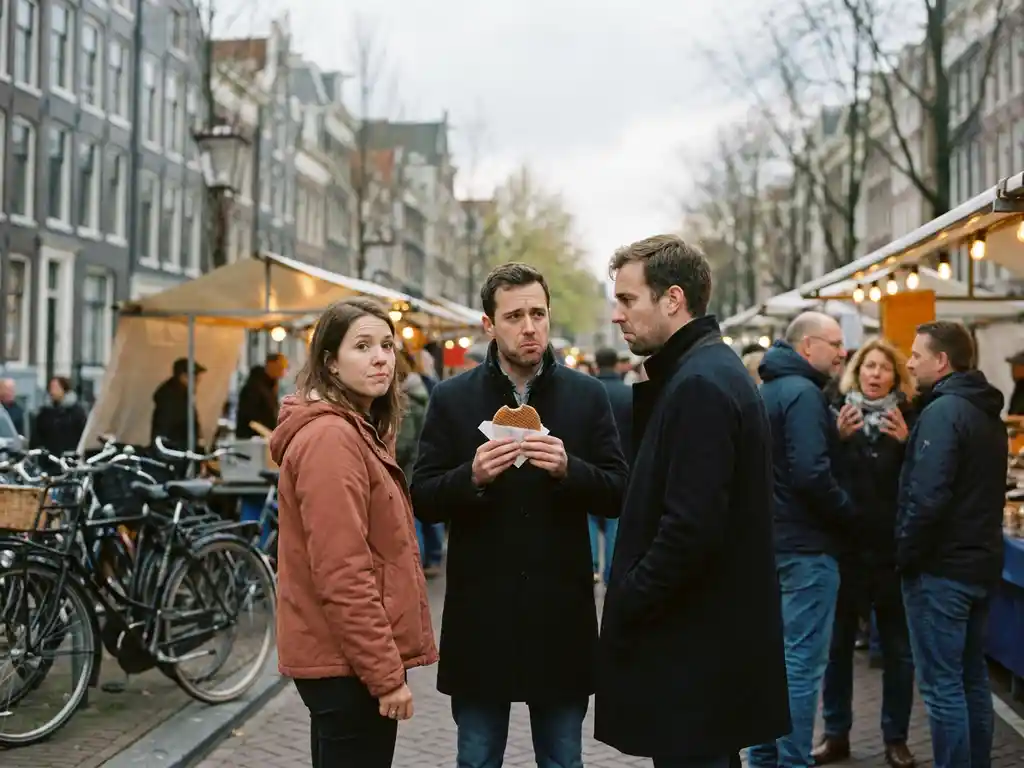
Yes, not speaking Dutch significantly limits your social life in the Netherlands, even though many Dutch people speak excellent English. The limitation is not about being understood. It is about access. Conversations at the school gate, jokes with neighbours, and small interactions at the market, these moments happen in Dutch, and without the language, you remain on the outside of them.
Language is also tied to confidence. When you cannot express yourself naturally, you tend to avoid situations where you might struggle. Over time, this avoidance shrinks your world. You stop initiating conversations. You skip community events. You rely on your partner more than you want to.
Learning Dutch, even at a basic level, changes this dynamic entirely. It signals effort and respect to Dutch people, opens doors to everyday interactions, and gives you the confidence to engage rather than retreat. Starting from absolute beginner level is completely normal, and the social rewards come quickly once you begin.
Where do expats typically meet people in the Netherlands?
Expats in the Netherlands most commonly meet people through structured activities that create regular, repeated contact. One-off events rarely lead to lasting friendships. What works is showing up consistently in the same place with the same people over time.
Popular ways expats build their social network include:
- Language courses, where the shared experience of learning creates natural bonds
- Sports clubs, running groups, and fitness communities
- Expat community organisations and international meetup groups
- Volunteering, which also builds local connections outside the expat bubble
Language courses deserve special mention here. They bring together people who are all navigating the same experience, which creates an immediate sense of solidarity. The social side of learning Dutch in a small group is often just as valuable as the language itself. At Dutch on Track, classes of 8 to 10 participants meet regularly after work hours, and many students describe the group as one of their first genuine social connections in the Netherlands.
How long does it take expats to feel socially settled in the Netherlands?
Most expats start to feel socially settled in the Netherlands after one to two years, though this varies considerably depending on language skills, social effort, and personal circumstances. The first six months are typically the hardest, with feelings of isolation peaking before the situation gradually improves.
The timeline shortens significantly when expats take active steps rather than waiting for integration to happen naturally. Learning Dutch accelerates the process more than almost anything else because it removes the single biggest barrier to spontaneous social contact. Building a routine that includes regular social touchpoints, whether a class, a club, or a volunteer role, also makes a measurable difference.
Expat partners who invest in language learning in their first year consistently report feeling more independent, more confident, and more connected to their local community. The goal is not fluency overnight. It is functional confidence, the ability to have a real conversation, handle daily situations, and feel like yourself again in a new country.
How Dutch on Track Helps You Build a Social Life in the Netherlands
Dutch on Track was built with exactly these challenges in mind. We understand that learning Dutch is not just about grammar and vocabulary. It is about getting your independence back, feeling confident in daily situations, and finding your place in a new country.
Here is what makes our approach different:
- Communicative from day one: We focus on speaking and listening from the very first lesson, because real social integration requires real conversation practice
- Small groups of 8 to 10 people: You learn alongside other internationals who are in the same situation, which means the classroom itself becomes a social community
- Practical, real-life content: Lessons are built around situations you actually face, at the school gate, at the doctor, with neighbours, at work
- Flexible and accessible: Classes run after work hours in central locations in Eindhoven and Tilburg, and our AI-supported learning tools let you prepare and consolidate at your own pace
Whether you are just arriving in the Netherlands or have been here for a while and still feel disconnected, Dutch on Track offers a clear path forward. Our courses run from absolute beginner to intermediate level, and our team of certified Dutch as a Second Language teachers is here to support you every step of the way. Ready to take the first step? Schedule a free meeting with Dutch on Track and find out which course fits your situation.
Frequently Asked Questions
Is it worth learning Dutch if I only plan to stay in the Netherlands for a few years?
Absolutely, even a short stay benefits enormously from basic Dutch skills. You will find daily life far less stressful, social interactions more natural, and your overall sense of wellbeing significantly higher. Many expats who initially planned a short stay also find that learning Dutch makes them want to stay longer, precisely because they start to feel genuinely at home.
How do I maintain my mental health while going through the social integration process?
Acknowledging that isolation and adjustment difficulty are normal, not personal failures, is an important first step. Building a consistent routine with at least one regular social touchpoint, such as a weekly class or sports group, gives structure and something to look forward to. If feelings of loneliness or low mood persist beyond the first few months, speaking to a professional expat counsellor or GP is a practical and worthwhile step, and many operate in English in the Netherlands.
What are the most common mistakes expats make when trying to build a social life in the Netherlands?
The most common mistake is waiting for friendships to happen organically, the way they might have back home. Dutch social culture rewards consistency and repeated contact, so attending an event once and expecting lasting connections is rarely enough. Another frequent misstep is staying exclusively within the expat bubble, which feels comfortable but limits exposure to local culture and slows down the integration process considerably.
How can I help my children integrate socially while I am still finding my own footing?
Children generally integrate faster than adults, especially when they are enrolled in Dutch-language schools and participating in after-school clubs or sports. Encouraging those activities, even if you cannot fully communicate with other parents yet, gives your child consistent social contact and a sense of normalcy. As your own Dutch improves, conversations at the school gate will become easier, and your child’s social world often becomes a natural gateway into your own.
Can online Dutch language learning replace in-person classes for social integration?
Online tools are excellent for building vocabulary, practising grammar, and preparing for real-life situations at your own pace, but they cannot fully replace the social dimension of in-person learning. The group dynamic of a physical classroom, shared laughter over a difficult word, and the routine of showing up together are themselves a form of social integration. A blended approach, using AI-supported tools to supplement in-person group lessons, tends to deliver the best results both linguistically and socially.
What Dutch language level do I realistically need to start having meaningful social interactions?
You do not need to wait for fluency. Even at A1 to A2 level, you can handle greetings, small talk, basic questions, and everyday interactions that make a real difference to how connected you feel. Dutch people genuinely appreciate the effort, and attempting Dutch, even imperfectly, often opens doors that staying in English keeps closed. Most students at Dutch on Track notice a meaningful shift in their confidence and daily interactions within the first few months of structured learning.
Are there specific cities or regions in the Netherlands where expats find it easier to integrate?
Cities with large international populations, such as Amsterdam, Eindhoven, Utrecht, and The Hague, tend to have more established expat communities, international meetup groups, and English-friendly services, which can ease the initial transition. However, a larger expat community can also make it tempting to avoid Dutch altogether, slowing down deeper local integration. Smaller cities and towns often offer a more immersive experience, where learning Dutch becomes both more necessary and more rewarding in terms of connecting with local people.
Related Articles
- Incompany Dutch course or regular group course: 6 factors employers should compare
- How does integration in the Netherlands work for expats?
- Is it difficult for an American to move to the Netherlands?
- What is the best city in the Netherlands for expats?
- What makes Dutch language courses effective for adults?