What are typical Dutch traditions and holidays?
The Netherlands is a country with a rich calendar of celebrations, customs, and community traditions that shape everyday life in ways that can surprise even the most seasoned traveler. For anyone settling in the Netherlands as an expat, understanding these traditions is not just a cultural curiosity—it is a genuine gateway to belonging, making friends, and feeling at home in your new country.
Whether you have just arrived or have been navigating expat life in the Netherlands for a while, this guide walks you through the most important Dutch holidays and traditions, what they actually look like in practice, and how joining in can transform your experience of living in the Netherlands as an expat.
What are the most important Dutch holidays?
The most important Dutch holidays include King’s Day (Koningsdag) on April 27, Sinterklaas on December 5, Christmas on December 25 and 26, Liberation Day (Bevrijdingsdag) on May 5, and Easter. These celebrations are deeply embedded in Dutch culture and are moments when the entire country comes alive with shared rituals, street parties, and family gatherings.
Beyond the big names, the Dutch also observe Remembrance Day (Dodenherdenking) on May 4 with two minutes of silence across the country, a moment that carries enormous emotional weight. Carnival is celebrated with great enthusiasm in the southern regions, particularly around Eindhoven and Tilburg, where locals dress in costumes and take to the streets for days of festivities. Understanding this calendar helps expats anticipate when shops may be closed, when public transport becomes chaotic, and—more importantly—when the best opportunities for genuine social connection arise.
What is Sinterklaas and how is it celebrated?
Sinterklaas is a beloved Dutch tradition celebrated on the evening of December 5, known as Pakjesavond (gift-giving evening). It centers on the figure of Saint Nicholas (Sint Nicolaas), a bishop who arrives by steamboat from Spain in mid-November and travels the country with his helpers, delivering gifts to children. Adults often exchange presents accompanied by humorous poems that gently tease the recipient.
For expats living in the Netherlands, Sinterklaas can feel unfamiliar at first, but it is one of the most warmly shared traditions in Dutch culture. Workplaces, schools, and community groups often organize Sinterklaas celebrations where colleagues draw names and write poems for each other. Joining in, even imperfectly, signals that you are making an effort to embrace Dutch life—and the Dutch genuinely appreciate that. The tradition of writing a funny, affectionate poem about someone is a wonderful icebreaker and a chance to show your personality, even across a language barrier.
What happens during King’s Day in the Netherlands?
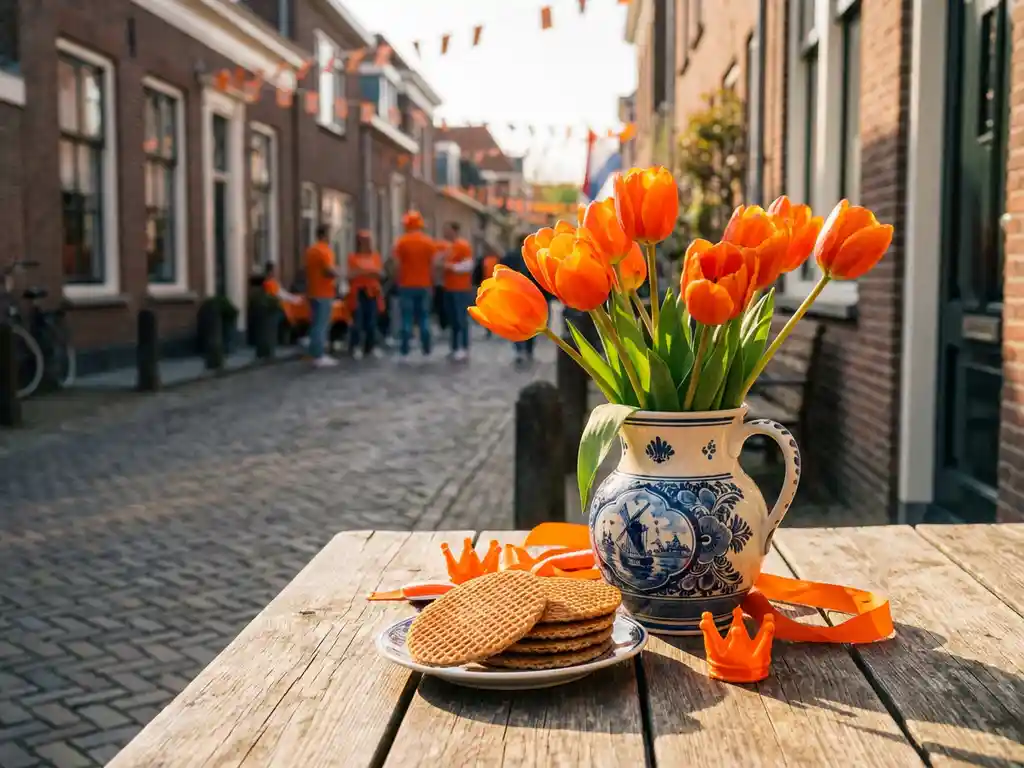
King’s Day (Koningsdag) on April 27 is the Dutch national holiday celebrating the King’s birthday. The entire country turns orange—the color of the Dutch royal family—and cities fill with outdoor markets, live music, street parties, and boat parades on the canals. It is one of the most joyful and inclusive days on the Dutch calendar.
What makes King’s Day particularly special for expats is that it is genuinely open to everyone. The famous vrijmarkt (free market) tradition allows anyone to sell second-hand goods on the street without a permit, and the festive atmosphere makes it easy to strike up conversations with strangers. Cities like Amsterdam, Eindhoven, and Tilburg host enormous celebrations. Wearing orange is all that is required to feel part of the crowd, and the day has a spontaneous, warm energy that breaks down social barriers in a way that everyday Dutch life sometimes does not.
How do Dutch people typically celebrate Christmas?
Dutch people celebrate Christmas (Kerstmis) on December 25 and 26, with two public holidays. Unlike in some countries where Christmas is the primary gift-giving occasion, in the Netherlands that role belongs to Sinterklaas. Christmas is typically a quieter, family-focused celebration centered on shared meals, candlelight, and time at home rather than large public events.
Traditional Christmas foods in the Netherlands include oliebollen (deep-fried dough balls dusted with powdered sugar), gourmetten (a tabletop grill where everyone cooks their own small portions), and various baked goods. For expats, the Dutch Christmas period can feel more low-key than expected, but it is a meaningful time to connect with Dutch colleagues and neighbors. Accepting an invitation to a Dutch home during this period is a real privilege and a sign of genuine warmth.
What Dutch traditions should expats know about?
Beyond the major holidays, several everyday Dutch traditions matter for expats settling in the Netherlands. These include the birthday calendar (verjaardagskalender) hung in the toilet, the expectation of bringing your own cake to the office on your birthday, the directness of Dutch communication, and the importance of cycling as a daily ritual rather than a leisure activity.
- Birthday cake at work: In the Netherlands, you bring cake for your colleagues on your own birthday—not the other way around.
- Stroopwafels with coffee: Placing a stroopwafel on top of a hot mug to soften the caramel center is a small but deeply Dutch ritual.
- Gezelligheid: This untranslatable concept describes a warm, cozy social atmosphere and is central to how Dutch people socialize.
- Cycling everywhere: The bicycle is not just transport—it is part of the national identity. Joining the cycling culture is one of the fastest ways to feel Dutch.
These smaller traditions are often where expats find the richest opportunities for connection. Noticing them, asking about them, and participating in them signals cultural curiosity—something the Dutch respond to warmly.
How can learning Dutch help you join in local traditions?
Learning Dutch allows you to participate in local traditions actively rather than observing from the outside. When you can understand a Sinterklaas poem, follow a conversation at a King’s Day street party, or share a joke with a Dutch colleague, you move from being a bystander to being a genuine participant. Language is the key that unlocks cultural belonging.
Even a basic level of Dutch changes how locals interact with you. Dutch people are often pleasantly surprised when an expat makes the effort to learn their language, and that surprise frequently turns into warmth and openness. Understanding cultural references, humor, and the rhythm of Dutch conversation becomes possible once you have a foundation in the language. This is especially true during social occasions tied to holidays, where a shared language creates shared laughter and shared memories.
Language learning itself can also be a social experience. Studying in a small group with other internationals who are navigating the same cultural journey creates friendships built on a genuinely shared experience—which is exactly what many expats are looking for when they first arrive.
How Dutch on Track helps you feel at home in the Netherlands as an expat
Dutch on Track was built precisely for expats and internationals who want to do more than survive in the Netherlands—they want to truly belong. Our courses go beyond grammar and vocabulary to help you engage with Dutch culture, understand local humor, and feel confident joining in traditions like Sinterklaas celebrations, King’s Day conversations, and everyday Dutch social life.
Here is what makes our approach work for expats settling in the Netherlands:
- Small groups of 8 to 10 people create a relaxed, social atmosphere where you practice Dutch and make friends at the same time.
- A communicative method that encourages speaking from day one, so you build real confidence rather than just theoretical knowledge.
- Courses from A0 to B1, including our 43-week “Dutch in 1 Year” program, so you can start exactly where you are and progress at a meaningful pace.
Learning Dutch with us is genuinely fun. Our after-work classes in central Eindhoven and Tilburg attract internationals from all over the world, and many students find that the friendships they make in class become their first real social circle in the Netherlands. If you are ready to stop watching Dutch life from the sidelines and start joining in, schedule a free meeting with Dutch on Track and take the first step toward feeling truly at home. You can also explore our Beginner Dutch Course if you are starting from scratch.
Frequently Asked Questions
How long does it typically take for expats to feel comfortable participating in Dutch traditions?
Most expats find that active participation in Dutch traditions becomes natural within 6 to 12 months of arriving, especially when they engage with language learning and join community or workplace celebrations. The key is not waiting until you feel fully ready — joining in imperfectly is far more effective than observing from the sidelines. Small gestures like bringing cake on your birthday or wearing orange on King’s Day signal cultural goodwill and tend to accelerate genuine social connection.
What are some common mistakes expats make when navigating Dutch holidays and traditions?
One of the most common mistakes is treating Sinterklaas as a lesser version of Christmas and not engaging with it, when in fact it is the more culturally significant gift-giving tradition for most Dutch people. Another frequent misstep is being unprepared for how much of public and social life shuts down or transforms on major holidays — planning ahead for closed shops, altered transport, and packed city centers will save a lot of frustration. Finally, many expats underestimate the importance of small everyday traditions like gezelligheid and cycling culture, which often matter more for daily belonging than the big annual celebrations.
Is it appropriate for expats to participate in Sinterklaas celebrations at work even if they don't fully understand the tradition?
Absolutely — in fact, Dutch colleagues typically find it charming and endearing when expats make an effort to join in, even if the poem is written in broken Dutch or with a little help from a colleague. The spirit of Sinterklaas is warmth, humor, and connection, not perfection. If you are unsure how to write a Sinterklaas poem, ask a Dutch coworker to help you — it becomes a bonding experience in itself and shows genuine cultural curiosity.
Are there regional differences in how Dutch traditions are celebrated that expats should be aware of?
Yes, regional differences can be quite significant. Carnival, for example, is celebrated intensely in the southern provinces like Noord-Brabant and Limburg — cities such as Eindhoven, Tilburg, and Den Bosch transform completely for three days — while it is barely observed in cities like Amsterdam or Utrecht. King’s Day celebrations also vary in scale and atmosphere depending on the city, with Amsterdam being famously large and chaotic while smaller cities offer a more relaxed, community-oriented experience. Knowing your region’s local customs helps you find the celebrations that suit your personality and social style.
How can I use Dutch holidays as an opportunity to practice the Dutch language in a real-world setting?
Holidays and traditions are some of the best low-pressure environments for practicing Dutch because the festive atmosphere makes people more relaxed, patient, and willing to engage. Try learning a few holiday-specific phrases or words ahead of time — wishing someone ‘Fijne Koningsdag!’ or asking a colleague ‘Heb jij al een gedicht geschreven?’ (Have you written a poem yet?) during Sinterklaas season opens natural conversations. These small linguistic efforts during celebrations tend to make a disproportionately strong impression and often lead to lasting friendships.
What if I come from a culture with very different holiday traditions — how do I balance my own heritage with integrating into Dutch culture?
Integration does not mean abandoning your own cultural identity — most Dutch people are genuinely curious about traditions from other countries and welcome the opportunity to learn about them. A practical approach is to share your own traditions while also participating in Dutch ones, which creates a natural two-way cultural exchange. Many expat communities in the Netherlands also organize multicultural events around holiday seasons, giving you a space to celebrate your heritage while staying connected to your international social circle.
Are there any resources or community events specifically designed to help expats experience Dutch traditions firsthand?
Many Dutch cities have expat centers, international community groups, and language schools that organize cultural events tied to the Dutch holiday calendar — these are excellent starting points for experiencing traditions in a welcoming, guided setting. Language courses like those offered by Dutch on Track intentionally weave cultural context into the learning experience, so students understand not just the words but the social situations in which they are used. Following local event platforms, expat Facebook groups, and city council websites is also a practical way to find Sinterklaas markets, King’s Day street parties, and other community events open to everyone.