Where do expats meet people and make friends in the Netherlands?
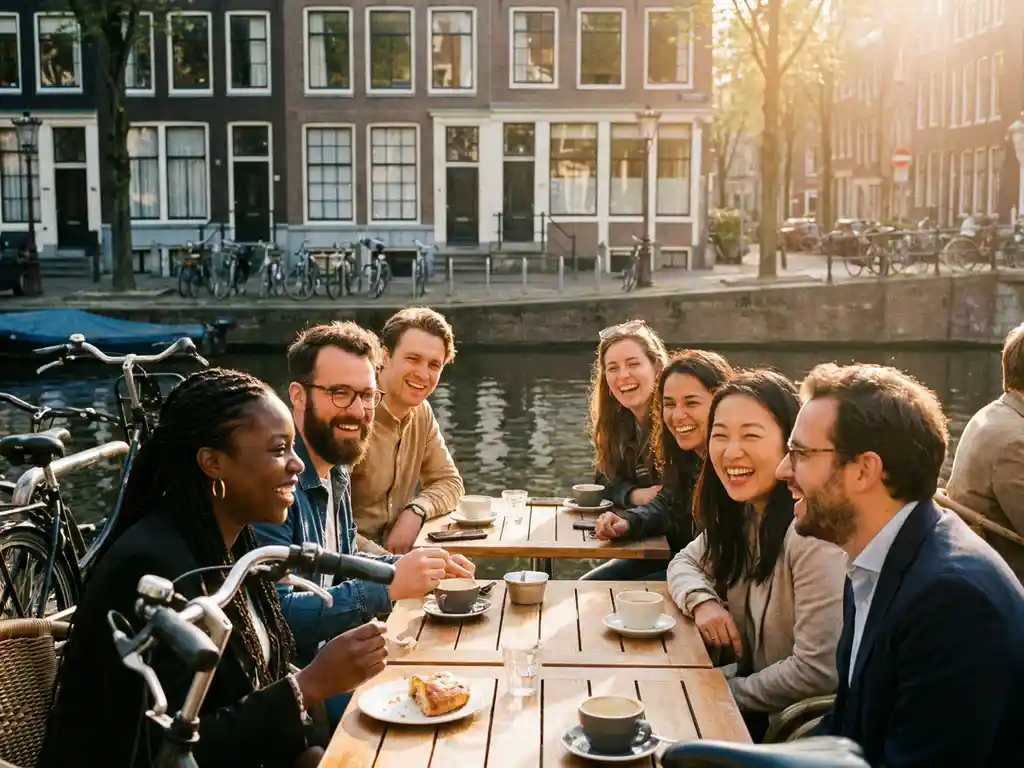
Expats in the Netherlands meet people through international communities, language classes, sports clubs, volunteer groups, neighborhood activities, and social apps like Meetup and Internations. The social scene for internationals is active, especially in cities like Eindhoven, Tilburg, Amsterdam, and Utrecht. That said, building genuine friendships takes more than showing up once — it requires consistency, openness, and ideally some Dutch language skills. The sections below answer the most common questions expats have about making friends and building a social life in the Netherlands.
Where do expats usually struggle to meet people in the Netherlands?
Most expats in the Netherlands struggle to meet people because Dutch social culture tends to be reserved and agenda-driven. Dutch people often have full social calendars planned weeks in advance, which makes spontaneous connections harder. Combined with language barriers and unfamiliar social norms, many internationals find themselves socially isolated despite living in a welcoming country.
The challenge is especially sharp in the first few months. Expats often rely heavily on colleagues for social contact, which creates a narrow circle that disappears on weekends. Neighborhoods in the Netherlands are quieter than many internationals expect — neighbors may be polite but rarely invite you in for coffee without a reason.
Expat partners face an additional layer of difficulty. Without a workplace to provide daily human contact, the days can feel long and isolating. Running errands, picking up children, or visiting a doctor without speaking Dutch adds frustration on top of loneliness. This combination of social isolation and functional helplessness is one of the most commonly reported challenges among expat partners in the Netherlands.
What are the best places to meet people as an expat in the Netherlands?
The best places to meet people as an expat in the Netherlands are language classes, international community groups, sports clubs, volunteer organizations, and local neighborhood events. These settings offer repeated contact over time, which is how genuine friendships actually form rather than through one-off social events.
Here are some of the most effective options expats use in 2026:
- Language classes: Small group settings where everyone shares the same experience of learning Dutch create natural bonds quickly.
- Sports clubs: Running groups, tennis clubs, and football teams provide regular contact and a shared activity that transcends language.
- Volunteer work: Local charities and community organizations welcome internationals and connect you directly with Dutch residents.
- Expat community events: Groups like Internations organize regular meetups in most Dutch cities, giving you a low-pressure starting point.
The key insight is that the setting matters less than the frequency. One-time events rarely lead to lasting friendships. Joining something that meets weekly or monthly gives you the repeated exposure that turns acquaintances into actual friends.
How do expat partners specifically make friends in the Netherlands?
Expat partners most effectively make friends in the Netherlands by joining structured group activities that provide regular, repeated social contact — such as language courses, parent groups at international schools, fitness classes, or hobby clubs. Because expat partners often lack the built-in social structure of a workplace, creating that structure deliberately is essential.
Parent networks at international schools are a particularly strong starting point for expat partners with children. School pickup becomes a daily social ritual, and many international schools actively organize parent events to help families connect. WhatsApp groups and class parent networks often evolve into genuine friendships over time.
For expat partners without children, language classes serve a similar function. Sitting in a small group twice a week with people who share the same challenges creates a sense of community that is hard to replicate elsewhere. Many expat partners describe their language classmates as their first real friends in the Netherlands, not just because of the shared learning experience but because of the honesty and vulnerability that comes with struggling together.
Fitness studios, creative workshops, and cooking classes are also popular among expat partners because they combine personal development with social opportunity — two things that matter deeply to people rebuilding their sense of identity in a new country.
Does learning Dutch help expats make friends with local people?
Yes, learning Dutch significantly helps expats make friends with local Dutch people. While most Dutch people speak excellent English, making the effort to learn their language signals genuine respect and commitment to integration. Dutch people respond warmly to internationals who try to speak Dutch, even imperfectly, and it opens doors that English simply cannot.
The practical benefit is real. When you can follow a conversation at a neighborhood barbecue, joke with a shopkeeper, or chat with a parent at school pickup, you move from being a polite outsider to someone who belongs. These small moments of connection accumulate into something meaningful over time.
Beyond social signaling, speaking Dutch removes the invisible barrier that many expats feel in local settings. Dutch social groups do not always switch to English automatically, and being able to participate — even at a basic level — changes the entire dynamic. You stop being the person everyone has to accommodate and start being someone who contributes to the conversation.
At Dutch on Track, we teach Dutch using a communicative approach that focuses on speaking from day one. The goal is not grammatical perfection but functional confidence — the kind that helps you connect with people in real life, not just pass a test.
What social apps and platforms do expats use to meet people in the Netherlands?
The most widely used social apps and platforms among expats in the Netherlands are Meetup, Internations, Facebook Groups, and WhatsApp community groups. Each serves a slightly different social function, and most active expats use a combination of several.
Meetup is particularly popular for activity-based socializing. You can find hiking groups, language exchange evenings, board game nights, and professional networking events in most Dutch cities. The activity-first format makes it less awkward than purely social events because there is always something to do and talk about.
Internations has a strong presence in the Netherlands and organizes regular events in Amsterdam, Eindhoven, Tilburg, and other cities. It skews slightly older and more professionally oriented, making it a good fit for expat partners who are also looking to rebuild their professional network.
Facebook Groups remain surprisingly active for expats in the Netherlands. Local groups like “Expats in Eindhoven” or “Internationals in Tilburg” are used for practical questions, event sharing, and informal meetups. They are also a good way to find out about community events that are not widely advertised elsewhere.
WhatsApp groups, often formed through language classes, school networks, or neighborhood apps like Nextdoor, tend to produce the most genuine connections because they are smaller, more personal, and based on an existing shared context.
How long does it typically take expats to build a social circle in the Netherlands?
Most expats take between six months and two years to build a genuine social circle in the Netherlands. The wide range reflects how much the timeline depends on individual effort, language skills, and whether the expat actively joins structured social activities rather than waiting for friendships to form organically.
The first three months are typically the hardest. Everything is new, routines are not yet established, and social energy often goes toward practical survival rather than friendship-building. Many expats describe this period as lonelier than expected, even when they are busy.
Between three and twelve months, most expats who have joined regular activities begin to see early friendships develop. These are often other internationals at first — people who share the same experience of navigating life in a new country. These friendships tend to form faster because the common ground is immediate and deep.
Building friendships with Dutch locals generally takes longer, often well into the second year. This is not because Dutch people are unfriendly, but because their social lives are already full and trust builds slowly. Speaking some Dutch, being consistent, and showing genuine interest in local culture accelerates the process considerably.
The expats who build strong social circles fastest are almost always the ones who commit to something regular — a weekly class, a sports team, a volunteer role — rather than attending one-off events and hoping for the best.
How Dutch on Track Helps You Build a Social Life in the Netherlands
Learning Dutch is one of the most effective things you can do to feel at home in the Netherlands, and Dutch on Track is designed specifically for expats and their partners who want to make that happen. Our courses are not just about grammar and vocabulary — they are about building the confidence to connect with people around you, in the supermarket, at school pickup, with your neighbors, and at work.
Here is what makes our approach different:
- Small groups of 8 to 10 people — you practice with fellow internationals who share your experience, and many students leave with genuine friendships.
- Communicative method from day one — we focus on speaking and listening, not just reading and writing, so you gain real-world confidence quickly.
- Practical, daily-life content — lessons are built around situations you actually encounter in the Netherlands, from the doctor’s office to neighborhood conversations.
Our courses run after work hours in Eindhoven and Tilburg, at central locations that are easy to reach. Whether you are a complete beginner or already have some Dutch, we have a level that fits where you are right now. If you are ready to stop feeling like an outsider and start feeling like you belong, schedule a free meeting with Dutch on Track and take the first step toward a fuller social life in the Netherlands.
Frequently Asked Questions
Is it harder to make friends in smaller Dutch cities compared to Amsterdam?
Smaller cities like Eindhoven and Tilburg actually have thriving expat communities that can be easier to navigate than Amsterdam’s larger, more transient social scene. Because the international community is more concentrated, you tend to see the same faces repeatedly across different events and groups, which accelerates the trust-building process. That said, the range of expat-specific events is narrower, so joining structured activities like language classes or sports clubs becomes even more important in smaller cities.
What are the most common mistakes expats make when trying to build a social life in the Netherlands?
The biggest mistake is relying on one-off events and waiting for friendships to happen naturally. Many expats attend a single Internations evening or a neighborhood gathering, don’t instantly click with anyone, and conclude that making friends in the Netherlands is impossible. The second most common mistake is staying exclusively within the expat bubble — while international friendships are valuable and form faster, limiting yourself to them slows down the deeper integration that makes life in the Netherlands genuinely fulfilling.
How do I handle the awkwardness of approaching Dutch people when they already seem to have a full social life?
The key is to lower the stakes by connecting through a shared activity rather than direct social overtures. Dutch people are far more open to someone they see weekly at a running club or volunteer shift than to a stranger trying to strike up a friendship cold. Once you have a recurring context — especially one where you can speak some Dutch — the relationship develops naturally without anyone feeling put on the spot. Patience and consistency matter far more than charm or social confidence.
Can I realistically make Dutch friends without speaking Dutch fluently?
Yes, fluency is not required — but effort is. Dutch people appreciate internationals who make a genuine attempt to learn the language, even if conversations still happen mostly in English. Starting with basic phrases, understanding some Dutch in group settings, and showing that you are actively learning signals respect and commitment that Dutch locals notice and respond to. Think of your Dutch language progress as a relationship investment: even a beginner level opens doors that staying English-only keeps firmly closed.
What should I do if I've been in the Netherlands for over a year and still feel socially isolated?
First, honestly assess whether you have been joining activities with regular, repeated contact or mostly attending one-off events — that distinction alone explains most cases of persistent isolation. If you have been consistent and still feel disconnected, consider whether language is the barrier: even intermediate Dutch can dramatically change how included you feel in local settings. It may also help to speak with a counselor or expat support group, as prolonged social isolation can affect mental health, and addressing it directly is a sign of strength, not failure.
Are there specific types of volunteer work that tend to connect expats with Dutch locals most effectively?
Volunteer roles that involve hands-on, collaborative work tend to create the strongest connections — think community gardens, food banks, local sports coaching, or neighborhood clean-up initiatives rather than administrative or remote roles. These settings put you side by side with Dutch residents working toward a shared goal, which is one of the fastest ways to build genuine rapport across cultural and language differences. Many municipalities have a volunteer center (vrijwilligerscentrale) where you can find opportunities matched to your interests and availability.
How can I maintain my social momentum when my expat friends keep moving away?
Expat social circles are inherently fluid, and the best way to manage this is to keep investing in your local Dutch connections alongside your international friendships — local friends don’t relocate every two years. Building ties to place-based communities like neighborhood groups, sports clubs, or local language classes creates a social foundation that persists even as individual expat friends come and go. It also helps to stay active on platforms like WhatsApp groups and local Facebook communities so you are always aware of new arrivals and events where you can meet the next wave of internationals.