Where do most Americans live in the Netherlands?
The Netherlands has become one of Europe’s most popular destinations for American expats, and it is easy to see why. With a high standard of living, a welcoming international community, and strong English proficiency among Dutch locals, settling in the Netherlands feels surprisingly manageable for many Americans. Whether you are relocating for work, following a partner, or simply seeking a new adventure, understanding where Americans tend to cluster and what life actually looks like can help you hit the ground running.
If you are researching expat life in the Netherlands, you have probably noticed that the experience varies a lot depending on where you land. This guide answers the most common questions Americans ask before and after making the move, from choosing a city to building genuine friendships and deciding whether to learn Dutch.
Where do most Americans live in the Netherlands?
Most Americans living in the Netherlands settle in Amsterdam, The Hague, Eindhoven, and Utrecht. Amsterdam attracts Americans drawn to its international business scene and cultural energy. The Hague is popular among those working in diplomacy, law, or international organizations. Eindhoven appeals to tech professionals and engineers, while Utrecht offers a central location with a strong expat community and excellent transport links.
Amsterdam consistently tops the list simply because of its size and global reputation, but it also comes with higher housing costs and a competitive rental market. The Hague has a distinctly international character, partly because it hosts numerous embassies and institutions like the International Court of Justice, making it a natural home for Americans in professional or diplomatic roles. Eindhoven has grown rapidly as a tech and design hub, driven largely by the presence of companies like ASML and Philips, which attract highly skilled workers from around the world, including many Americans. Rotterdam is another option worth considering, particularly for those in logistics, trade, or architecture, as the city has a bold, modern identity quite different from the canal-lined streets of Amsterdam.
Why do so many Americans choose to live in the Netherlands?
Americans choose to live in the Netherlands because of its strong economy, high quality of life, widespread English fluency, and central location within Europe. The country consistently ranks among the happiest and most livable in the world, offering excellent healthcare, reliable infrastructure, and a culture that values work-life balance. For American expats, the relatively smooth transition makes the Netherlands an especially attractive first step into European life.
Practical factors play a big role. The Netherlands has a well-established expat infrastructure, with international schools, English-language services, and a large community of internationals already in place. Many Americans arrive through multinational employers that have offices in cities like Amsterdam or Eindhoven, and the Dutch knowledge economy actively attracts skilled foreign workers. Beyond logistics, the Netherlands offers something harder to quantify: a genuine openness to outsiders. Dutch society is direct and pragmatic, which Americans often find refreshing once they adjust to the communication style.
The country’s geographic position is also a draw. Living in the Netherlands means Paris, London, and Berlin are all within a short flight or train ride, making it an ideal base for Americans who want to explore Europe during their time abroad.
What is daily life like for Americans in the Netherlands?
Daily life in the Netherlands for Americans is generally comfortable and well-organized, though it comes with a distinct cultural rhythm. Cycling is a central part of everyday life, grocery shopping happens frequently in smaller quantities, and social life tends to be planned rather than spontaneous. Americans often describe an initial adjustment period before the routine starts to feel natural and even enjoyable.
Navigating Dutch culture as an American
One of the most common surprises for Americans is the directness of Dutch communication. In the Netherlands, honesty is valued over politeness in a way that can initially feel blunt or even unfriendly. Understanding this cultural difference early on saves a lot of unnecessary confusion. Once you recognize that a straightforward “no” is simply a direct answer rather than a personal rejection, interactions become much easier to navigate.
Practically speaking, daily life is highly functional. Public transport is reliable, supermarkets are well-stocked, and most administrative processes, while sometimes bureaucratic, are manageable with patience. Many Americans find that the Dutch emphasis on efficiency and structure actually suits their working style well, even if the social customs take longer to feel familiar.
Work culture and leisure
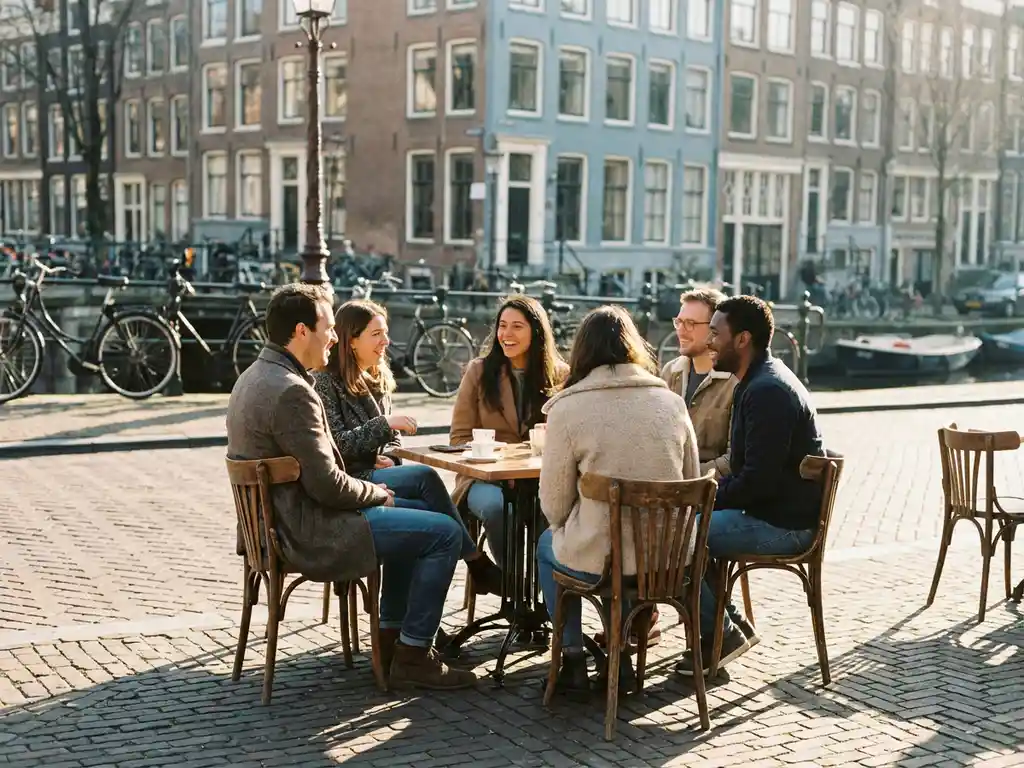
Work-life balance is taken seriously in the Netherlands. Long hours are not a badge of honor, and evenings and weekends are genuinely protected time for most Dutch professionals. Americans used to hustle culture sometimes find this shift liberating. Leisure time often revolves around cycling trips, visiting local markets, exploring museums, or simply enjoying a coffee at a neighborhood café. The Dutch calendar is also full of seasonal celebrations and local events that offer great opportunities to connect with the community around you.
How do Americans make friends and build a social life in the Netherlands?
Americans build a social life in the Netherlands by joining expat groups, participating in sports clubs or hobby communities, attending local events, and enrolling in activities that bring them into regular contact with both internationals and Dutch locals. Building genuine friendships takes time, but consistent shared experiences are the most reliable way to develop meaningful connections.
Dutch social circles tend to be tight-knit and long-established, which can make it difficult to break in as a newcomer. Many Americans find it easier to connect first within the international community and then gradually expand outward. Expat networks in cities like Amsterdam, Eindhoven, and Utrecht are active and welcoming, with regular meetups, language exchanges, and social events specifically designed for people in transition.
One surprisingly fun and effective route to social connection is taking a Dutch language class. Sitting in a small group with other internationals who are all navigating the same challenges creates an immediate sense of camaraderie. You laugh together over pronunciation, celebrate small wins together, and often end up meeting for a drink after class. It is the kind of low-pressure, regular social contact that naturally leads to real friendships.
Does learning Dutch help Americans integrate in the Netherlands?
Yes, learning Dutch significantly helps Americans integrate in the Netherlands, even though most Dutch people speak excellent English. Speaking Dutch, even at a basic level, signals genuine effort and respect for the local culture. It opens doors to deeper conversations, smoother daily interactions, and a stronger sense of belonging in your community.
Many Americans assume that English fluency among the Dutch makes learning the language unnecessary. In practical terms, you can absolutely get by without Dutch in most urban areas. But integration is about more than practicality. When you attempt to speak Dutch at the bakery, with your neighbors, or at a local event, you are communicating something important: that you are here to engage, not just to pass through. Dutch people genuinely appreciate the effort, and it changes the nature of your interactions in a meaningful way.
Learning Dutch also accelerates your understanding of the culture itself. Language carries humor, nuance, and social cues that simply do not translate. As your Dutch improves, you start to understand why certain things are said the way they are, which makes the directness feel less jarring and the humor much more accessible. For Americans serious about building a life in the Netherlands, language learning is one of the most rewarding investments you can make.
How Dutch on Track Helps Americans Settle into Life in the Netherlands
Dutch on Track is designed specifically for expats, internationals, and their partners who want to learn Dutch in a way that actually fits their lives. Our courses combine structured learning with a genuinely social, enjoyable experience, making language learning one of the highlights of your week rather than another item on your to-do list. Here is what makes our approach different:
- Small groups of 8 to 10 participants, so you get real speaking time and quickly get to know your classmates.
- A blended learning method that combines e-learning preparation, interactive classroom sessions, and consolidation, all designed around daily life in the Netherlands.
- Evening classes from 17:45 to 19:45 at central locations in Eindhoven and Tilburg, easy to reach after work.
- Certified teachers who specialize in Dutch as a Second Language, guiding you from absolute beginner (A0) all the way to intermediate (B1).
Beyond the language itself, our classes are a genuinely fun way to meet other internationals who are navigating the same experience as you. Many of our students find that their classmates become some of their closest friends in the Netherlands. The shared challenge of learning Dutch, combined with the laughter and small victories along the way, creates a real sense of community. If you are ready to take that step toward feeling more at home in the Netherlands, schedule a free meeting with Dutch on Track, and we will help you find the right course to get started.
Frequently Asked Questions
How long does it typically take Americans to feel settled in the Netherlands?
Most Americans report that the initial adjustment period lasts anywhere from three to six months, with the first few weeks being the steepest part of the learning curve. Practical milestones like registering with your local municipality (the BSN number process), opening a Dutch bank account, and finding a reliable cycling route to work all contribute to a growing sense of normalcy. By the six-month mark, many Americans describe the Dutch rhythm of life feeling genuinely comfortable rather than foreign.
What are the biggest mistakes Americans make when first moving to the Netherlands?
One of the most common mistakes is underestimating the Dutch rental market, particularly in Amsterdam and Utrecht, where housing goes fast and competition is fierce. Americans who arrive without pre-arranged accommodation often find themselves in a stressful scramble. Another frequent misstep is interpreting Dutch directness as coldness or rudeness and pulling back socially as a result, when in fact the Dutch are simply being honest rather than unfriendly. Starting your housing search and social engagement early, before you even land, makes a significant difference.
Do I need to register anywhere officially when I arrive in the Netherlands as an American?
Yes, registering with your local municipality is one of the first and most important administrative steps after arriving. This registration gives you a BSN (Burger Service Nummer), which is essentially your citizen service number and is required for almost everything, including opening a bank account, accessing healthcare, and paying taxes. You will typically need proof of address, your passport, and potentially your employment or residence permit documentation. Processing times vary by municipality, so it is worth booking your appointment as soon as possible after arrival.
Is it better to live in Amsterdam or one of the smaller Dutch cities as an American expat?
It really depends on your lifestyle priorities and why you are moving. Amsterdam offers the most vibrant international scene, the widest range of English-language services, and the greatest cultural variety, but housing costs are significantly higher and the city can feel overwhelming at first. Cities like Eindhoven, Utrecht, or The Hague offer a more manageable pace, lower rents, and tight-knit expat communities where it can actually be easier to build meaningful connections. Many Americans who initially move to Amsterdam eventually relocate to a smaller city once they prioritize quality of life over urban buzz.
What level of Dutch do I realistically need to function day-to-day in the Netherlands?
In most urban areas, you can handle daily life entirely in English, especially in shops, restaurants, and professional settings. However, reaching an A2 to B1 level in Dutch makes a noticeable difference in situations like dealing with landlords, navigating government services, understanding official letters, and connecting with Dutch neighbors or colleagues on a more personal level. Even a basic conversational level demonstrates respect for the local culture and tends to be warmly received by Dutch people, which gradually opens up a richer and more integrated experience.
How does the Dutch healthcare system work for American expats?
Once you are registered and have your BSN, you are required by Dutch law to take out basic health insurance (basisverzekering) with a Dutch health insurer, typically within four months of registering. The system is private but tightly regulated, meaning all basic plans cover the same core services at a similar price point. You will also need to register with a local general practitioner (huisarts), who acts as a gatekeeper for specialist referrals. Americans generally find the Dutch system more affordable and accessible than the US system, though the referral-based structure takes some getting used to.
Can I bring my car from the United States, or is it better to buy one in the Netherlands?
Technically, you can import a US vehicle, but the process involves significant costs including import duties, VAT, and mandatory technical inspections to meet European standards, making it rarely worth the effort. More practically, the Netherlands is one of the most cycling-friendly countries in the world, and many Americans find that a good bicycle handles the majority of their daily transport needs. If you do need a car for longer trips or suburban living, buying or leasing locally is far more straightforward, and the extensive public transport network often makes car ownership unnecessary altogether.