Which online Dutch course offers the most practical speaking practice?
The online Dutch course that offers the most practical speaking practice is one that builds real conversation skills from day one, not just grammar rules or vocabulary lists. For expat partners living in the Netherlands, the best format combines structured speaking exercises with real-life scenarios, small group interaction, and consistent feedback from a qualified teacher. The sections below break down exactly what to look for and why it matters.
What counts as ‘practical speaking practice’ in a Dutch course?
Practical speaking practice means using Dutch in realistic, everyday situations rather than repeating scripted sentences in isolation. It includes role-playing conversations you would actually have, such as talking to a GP, asking questions at your child’s school, or chatting with neighbors. The goal is functional fluency, not grammatical perfection.
Many courses focus heavily on written exercises or passive listening, which builds recognition but not the confidence to speak. True practical practice involves:
- Speaking with other learners in simulated real-life scenarios
- Receiving immediate, constructive feedback from a teacher
- Repeating and adapting phrases until they feel natural
- Practicing under mild pressure, so you get used to thinking on your feet
The communicative approach, where speaking is central from the very first lesson, is widely recognized as the most effective method for building this kind of usable fluency.
How does a blended learning format improve spoken Dutch skills?
A blended learning format improves spoken Dutch skills by separating preparation from practice. Instead of using valuable classroom time to introduce new vocabulary, learners study words and phrases independently beforehand, then arrive ready to actually use them in conversation. This means more time speaking and less time passively absorbing information.
The typical blended structure works in three stages:
- E-learning preparation: Learners study vocabulary, listen to dialogues, and familiarize themselves with new structures at their own pace before class.
- Interactive classroom sessions: Class time is used almost entirely for speaking practice with fellow learners, guided by a teacher who corrects and encourages in real time.
- Consolidation exercises: After class, learners reinforce what they practiced through follow-up activities that lock in the new language.
This format is especially effective for expat partners who have limited time but high motivation. Each class session feels productive because you spend it doing the thing that actually builds fluency: talking.
What’s the difference between online and in-person Dutch speaking practice?
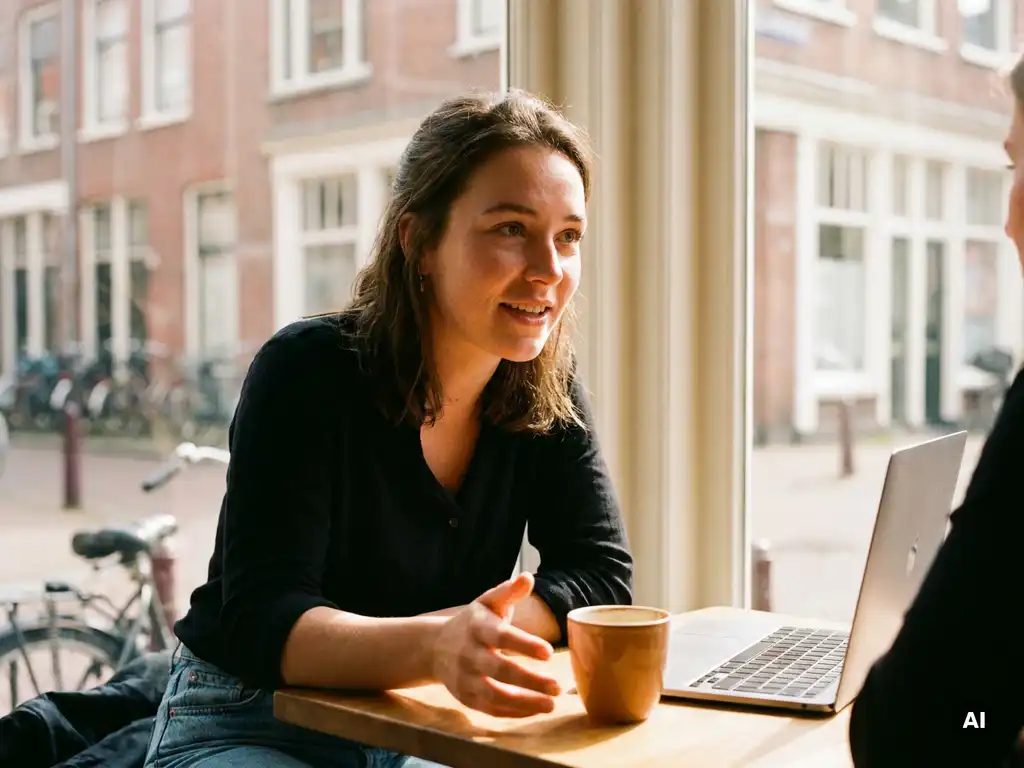
The key difference between online and in-person Dutch speaking practice is the quality of spontaneous interaction. In-person classes create natural conversational dynamics, body language cues, and a social energy that is harder to replicate on a screen. Online classes offer flexibility but often reduce the richness of real-time exchange.
That said, both formats can be highly effective when structured well. Online Dutch courses work best when they include:
- Live video sessions with a real teacher, not just pre-recorded lessons
- Small group sizes that ensure every participant speaks regularly
- Breakout conversations between learners, not just teacher-led Q&A
In-person classes add an important social dimension. You meet people, build friendships, and practice Dutch in a shared physical space, which mirrors the kind of social situations you will encounter in daily Dutch life. For expat partners working to build a social network in a new country, this community aspect is often just as valuable as the language learning itself.
Which Dutch course features matter most for expat partners?
For expat partners, the most important Dutch course features are practical relevance, a communicative teaching method, small group sizes, and a social environment that supports building connections. Grammar-heavy courses designed for academic learners rarely meet the real needs of someone trying to navigate daily life in the Netherlands.
The features that make the biggest difference include:
- Real-life content: Lessons built around situations like visiting the doctor, registering at the gemeente, or talking to other parents at school
- Small groups: Classes of 8 to 10 people ensure you actually speak in every session, not just listen
- Speaking from day one: A method that prioritizes communication over perfection, so you stop being afraid to make mistakes
- Qualified teachers: Instructors certified in teaching Dutch as a Second Language understand how adult learners acquire a new language
- Community and fun: Learning alongside other internationals who share your experience creates friendships and makes the process genuinely enjoyable
Self-development and social integration go hand in hand for expat partners. A course that helps you make friends while learning Dutch delivers far more than just language skills.
Should you choose a group course or self-study app for speaking practice?
For speaking practice specifically, a group course is significantly more effective than a self-study app. Apps can build vocabulary and introduce grammar, but they cannot replicate the unpredictability of a real conversation or give you the feedback you need to correct your pronunciation and phrasing in the moment.
Self-study apps are useful as a supplement, particularly for reviewing vocabulary between lessons. But if your goal is to actually hold conversations in Dutch, you need to practice with other people. Group courses offer something apps simply cannot: the experience of speaking under gentle pressure, adjusting to how others respond, and building the social confidence that comes from being understood.
For expat partners, group courses also offer something equally important. They put you in a room with people who are going through the same experience. That sense of shared challenge, combined with the fun of learning together, creates connections that often extend well beyond the classroom.
How quickly can you hold basic conversations in Dutch with the right course?
With a communicative, speaking-focused Dutch course, most learners can hold basic everyday conversations within the first few weeks. At the A1 level, which typically takes two to three months of consistent study to reach, you can introduce yourself, handle simple transactions, and manage familiar situations like shopping or asking for directions.
Progress depends on several factors:
- How often you practice outside of class, including with neighbors, in shops, or with other parents
- Whether your course uses a communicative method that gets you speaking from lesson one
- The consistency of your attendance and preparation
- Your willingness to make mistakes and keep going
Reaching conversational B1 level, where you can discuss a wide range of everyday topics with confidence, typically takes around a year of structured learning. A well-designed program that takes you from A0 to B1 over 43 weeks makes this timeline very achievable for motivated learners.
How Dutch on Track helps you build real speaking confidence
We designed our approach specifically for expat partners and internationals who want to speak Dutch in real life, not just pass a test. Our blended learning method, small group classes, and certified teachers combine to give you the speaking practice that actually sticks.
Here is what sets our Dutch language courses apart:
- Speaking from lesson one, using a communicative method that builds confidence fast
- Small groups of 8 to 10 participants so you speak in every single class
- Real-life scenarios drawn from daily life in the Netherlands
- E-learning preparation and consolidation so classroom time is spent talking, not introducing grammar
- A social, fun environment where you meet other internationals and build genuine friendships
- Courses from A0 to B1, including our flagship Dutch in 1 Year program
- Evening classes after work hours, in central locations in Eindhoven and Tilburg
If you are ready to stop watching Dutch life happen around you and start participating in it, we would love to help. Schedule a free meeting with us and find out which course fits your level and goals.
Frequently Asked Questions
What if I have never studied Dutch before — can I still join a group speaking course?
Absolutely. Most communicative Dutch courses, including programs that take you from A0 to B1, are specifically designed for complete beginners. You do not need any prior knowledge to start — the course structure is built to introduce language in context from day one, so your very first lesson will already involve speaking, not just listening to theory. Look for courses that explicitly label a starting level of A0 and confirm with the provider that no prior experience is required.
How do I know if my current Dutch course is actually improving my speaking skills?
A simple test: after each class, ask yourself whether you spoke more than you listened. If most of your class time was spent watching a teacher explain grammar or completing written exercises, your speaking skills are unlikely to develop quickly. Genuine progress shows up when you start instinctively reaching for Dutch phrases in daily life — at the supermarket, with neighbors, or on the phone — without mentally translating from English first. If that is not happening after a few weeks, it may be worth switching to a more communicative, speaking-focused format.
What is the best way to practice Dutch speaking between classes?
The most effective between-class practice involves real interactions, however small. Greet your neighbors in Dutch, order your coffee in Dutch, and try to follow along with Dutch radio or a simple Dutch podcast during your commute. If your course includes e-learning preparation, completing it before each class ensures you arrive ready to use new vocabulary in conversation rather than encountering it for the first time. Even five to ten minutes of daily exposure outside the classroom compounds significantly over weeks and months.
I am shy about speaking Dutch and afraid of making mistakes — how do I get over this?
This is one of the most common challenges adult language learners face, and the right course environment makes an enormous difference. Small group classes with other international learners in a similar situation naturally reduce the pressure, because everyone is making mistakes and working through the same challenges together. A good teacher frames errors as a normal and necessary part of learning, not something to be embarrassed about. The key insight is that speaking imperfect Dutch is always more useful than staying silent — native Dutch speakers genuinely appreciate the effort, and most will meet you more than halfway.
Can I use a language app like Duolingo alongside a group Dutch course?
Yes, and used correctly, apps can be a helpful supplement — but they should not replace live speaking practice. Apps are effective for drilling vocabulary, reviewing grammar patterns, and maintaining daily contact with the language between lessons. Where they fall short is in replicating the unpredictability of real conversation: the pauses, the misunderstandings, the need to rephrase on the spot. Think of an app as a warm-up tool that supports your group course, not a standalone solution for building conversational fluency.
How do I choose the right Dutch course level if I already have some basic knowledge?
Most reputable Dutch language schools offer a short placement process — either a written assessment, a brief spoken intake, or both — to help you find the level where you will be challenged without being overwhelmed. If you can introduce yourself, count, and handle very simple exchanges but struggle with anything beyond that, A1 is likely your entry point. Be honest during the placement process about what you can actually produce in speech, not just what you can recognize when reading, since those two skills often sit at different levels for adult learners.
Is it realistic to reach a conversational level of Dutch while working full time?
Yes, provided the course is structured around your schedule and you are consistent with attendance and preparation. Evening group courses held after work hours are specifically designed for this situation, and the blended learning format — where you prepare independently before class and consolidate after — means you can make meaningful progress with a manageable weekly time commitment. The learners who advance fastest are not necessarily those with the most free time; they are the ones who practice little and often, and who actively use Dutch in their daily environment outside of class.
Related Articles
- The best Dutch courses for international employees: 7 things HR should compare
- What are the biggest cultural shocks expats face in the Netherlands?
- What are the biggest challenges of expat social life in the Netherlands?
- What is Sinterklaas and how do the Dutch celebrate it?
- What is the difference between basic and advanced Dutch courses?